Chile's Far-Right President Kast Launches Border Barrier Construction
Chile's newly inaugurated far-right president, José Antonio Kast, has swiftly moved to implement his flagship campaign promise by commencing work on a physical border barrier along the nation's northern frontier with Peru. Less than a week after taking office, Kast oversaw preparations on Monday, marking a significant shift in Chile's immigration and security policies.
Border Shield Plan Takes Shape in Desert Terrain
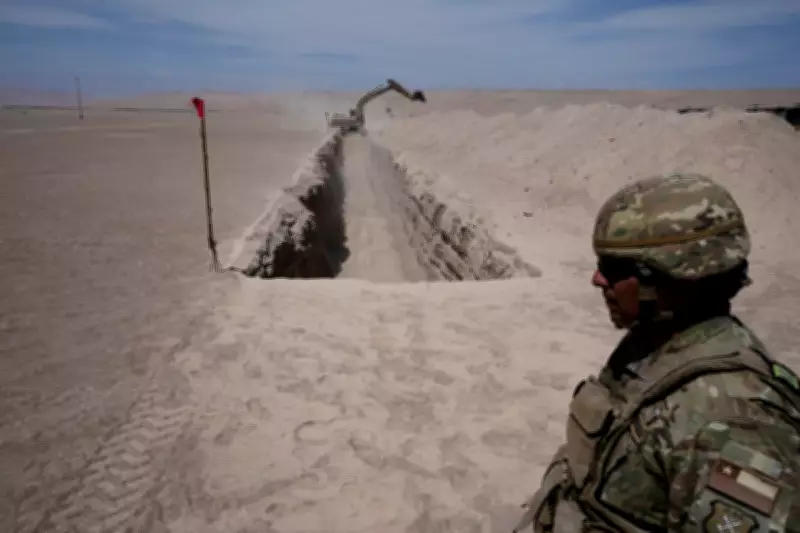
From the Chacalluta area in Chile's northern border zone, where many immigrants have historically crossed from Peru into one of Latin America's most prosperous nations, Kast announced the launch of his "Border Shield" initiative. The plan involves constructing a barrier comprising ditches and fences, bolstered by drone surveillance and military patrols. Initially, the effort appears modest, with a single bulldozer observed carving a trench in the dusty desert landscape.
Kast emphasized the importance of this project, stating, "For all of Chile, this is a milestone. We have taken clear and concrete decisions to close our border to illegal immigration, drug trafficking, and organized crime. We want to implement this without any delay." His approach mirrors that of his political ally, former U.S. President Donald Trump, utilizing emergency powers to issue decrees aimed at enhancing border security and expediting deportations of undocumented foreigners.
Rising Immigration and Crime Concerns Fuel Policy Shift
The move comes amid growing concerns over immigration and crime in Chile. Between 2017 and 2024, the foreign population in Chile doubled, with over 300,000 individuals believed to be living in the country without proper documentation, many of whom are Venezuelans fleeing political persecution and economic collapse. Additionally, foreign criminal gangs from Venezuela and other nations have established a presence in Chile in recent years.
While Chile maintains some of the lowest homicide rates in the region, incidents such as carjackings, kidnappings, and contract killings—previously uncommon in the stable nation—have surged, dominating local media and fostering public fear. Many Chileans attribute these issues to new arrivals, contributing to Kast's electoral success and his hardline stance on border control.
Historical Context and Political Implications
Kast's presidency represents Chile's most significant right-wing turn since 1990, when the country restored democracy after 17 years of military rule under General Augusto Pinochet. Notably, Kast campaigned for Pinochet in his youth, underscoring the ideological shift in Chilean politics. His rapid action on the border barrier highlights a commitment to conservative values and national security, setting a precedent for future policies in the region.
As construction progresses, the effectiveness and impact of the Border Shield plan will be closely monitored, with potential implications for immigration flows, bilateral relations with Peru, and domestic security in Chile.