Minnesota Clergy Sue for Pastoral Access to Immigrants at ICE Facility
Clergy Sue for Pastoral Access to Minneapolis ICE Facility

Minnesota Clergy File Federal Lawsuit for Pastoral Access to ICE Detainees

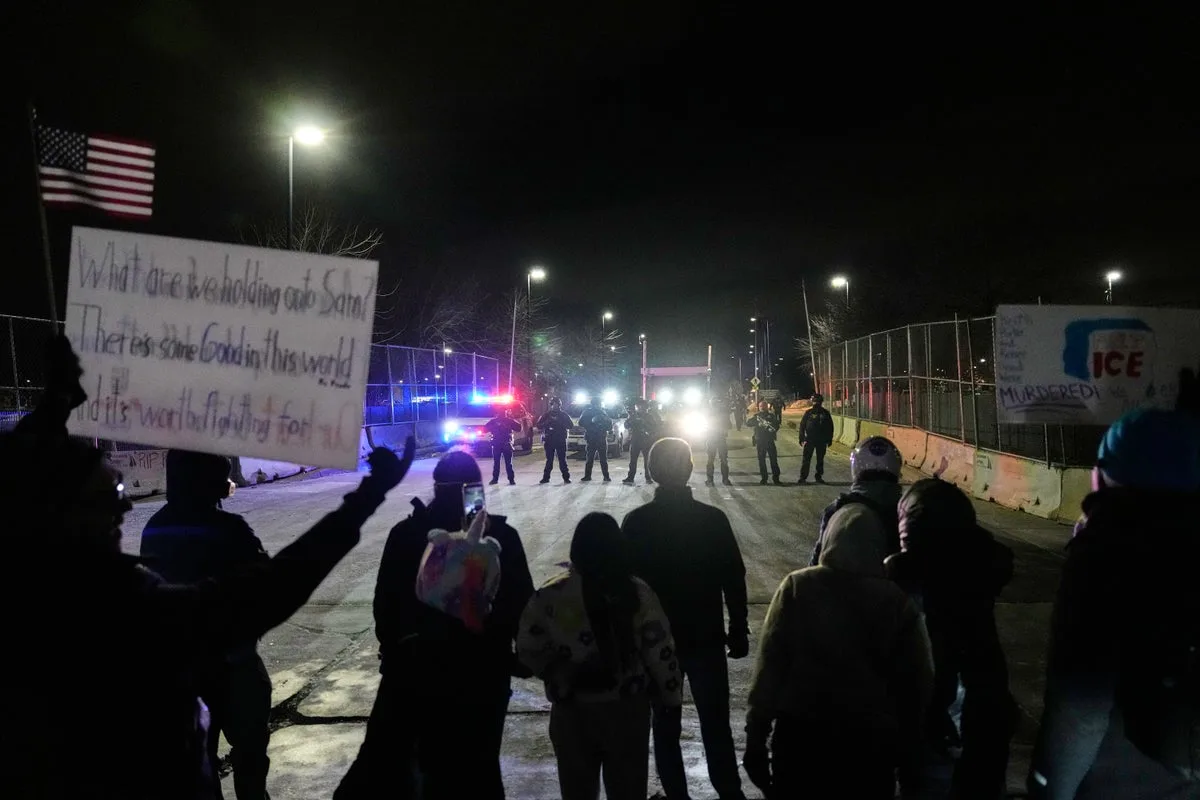
Clergy groups in Minnesota have initiated a federal lawsuit, requesting a court order to grant in-person pastoral access to immigrants held at a U.S. Immigration and Customs Enforcement (ICE) facility in Minneapolis. The legal action targets the Bishop Henry Whipple Federal Building, a site that has become a focal point for immigration enforcement operations and community protests.

Legal Battle Over Religious Freedom and Detainee Rights

The lawsuit, filed by Minnesota branches of the Evangelical Lutheran Church in America, the United Church of Christ, and a Catholic priest, alleges that ICE has unconstitutionally obstructed faith leaders from providing spiritual comfort to detainees. U.S. District Judge Jerry Blackwell is scheduled to hear arguments from attorneys representing the clergy, who are seeking an injunction to require Department of Homeland Security officials to allow prompt pastoral visits.

The legal complaint argues that the restrictions at the Whipple building violate both the constitutional freedom of religion and the 1993 Religious Freedom Restoration Act. It cites several instances where clergy were denied access, including on Ash Wednesday, a significant day in Christian traditions. The lawsuit describes the facility as standing in stark contrast to its namesake's legacy, accusing it of becoming an epicenter for the systematic deprivation of fundamental rights.

Wide Pickt banner — collaborative shopping lists app for Telegram, phone mockup with grocery list

Government Response and Operational Context

Government attorneys plan to counter the clergy's request by arguing that it is partly moot, as Operation Metro Surge officially ended on February 12. They contend that the number of new detentions has since subsided, leading to eased visitor restrictions and the allowance of clergy visits for over two weeks. In recent filings, officials stated that staff were previously unable to permit visitation due to the building's role as both a hub for heightened ICE operations and a symbolic center of community unrest.

Tauria Rich, a senior local ICE official overseeing the facility, emphasized in a filing this week that the Whipple building is primarily a short-term holding facility, with most detainees moved within 24 hours. She noted that visitors are rare and that clergy requests are handled on a case-by-case basis, citing an example where a clergy member left in early March because no detainees were present.

Broader National and Local Support for Access

The Minnesota lawsuit is part of a broader national push by clergy for increased access to immigration detention facilities, particularly during holy seasons such as Lent and Ramadan. Similar efforts have been documented in other states, including a lawsuit in Chicago that allowed Catholic priests and a nun entry to an ICE facility on Ash Wednesday, and struggles by Muslim and Christian clergy in Texas to access large detention centers.

In Minnesota, the request is supported by Catholic and Episcopal bishops, other Christian and Jewish clergy, and the Minnesota Council of Churches. Additionally, access issues extend beyond clergy; three members of Congress from Minnesota were turned away when attempting to inspect the facility, later reporting poor conditions. Attorneys have also faced barriers, with a federal judge ordering Homeland Security last month to provide new detainees at Whipple with immediate access to counsel before transfer.

Policy and Practical Implications

ICE's stated policy requires facilities holding detainees for more than 72 hours to have a chaplain or religious services coordinator and dedicated spaces for services, with advance notice and background checks for clergy. However, the government argues that the Whipple building's short-term nature exempts it from these requirements. The ongoing legal dispute highlights tensions between immigration enforcement practices and religious freedoms, with clergy asserting their faith-driven duty to minister to detainees in moments of fear and isolation.

Pickt after-article banner — collaborative shopping lists app with family illustration