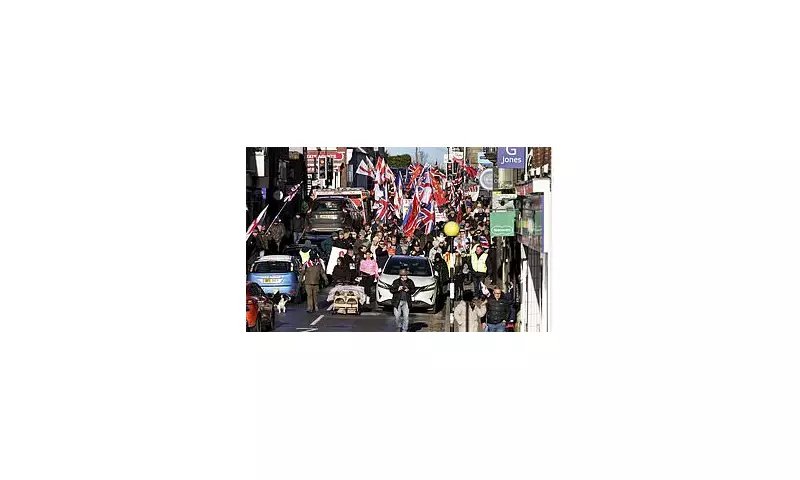
For the tenth consecutive Sunday, the streets of a Sussex town have echoed with the sound of protest as hundreds of residents voiced their fierce opposition to government plans to house asylum seekers in a disused army barracks.
A Decade of Sundays in Protest
Hundreds of demonstrators once again descended on Crowborough, with anger mounting over the proposal to accommodate nearly 600 male migrants at the former army camp. The plan, announced in October, would see around 540 male asylum seekers moved into the barracks as part of a government drive to reduce its reliance on expensive hotel accommodation.
Today's march saw protesters waving Union Jack and St George's flags as they paraded through the town. Those leading the demonstration held banners declaring 'Crowborough says no', while a young girl at the front carried her own poignant poster stating 'My safety matters'. The protests show no sign of abating, with some participants describing Prime Minister Sir Keir Starmer as a 'traitor' amid ongoing uncertainty.

Legal Battle and Official Uncertainty
The organised resistance, led by the Crowborough Shield residents' group, has launched a formal legal challenge against the proposals. An appeal fund to support this fight has already amassed an impressive £90,000 in contributions.
Despite the high tensions, campaigners revealed this week that they still have not been given a clear timeline for when the asylum seekers might start moving in. Kim Bailey, Chair of Crowborough Shield, stated that Home Office lawyers have confirmed no final decision has been made regarding the use of the site.
Government Stance and Apology
The Home Office has issued an apology for its handling of the communication around the Crowborough camp plans. However, it remains determined to push forward with its strategy to end the use of hotels for migrant housing.
A spokesman previously said: 'We are furious at the level of illegal migrants and asylum hotels. This government will close every asylum hotel. Work is well underway, with more suitable sites being brought forward to ease pressure on communities and cut asylum costs.' The department added that it is working closely with local authorities and partners to accelerate delivery.
The situation leaves Crowborough in a state of limbo, with a community steadfast in its opposition and a government committed to a controversial policy, ensuring this issue will remain at the forefront of local and national debate.