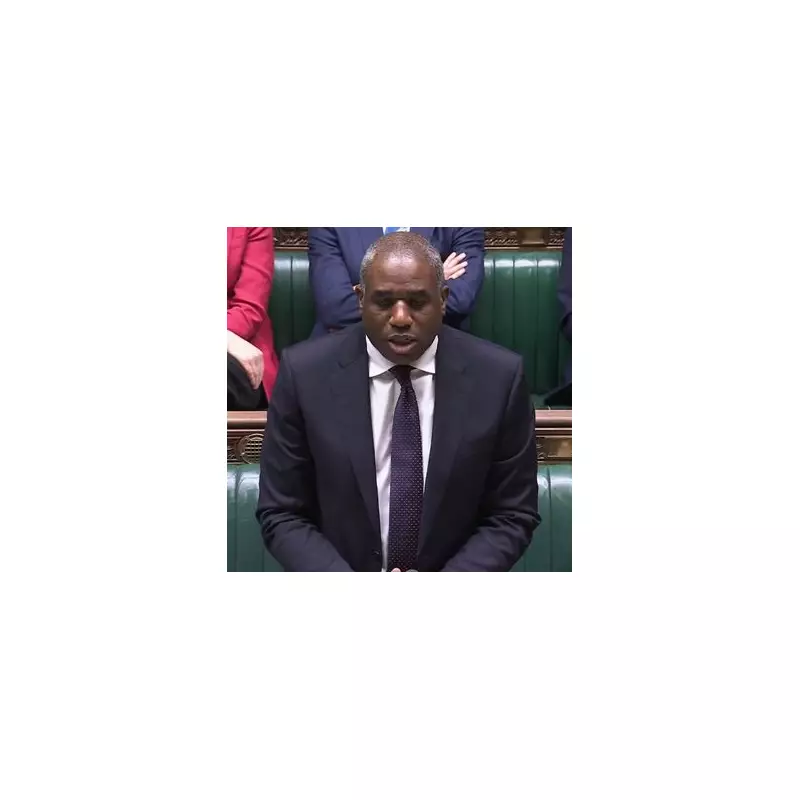
In a significant announcement to the House of Commons, Justice Secretary and Deputy Prime Minister David Lammy has declared a dramatic increase in the early deportation of foreign criminals from the United Kingdom.
A Sharp Rise in Early Removals
Mr Lammy told MPs that the number of foreign national offenders (FNOs) removed under the early removal scheme has rocketed by 75% since the Labour government took office. The latest figures show that more than 2,700 FNOs were deported in the last year, a substantial jump from the 1,560 removed in the final year of the Conservative government.
The Deputy Prime Minister positioned this surge as evidence of the government's firm commitment to tackling the ongoing prisons crisis. He stated that the administration had delivered on its promise to remove dangerous individuals from the country more swiftly, describing the increase as a "step-change" in policy execution.
Weekly Figures and Policy Changes
The scale of the acceleration became particularly evident in September, when the system hit a new weekly high. Removals under the scheme reached 114 in a single week, equating to roughly 16 foreign criminals being deported every day.
This increase follows the introduction of stricter rules earlier this year, designed to enable the deportation of foreign criminals at an even earlier stage in their prison sentences. Overall, the total number of FNOs returned to their home countries has risen by 14% under the current Labour administration.
Contrast with Previous Government and Future Plans
Mr Lammy's announcement drew a direct contrast with the record of the previous government. He noted that despite former Prime Minister Rishi Sunak's pledge to double the number of deportations, the annual figure when the Conservatives left office in July 2024 remained below levels seen in 2010.
Jake Richards, the Parliamentary Under-Secretary of State for Sentencing, Youth Justice and International, reinforced the government's stance. He emphasised that the administration is taking "radical action" to ensure deportations happen earlier and faster. Mr Richards also signalled an intent to go further, stating plans to rebalance the application of human rights law domestically and pursue international changes to prevent offenders from abusing the system.
The government's message was unequivocal: its pledge to deport more foreign criminals is being acted upon with measurable results, marking a clear shift in approach from the previous administration.