Stranded on Paradise: The Hidden Migrant Crisis in France's Indian Ocean Territory
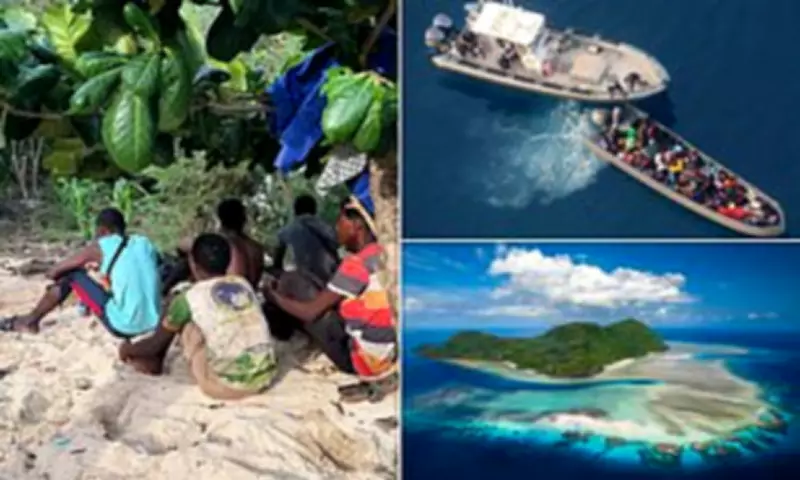
Sheltering beneath the shade of an almond tree on a minuscule Indian Ocean island, a group of young men find grim humour in their predicament. "There are worse places to be stranded by people smugglers," one jokes. The idyllic square mile of sandy beaches and dense, mountainous jungle offers a stark contrast to the perilous white cliffs of Dover, yet their goal remains the same: a chance at a new life in Europe.
A Remote Stepping Stone to Europe
Abandoned on the coral reef-ringed island of Mtsamboro after a treacherous 40-mile journey across the Mozambique Channel, nine young men have the island largely to themselves. Their days are filled with the sounds of lapping waves and tropical rain, as they survive by picking bananas and coconuts. Their objective lies just a few miles away: Mayotte. "Mayotte is France, and that means Europe and the chance of a better life," one migrant explained to The Mail on Sunday, which found the group last week.
Their existence is a tense game of cat-and-mouse with French authorities, who hunt them through the jungle using drones. The parallels with the migrant crisis in the English Channel are striking, yet the French response in this remote territory is markedly different.
An Aggressive French Response
While the sea temperature is warmer, the determination of the French authorities to stop the boats is unswerving. Mayotte is not merely an overseas territory; it is a full French department, governed by the same laws as Marseille or Paris. This status makes it a powerful magnet for those fleeing poverty in the neighbouring Comoros islands.
Reports emerged last year of French police employing aggressive tactics, including ramming small fishing boats and creating waves to swamp them—methods they have criticised in the Channel. Tragically, these interceptions have led to fatalities and life-changing injuries. It is estimated that 10,000 people have drowned attempting this crossing since 1995.
French security forces utilise maritime radar, helicopters, and high-speed boats to locate and intercept traffickers in the channel. Those caught are processed with practised efficiency at a detention centre and are frequently deported to the Comoros on the same day. A senior gendarmerie officer defended the interceptions, stating the boats are dangerously overcrowded and passengers lack lifejackets, creating a duty to act.
Life in Hiding and a Determined Crackdown
The migrants on Mtsamboro, mostly in their late teens and early twenties, describe a fearful existence. "The gendarmes come here to hunt us, sometimes for a week or more, and set up tents on the beach," said one man in a basketball vest. "They use drones, but we are familiar with the island and disappear to hidden shelters. It can be scary." They survive on fish, fruit, and occasional supplies from passing boats.
Presiding over the crackdown is the prefect, François-Xavier Bieuville, a career civil servant described by one Paris newspaper as governing with "iron discipline." His office declined to comment for this report. Under his watch, Mayotte deported 21,409 people last year, a figure that starkly contrasts with the UK's 8,164 enforced returns in the same period.
Police also conduct raids on houses on Mayotte's main island, Grande-Terre, seizing undocumented immigrants. In the coming months, authorities plan to build a pontoon on Mtsamboro's beach, which will likely end the migrants' precarious refuge and force a final attempt to reach Mayotte.
A Deeply Divided Island
Immigration has profoundly divided Mayotte, France's poorest region. Nearly half of its 350,000 residents are immigrants, mainly from the Comoros. Many locals believe President Macron should provide more financial support, with liberals arguing immigrants should be allowed to settle in mainland France.
Others hold a harder line. Salime Mdere, former vice-president of Mayotte's departmental council, has spoken controversially about "terrorist" Comoran youths. The economic cost of policing the crisis is also a point of contention. Senator Said Omar Oili noted that money spent on immigration enforcement is counted as aid, diverting funds from other vital needs.
The cycle of deportation and return is relentless. A ferry leaves for the Comoros at least three times a week carrying deportees. Observers report seeing the same faces travelling back and forth. "Someone who is expelled in the morning can be back in Mayotte in the afternoon," Senator Oili stated.
For the young men hiding on Mtsamboro, the risk is worth the reward. "I will never give up," said one who had been caught and deported twice. "There is only poverty behind me. Maybe one day I can live in Europe." Despite Mayotte's problems with social unrest and crime—often blamed on the influx of migrants—their resolve remains unbroken. As one put it simply: "It can't be worse than where we came from."