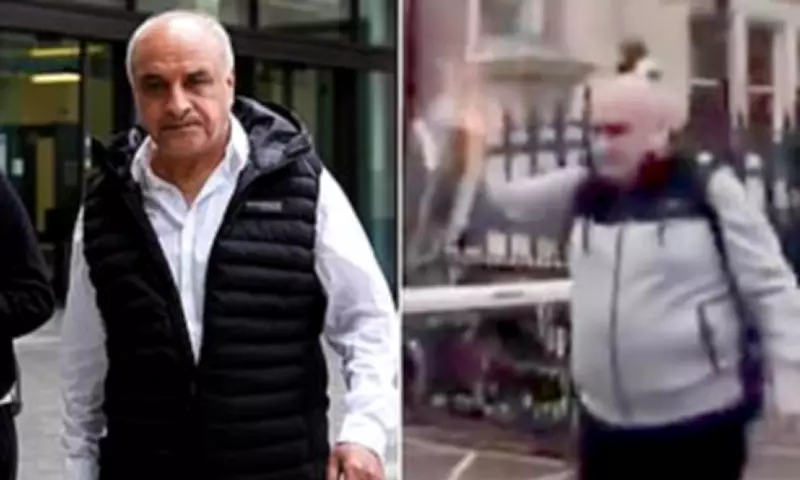
The Home Office has agreed to provide accommodation to a protester who set fire to a Koran outside the Turkish consulate in London, following reports of multiple threats to his life. Hamit Coskun, a Turkish-born atheist of Kurdish and Armenian descent, ignited the Islamic text during a demonstration in Rutland Gardens, Knightsbridge, on February 13 last year, while shouting expletives against Islam.
Legal Battles and Blasphemy Controversy
Mr Coskun was initially convicted of a religiously aggravated public order offence in June last year and fined £240. District Judge John McGarva stated that Coskun harboured a "deep-seated hatred of Islam and its followers," dismissing claims that the prosecution aimed to revive blasphemy laws. However, his conviction was overturned four months later at Southwark Crown Court, where Mr Justice Bennathan ruled that freedom of expression includes the right to express views that "offend, shock or disturb."
The judge emphasised that blasphemy is not a crime in England and Wales, where such laws were abolished in 2008, though they remain in force in Northern Ireland. The Crown Prosecution Service is currently appealing this decision, adding another layer to the ongoing legal saga.
Asylum Claim and Safety Concerns
After the protest, Mr Coskun applied for asylum, and his case is still pending. At a High Court hearing on Thursday, Mr Justice Linden revealed that Coskun had requested accommodation from the Home Office, citing that his "life has been threatened on a number of occasions" and there had been "several acts of violence against him." He sought housing with "certain conditions" to ensure his safety.
Under section 4 of the Immigration and Asylum Act 1999, the Home Office can offer accommodation to asylum seekers or former claimants, subject to specific conditions. Initially, the department agreed to provide housing on December 1, but reversed this decision on January 8, prompting Coskun to pursue legal action.
Resolution and Accommodation Details
During the hearing, lawyers for both parties reached an agreement. Government barristers confirmed that the Home Office had withdrawn its reversal and identified suitable accommodation. Iris Ferber KC, representing Coskun, noted in written submissions that the Home Office "accepted" her client faces "exceptional and ongoing safety risk, including threats to his life, arising from his public act of protest."
The agreed accommodation is a self-contained property in an urban area in southern England, situated "away from communities likely to regard his actions as blasphemous." William Irwin, for the Home Office, stated that a property meeting these conditions has been identified, rendering the legal claim academic.
This case highlights the complex interplay between freedom of expression, religious sensitivities, and state responsibilities toward individuals at risk due to their actions. The Home Office's decision underscores its duty to protect those under threat, even in controversial circumstances.