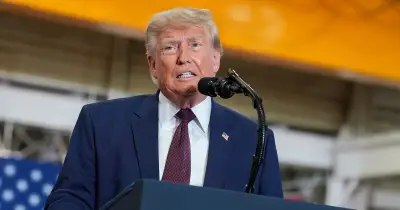
Nearly a year into his second term, President Donald Trump's pledge to execute the "largest deportation operation in American history" is leaving a profound mark. Official data reveals nearly 300,000 individuals have been deported, with a record 65,000 people currently held in detention centres. Aggressive operations by Immigration and Customs Enforcement (ICE) and Customs and Border Protection (CBP), sometimes supported by federalised National Guard units, have instilled fear in immigrant communities from Charlotte to Chicago.
Enabled by a Supreme Court ruling that activists say effectively legalises racial profiling, these enforcement actions have separated families, disrupted work and education, and caused communities to cancel public events. Yet, in the face of this campaign, a defiant response has emerged. Across the United States, residents are banding together, using encrypted messaging apps like Signal to coordinate a grassroots defence of their neighbours.
The Rapid Responders: Chasing Agents and Sounding Alarms
In Chicago's Rogers Park neighbourhood, the reality of Trump's "Operation Midway Blitz" hit home on 9 October. Jose, a 49-year-old real estate appraiser and father, received a Signal alert simply stating: "They're here." Federal agents had been spotted harassing a local tamale vendor. With no prior organising experience, but as a volunteer with the group Protect Rogers Park, Jose jumped on his bicycle.
He and a fellow responder tracked down a suspect Jeep, with Jose using his bike to briefly impede the vehicle at a traffic light before being threatened with arrest. Undeterred, when ICE returned three days later, the group had a new tactic: whistles. "We followed the agents' vehicles through the streets on our bikes, blowing our whistles to alert our neighbours," Jose explained. His goal is not direct confrontation but to slow operations, gather support, and make raids "not worth their while."
Nearby, Mark Selner, the 59-year-old owner of the Red Vault fetish shop, decided to use his "white privilege for good." Disgusted by what he sees as bullying tactics, he began distributing free plastic whistles from his storefront, giving away almost 400 in a few weeks. He also posted clear signage stating ICE agents cannot enter without a judicial warrant, creating a safer space for his customers.
Mutual Aid in Action: From Groceries to School Patrols
The fear generated by raids has tangible, daily consequences. In Los Angeles's Boyle Heights, public health student Miguel Montes noticed people were too scared to attend medical appointments or even buy food following raids in June. In response, he and friends launched a grocery delivery service for affected families. Through his organisation, Raíces Con Voz, they have since delivered supplies to approximately 1,500 families.
On the opposite coast, in Montgomery County, Maryland, the deployment of the National Guard prompted parents at a predominantly Latino elementary school to act. Facing initial scepticism from the community, parents Sarah Hunter and Jane Palmer helped organise a network of about 30 volunteers. These volunteers now station themselves around the school during arrival and dismissal times, not as surveillance, but as a friendly, visible presence to build community and ensure safety.
"If this does nothing but build community across these populations, then we've succeeded," said Palmer, who dressed as the school mascot on Halloween to connect with families.
Beyond the Raid: Supporting the Detained and Deported
The resistance continues long after an arrest is made. In New York, a chilling pattern unfolds outside immigration courts, where asylum seekers are frequently detained by masked ICE agents after their hearings. While court watchers bear witness, the volunteer collective Mi Tlalli steps in to provide "ongoing care."
Maria, an undocumented social worker with the collective, explained their mission. For those detained, they deposit $50 weekly into commissary accounts. They connect families with mental health support, distribute mutual aid, and even maintain contact with individuals after deportation. "We may not be able to save everyone," Maria said, "but is that going to keep us from helping anyone?"
From encrypted chats to whistle alerts, grocery runs to school patrols, these stories illustrate a nationwide tapestry of community-led resistance. As Jose in Chicago put it: "We're going to outlast them. They can't sustain this forever." In the face of a sweeping federal operation, ordinary Americans are organising to protect their neighbours, proving that defence can be as local as a street corner and as simple as a shared warning signal.