
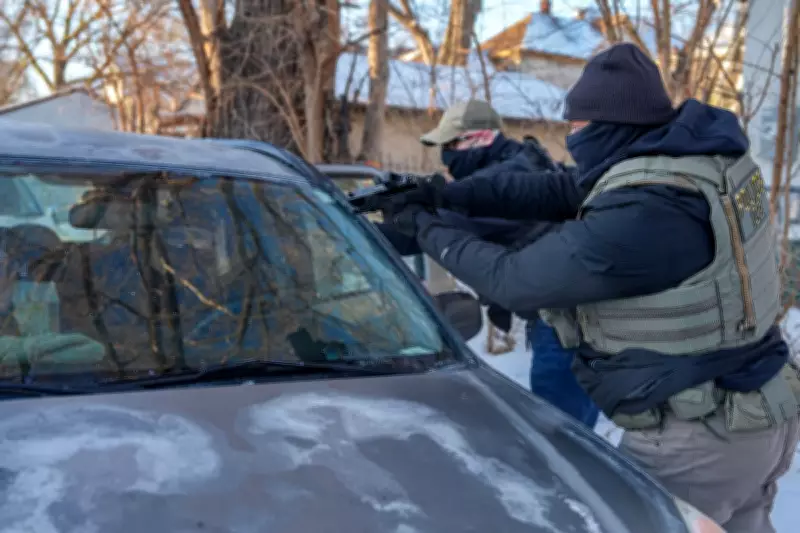
In a dramatic escalation of tensions in Minneapolis, federal immigration agents drew their service weapons to detain several activists who were monitoring their movements on Tuesday. The incident underscores the fraught atmosphere surrounding immigration enforcement operations in the city, which has persisted despite the recent departure of a high-profile Border Patrol commander.
Confrontation on the Streets
According to eyewitness accounts, including from an Associated Press photographer, the altercation unfolded after reports emerged of Immigration and Customs Enforcement (ICE) officers conducting door-to-door visits in south Minneapolis. A group of activists, monitoring the situation, began trailing the federal vehicles in their own cars.
The situation escalated rapidly when the officers brought their convoy to a halt. Agents exited their vehicles with guns drawn, ordering the activists to step out of their car at gunpoint. At least one individual, reportedly wearing clothing bearing an anti-ICE message, was handcuffed while lying face-down on the ground. Agents on the scene warned journalists to maintain their distance and threatened the use of pepper spray.
A Shift in Tactics and Legal Context
This incident occurs against a backdrop of evolving enforcement strategies. Federal agents have recently shifted towards more targeted, low-profile arrests at residential addresses, moving away from the larger, more visible operations staged in public parking lots. This has made their convoys harder for activist networks to track, with group alerts increasingly focused on sightings rather than confirmed detentions.
The legality of such stops is under judicial scrutiny. Last month, a federal judge imposed limits on how officers may treat motorists who are merely following them without obstructing their work. The ruling stated that safely trailing agents "at an appropriate distance does not, by itself, create reasonable suspicion to justify a vehicle stop." However, this order was subsequently set aside by an appeals court, leaving the legal landscape uncertain.
Leadership Changes and Warnings
The Minneapolis operation has seen a recent change in leadership. Border Patrol commander Greg Bovino, who was overseeing a significant immigration crackdown in the city and other major US urban centres, left his post last week. His departure followed closely after the fatal shooting of Alex Pretti, the second local killing of a US citizen in January linked to the enforcement activities.
He has been replaced by Trump administration border czar Tom Homan, who was dispatched to Minnesota. Homan has issued stern warnings, indicating that protesters who interfere with officers' duties could face serious consequences.
Separate Case Involving a Congresswoman
In a related development highlighting the charged political climate, a man charged with assaulting Democratic US Representative Ilhan Omar will remain in custody. US Magistrate Judge David Schultz granted a federal prosecutor's request to deny bond to Anthony Kazmierczak, who is accused of squirting apple cider vinegar on the congresswoman.
Assistant US Attorney Benjamin Bejar argued for the detention, stating, "We simply cannot have protesters and people — whatever side of the aisle they’re on — running up to representatives who are conducting official business, and holding town halls, and assaulting them." Defense attorney John Fossum countered that the vinegar posed a minimal risk and that his client's health issues were not being adequately addressed in jail.
There was no immediate comment from the Department of Homeland Security or ICE regarding the arrests of the activists in Minneapolis. The incident serves as a potent reminder of the ongoing and complex tensions between immigration enforcement authorities and community watchdogs in American cities.