
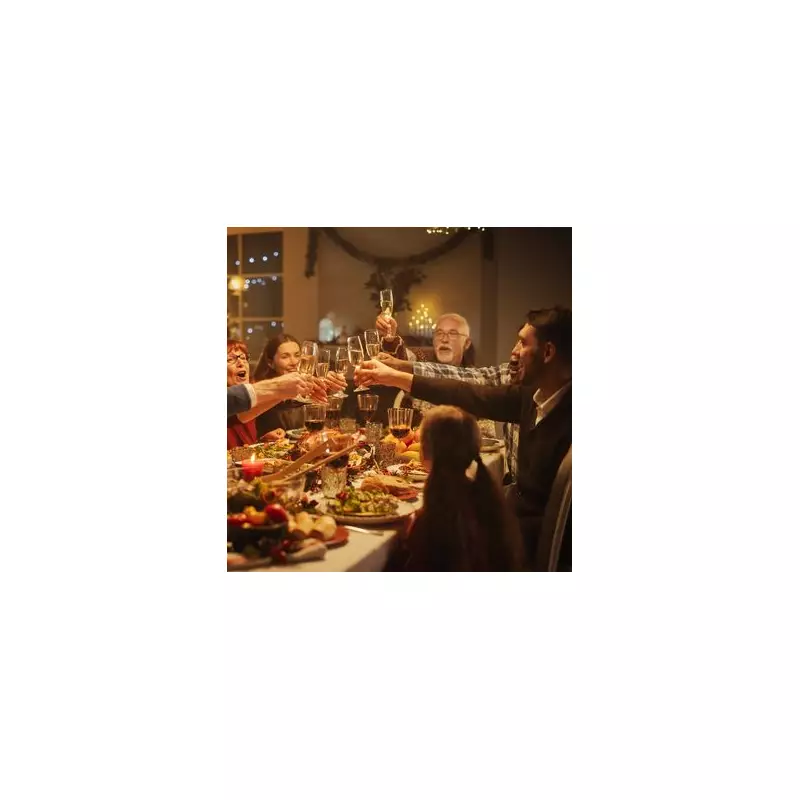
As British families gather around the table for their festive feasts this year, new research has pinpointed the one topic they are most desperate to avoid: immigration. According to exclusive polling, it has surpassed even traditional conversational minefields like politics and religion to become the nation's number one Christmas taboo.
The Festive Conversation Blacklist
The survey, conducted by the research firm Public First, reveals that 43% of Britons hope to avoid discussing immigration during their Christmas Day celebrations. This places it firmly ahead of other sensitive subjects, with 39% wanting to dodge talk of politicians, 35% aiming to steer clear of the economy, and 33% hoping to bypass conversations about religion.
The data highlights a clear disconnect between the heated national discourse and the desired harmony of the family dinner table. Seb Wride, a partner at Public First and head of opinion research, commented on this divide. "There is a very clear gap between the conversations politicians and the media are having, and the conversations people are willing to have over their turkey dinners," he said.
Age and Politics: Who is Most Likely to Dodge the Topic?
The instinct to avoid the immigration issue is not uniform across all demographics. The polling indicates it is particularly strong among older generations. More than half (51%) of those aged between 55 and 64 stated they would try to avoid the subject, representing the highest percentage of any age group.
Interestingly, the desire to sidestep the topic is widespread across the political spectrum, though with some variation. Liberal Democrat voters were the most likely to avoid it, at 48%, closely followed by Green Party voters at 47%. Some 45% of Reform UK voters and 42% of Labour voters said they would also steer clear. Even among Conservative voters, a significant 39% expressed a wish to avoid the topic during the festive period.
A Divisive Issue in a Season of Goodwill
Immigration has become an increasingly polarising issue in the UK in recent years. The backdrop to this festive reluctance includes widespread protests outside asylum hotels over the summer and anti-immigration riots last year following the tragic Southport stabbings.
Mr Wride noted a paradox in public attitudes, explaining that in focus groups, people have become more confident in expressing strong views on immigration, often introducing the topic immediately. "But clearly the way they speak to researchers has not spilled over to their family yet," he observed. "Even as immigration rises up the issue agenda, the divides in society have not yet become divides in the season of goodwill, or at least not out loud."
The research also uncovered a generational friction point, finding that nearly a third (32%) of young people believe they are likely to have an argument with their family at Christmas. While the specific topics for these potential rows were not defined, the overall landscape suggests that navigating dinner table chat this December 25th will require careful diplomacy for many households across the country.