A former FBI agent is offering the first detailed account of how investigators identified those responsible for the 1990 Isabella Stewart Gardner Museum heist, in which 13 artworks now valued at over $500 million were stolen. The theft remains the largest art heist in history, far surpassing more recent museum thefts, including a daylight heist at the Louvre that involved fewer works and was resolved more quickly.
The Heist and Its Aftermath
In 2013, the FBI stated it knew who was responsible but declined to name them, fueling speculation that persists today. Now, former agent Geoff Kelly, who led the investigation for more than two decades, publicly identifies the men he believes were involved in a new book. Kelly traces how the artworks moved through criminal networks, where violence took the lives of key suspects and witnesses, and challenges long-circulating theories by revisiting key details.
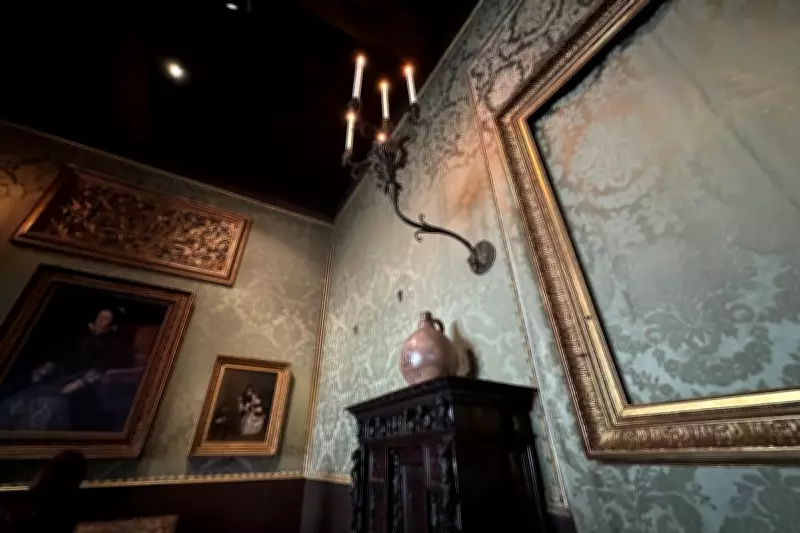
The irony at the center of the case is that Isabella Stewart Gardner intended for the museum to remain frozen in time. She stipulated in her will that nothing in the Venetian palazzo-inspired building would be changed after her death. Gardner, who lived in the museum and died there in 1924, arranged the paintings, sculptures, and architectural fragments exactly as she wanted. Today, the empty gilded frames of the missing paintings still hang in the museum, silent witnesses to what was taken.

The Night of the Theft
Early on March 18, 1990, as Boston wound down from St. Patrick's Day celebrations, two men dressed as police officers arrived at the museum and convinced a security guard to let them in, violating protocol. They handcuffed the guards in the basement and made their way to the museum's Dutch Room, where they cut Vermeer's The Concert and Rembrandt's Christ in the Storm on the Sea of Galilee from their frames. They also took works by Degas and Manet, a Napoleonic eagle finial, and the museum's security videotapes. The museum offered a $5 million reward, later doubled, for information leading to the recovery of the works.
Investigation and Suspects
Some tips pointed to the Irish Republican Army and Boston mob figures, including notorious crime boss Whitey Bulger. Kelly followed one lead to France, where FBI agents posed as wealthy intermediaries on a yacht to draw out suspected Corsican mob figures. Closer to home, agents searched houses across New England, relying heavily on informants. A triple murderer known as "Meatball," who was terminally ill, secretly recorded conversations with suspected associates in hopes of earning money for his family. But none of the tips led to the paintings.
Violence further complicated matters. Robert "Bobby" Donati, a Boston mob associate long suspected in the case, was found stabbed to death in 1991, his body left in the trunk of a car. Years earlier, Donati had visited the Gardner with another known art thief, Myles Connor, to scope it out for a robbery and said that if he ever took the museum's Napoleonic finial, it would be his "calling card." Later, a jeweler told investigators Donati tried to sell a finial from the museum but backed off, saying it was "too hot."
Another line of evidence centered on George Reissfelder, who investigators believe owned the getaway car. Kelly tracked down Reissfelder's brother, a retired military officer who initially did not believe his brother was involved. He broke down after being shown Manet's Chez Tortoni, saying he recognized it as a painting he himself hung above his brother's bed. Reissfelder later died under suspicious circumstances, and when investigators searched his home, the painting was gone. Both men had ties to TRC Auto Electric, a Dorchester shop linked to Charles "Chuck" Merlino's crew.
Limited Resources and Missteps
Though investigators believed they knew who was responsible, they had a difficult time finding definitive proof. In its early stages, the FBI assigned a single agent to the case, which Kelly said slowed progress. "You have to keep in mind when you're talking about investigations, they come down to dollars and cents," Kelly said. It was "like pulling teeth" to secure resources, as federal investigators in Boston were heavily focused on violent crime, drug trafficking, and organized crime cases.

Kelly said a decision to release surveillance footage despite investigators' objections became a lasting distraction. With no usable video from the night of the robbery, prosecutors released footage from the night before that showed a museum employee entering the building after his car broke down. Kelly objected to the theory that the employee was casing the museum, since that possibility had already been reviewed and dismissed. The footage fueled years of misplaced suspicion, as the man was later determined not to be involved.
Inside Job Theories
Among the questions that linger is whether the heist was an inside job. In photos from that night, a museum guard is seen handcuffed in the basement, his head wrapped in duct tape. Investigators noted that shortly before the robbery, the guard opened a door against policy—one that faced the area where the thieves were later seen waiting—a move considered highly unusual and suspicious. "It's the immutable laws of time and space," Kelly said. "I think that there was enough information back then that he could have been charged. Would it be enough to convict him? I don't know." By the time investigators examined those questions more closely, the statute of limitations had expired, leaving them with little leverage to compel cooperation. The guard, Rick Abath, denied any involvement and died in 2024.
The Fate of the Artworks
Kelly personifies the missing artworks, describing them as "perfect fugitives." "They don't go to the doctor. They don't get stopped for speeding. They don't leave fingerprints," he said. "They can just disappear." Unlike human fugitives, artworks can also be copied, leading to false leads over the years—including paintings spotted in a Reno antique market, hanging in private homes, and even one that appeared in an episode of the TV show Monk. Because the works are so recognizable, it is nearly impossible to sell them publicly. "Stealing the artwork from the museum, that's the easy part," Kelly said. "Profiting from it, that's the difficult part." He imagines the paintings will surface one day, outliving those who carried out the heist. "I have no doubt they still exist," he said.