Federal Judge Condemns Trump Administration's 'Dystopian Nightmare' Refugee Policy
A federal judge has delivered a scathing rebuke to President Donald Trump's administration, accusing it of turning the "American dream into a dystopian nightmare" through a controversial Homeland Security policy targeting recently resettled refugees. The order from Minnesota District Judge John Tunheim effectively blocks federal authorities from arresting and detaining refugees who have not yet obtained lawful permanent resident status in the state.
Judge's Blistering Critique of Broken Promises
In his ruling issued on Friday, Judge Tunheim emphasized the nation's historical commitment to refugees fleeing persecution. "Decades ago, as a nation, we made a solemn promise to refugees fleeing persecution: that after rigorous vetting, they would be welcomed to the United States and given the opportunity to rebuild their lives," he wrote. The judge asserted that the government's new policy represents a stark betrayal of that promise, raising serious constitutional concerns without congressional authorization.
"We assured them that they could care for their families, earn a living, contribute to their communities, and live in peace here in the United States. We promised them the hope that one day they could achieve the American Dream," Tunheim continued. "The new policy turns the refugees' American dream into a dystopian nightmare."

Operation PARRIS and Targeted Arrests
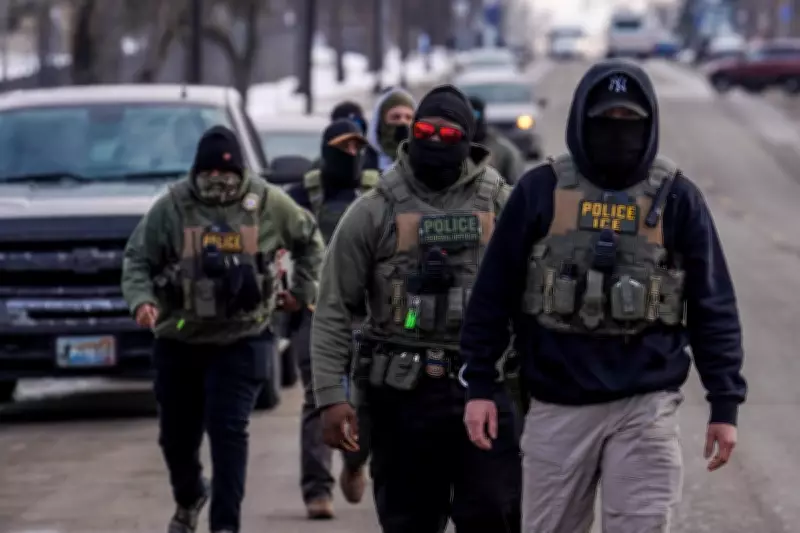
The preliminary injunction follows the Trump administration's launch of Operation PARRIS last month, an initiative specifically targeting Minnesota's 5,600 new refugees. Homeland Security had labeled the state "ground zero for the war on fraud," prompting Immigration and Customs Enforcement (ICE) officers to conduct arrests under the new policy.
Court filings reveal disturbing tactics employed by federal agents:
- Arresting refugees during routine immigration check-ins
- Detaining individuals on their way to work or school
- Appearing at refugees' homes without warrants for arrest
- Shackling and transporting detainees to a Texas detention center over 1,200 miles away
Policy Reversal and Nationwide Implications
An internal memo disclosed in court documents earlier this month reveals a dramatic reversal of long-standing policy. Previously, legally present refugees were protected during their first year in the United States while awaiting permanent residency. The new policy mandates that refugees must report to Homeland Security or face arrest and detention in ICE custody, even without evidence of deportable offenses or criminal activity.
Judge Tunheim's order arrived shortly after refugees and advocacy groups filed a separate lawsuit seeking to block the administration's detention policy nationwide. The ruling represents a significant legal victory for vulnerable communities, with thousands of refugees across the country potentially affected by the contested policy.
Human Impact and Refugee Testimonies
The human cost of the policy is vividly illustrated through refugee testimonies. Plaintiff Mona C., who fled death threats and waited nearly a decade to resettle in the United States, expressed profound anxiety about the new enforcement measures. "My family has worked hard to restart our lives, but now I am worried that ICE might arrest me," she stated. "Who will take care of my children if I am arrested and detained? We came to the U.S. to live in peace and safety, not to relive the horrors of our past."
Judge Tunheim had previously intervened to block federal officers from arresting and detaining new refugees following allegations that agents were "hunting" them down. His latest ruling reinforces that protection through a preliminary injunction, while also commanding the administration to immediately release any detained refugees and return them to their Minnesota homes.
The legal battle continues as advocacy groups challenge what they characterize as a systematic effort to "terrorize refugees who immigrated to this country under the promise that they would be welcomed and allowed to live in peace, far from the persecution they fled."