The Chilling Phone Call That Threatened a Prosecutor's Family
Panic and urgency hung heavy in those three simple words coming down the telephone line: "Where's your daughter?" This terrifying question would send shivers down the spine of any parent, but for prosecutor Dick Harpootlian, it represented a direct threat from the most dangerous man he had ever prosecuted.
A Preschool Plot Unfolds
That morning, Harpootlian's four-year-old daughter had gone to preschool just a couple of miles from their family home in South Carolina. Local law enforcement had received alarming information about a plot to kidnap her from the school and hold her hostage. The kidnappers' demand was horrifyingly simple: put serial killer Pee Wee Gaskins on a bus with $2,000 in cash, or they would, in Gaskins's own words, 'get rid' of the little girl.
Having successfully prosecuted Gaskins for his final murder, Harpootlian understood better than anyone what this man was capable of - even from within the confines of death row. This was a man who had raped a toddler then bludgeoned her to death with a hammer, caving in her skull before disposing of her body. A man who had murdered at least fourteen victims, including his own teenage niece, and was suspected of many more. A man who, while already serving life imprisonment, had committed yet another horrific slaying by blowing up a fellow inmate with a homemade bomb planted inside a radio.
The Warped Mind of a Serial Killer
"He was a horrific, violent psychopath," Harpootlian told the Daily Mail. "There were no constraints. He didn't see a child as a child. It was an object he could take his fury and vengeance out on, or he could use in a way to help him."
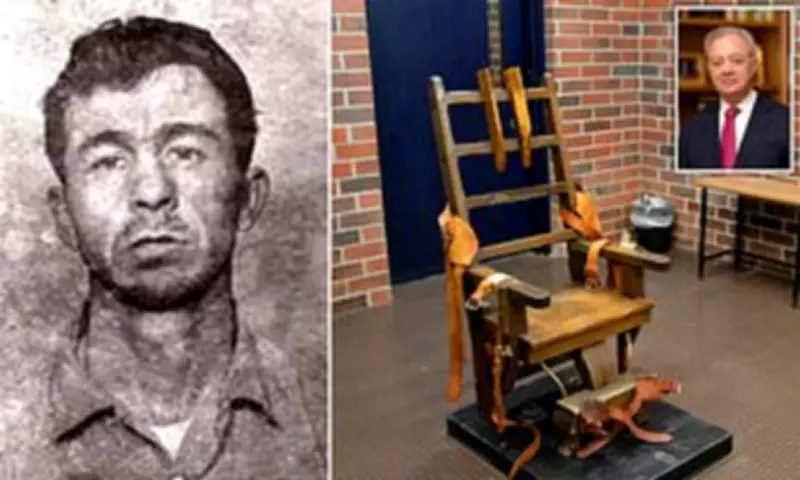
Thankfully, the kidnap plot was foiled in time, and Harpootlian's family hunkered down at home protected by armed South Carolina Law Enforcement Division agents. Two weeks later, on September 6, 1991, the nightmare would reach its conclusion when 2,000 volts of electricity was sent coursing through Gaskins's body in the electric chair.
"Until my wife and daughter were safe that day, until I was with them, I didn't breathe any sigh of relief," Harpootlian recalled. "Even after that, for the next two weeks, I was always anxious. And even after it was over, the thought that somebody would try to use my four-year-old daughter for leverage on a case is one of the reasons I later ran for something else when my prosecution term ended."
A Prosecutor's Transformation on Capital Punishment
Long before Gaskins's murderous tendencies had landed at Harpootlian's own doorstep, the case had tested his position within the justice system, completely transforming his views on the death penalty. Today, Harpootlian is best-known as one half of the defense duo representing legal scion Alex Murdaugh in his high-profile murder trial and a Democratic state senator who has worked on multiple presidential campaigns. However, back in his college days, Harpootlian was a self-described 'longhaired hippie who thought all cops were pigs' and who went to law school with the goal of fighting the system as a public defender.
From Opponent to Prosecutor
For years, he was a fierce opponent of the death penalty - a stance shaped by both his liberal politics and Christian upbringing. So in 1982, when the thirty-four-year-old found himself leading the state's third trial against Gaskins as an ambitious chief deputy prosecutor in Columbia, whether or not to seek the ultimate punishment proved a troubling dilemma.
As Harpootlian writes in his new book Dig Me a Grave: The Inside Story of the Serial Killer who Seduced the South, Gaskins wasn't just 'no-good.' He was "also a master of intimidation and illusion." His life of crime and depravity started young. At thirteen, he attacked a teenage girl with an ax while burglarizing her home. After a stint in a youth facility, he was constantly in and out of prison for rapes and killings.
The Killing Spree That Terrorised South Carolina
It was in 1970 when Gaskins embarked on one of the most prolific serial killing sprees in American history, with the first of many victims beginning to disappear from the Florence area. His methods varied horrifically:
- Some victims were shot
- Some were strangled
- Some were drowned
- Some were poisoned
Some murders were driven by his sick sexual fantasies for teenage girls and children, including the rape and murder of his fifteen-year-old niece and her friend. Others were motivated by deep-seated racism - murdering a woman because she was pregnant by a black man, then raping and murdering her biracial toddler daughter. Still others were committed out of a warped sense of convenience, including poisoning a woman with battery acid in a can of Coke after she fell pregnant with his child.
All the while, the unassuming five-foot-five, 130-pound man brazenly drove around Florence in a hearse, a sign in the back window reading: "We Haul Anything, Living or Dead." He even joked he needed the bizarre vehicle because he had killed so many people he needed to transport them to his private cemetery. This turned out to be no joke - the twisted killer had transformed a remote sunflower field into a graveyard for more than a dozen victims.
The Final Murder and Ultimate Sentence
By the time of his arrest in 1976, Gaskins had left a trail of bodies of teenage girls, toddlers, women, and men in his wake - many of them vulnerable runaways he had befriended while working at the carnival. He was convicted of eight murders and sentenced to death during the so-called Prospect Killer trial that year, but just months later the Supreme Court ruled the death penalty unconstitutional and his sentence was commuted to life in prison.
One year later, he was convicted of a ninth murder at a second trial and handed another life sentence. While awaiting a third trial, he agreed to plead guilty to thirteen murders and confess to his crimes for more life sentences. Gaskins would later boast about killing around ninety victims.
A Murder Behind Bars
It was while serving life in prison that Gaskins would commit his final murder. On September 12, 1982, an explosion rattled Columbia's Central Correctional Institution. Rudolph Tyner, a Black man on death row for killing a white couple who ran a grocery store, had been sitting on a toilet holding a radio to his ear when it blew up. Initially, it appeared to be a botched escape plot. Then a tape was found inside Gaskins's cell - the serial killer had a habit of recording his jailhouse calls, including calls discussing their plot to kill Tyner.
The serial killer was soon facing his third trial. By then, the death penalty had been reinstated in South Carolina - and Harpootlian wrestled with the dilemma of whether or not to seek it. He reached his decision after speaking with his father about his experience serving as a bomber pilot in World War Two. His dad told him he viewed those deaths as self-defense.
"My dad did not enjoy killing," Harpootlian explained. "He was doing his job in an attempt to protect his family, his country and the free world so he did it, but he didn't relish killing anybody." This reasoning resonated with Harpootlian in Gaskins's case. Being in prison for life had not deterred Gaskins from killing again, so the death penalty would be an act of self-defense to prevent him from killing again.
The Psychological Battle
"Gaskins liked killing. So if not him, then the question is who?" Harpootlian said. "He was given life sentences for thirteen murders and then he went out of his way to kill somebody on death row. He's the poster child for the death penalty." Harpootlian believes the death penalty should be avoided in most cases but that "some evil needs to be dealt with affirmatively."
"If you look at Ted Bundy, Jeffrey Dahmer or Pee Wee Gaskins, they're going to kill again if they're not constrained permanently," he said, adding: "That's the criteria to me: will they kill again?"
Despite his change in belief, Harpootlian admits the serial killer got inside his head. One day in court, Gaskins had called out to him: "Dick, you know what? You're a lot like me. You like killing, just like me. You're gonna enjoy killing me, Dick." "He was trying to get in my head," Harpootlian acknowledged.
The Aftermath and Lasting Impact
The psychological games continued after Gaskins was convicted and sentenced to death for Tyner's murder. From death row, Gaskins sent Harpootlian Christmas cards each year and called his office. One night soon after his daughter was born, Gaskins called Harpootlian on his home phone. Things then reached a head with the plot to kidnap his young daughter Kate.
Yet, even after the threat to his daughter and firm in his belief that the death penalty was warranted, Harpootlian still had mixed feelings about Gaskins's execution. It was September 5, 1991, when Gaskins requested his last meal of 'pizza with everything.' A few hours later, he was strapped into the electric chair and the switch flicked. As 2,000 volts coursed through Gaskins's body, his eyes exploded, his bowels emptied and his blood boiled.
A Complicated Closure
Harpootlian got the call just after 1:30am: Gaskins was dead. He slept soundly that night. "I felt relieved," he said. "But, at the same time, anxious about being part of a process that ended with killing somebody. I think if you don't regret the death of another human being, if you relish their death, you're as bad as they are."
Even thirty-five years later, Harpootlian still thinks about Gaskins's comments that they are the same. But he believes the difference between them is exactly why Harpootlian chose not to attend his execution. "I never gave it a second thought to watch that. I think anyone who wants to watch someone die is as bad as Pee Wee," he reflected. "Why would I want to watch somebody die? That's exactly what he likes."
The experience left an indelible mark on the prosecutor, shaping not only his career trajectory but his fundamental understanding of justice, violence, and the difficult decisions required when confronting true evil within the legal system.