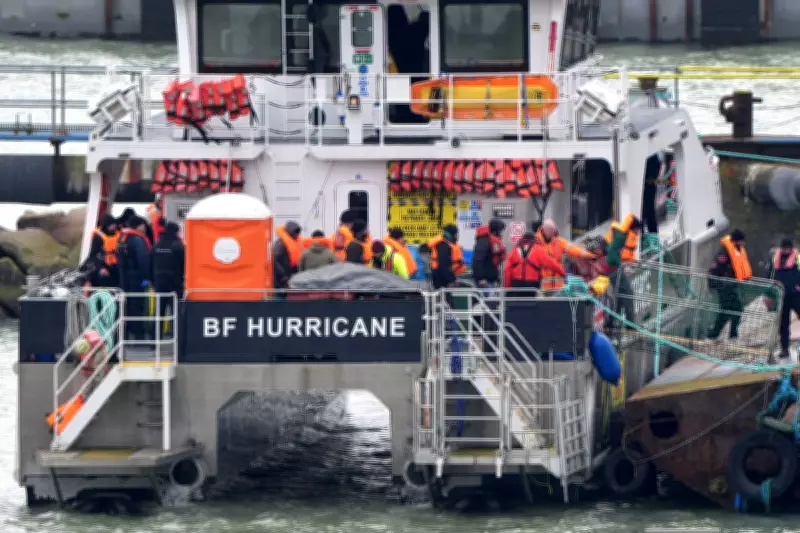
Migrants have arrived in the United Kingdom after successfully crossing the English Channel, marking the first such arrival in thirteen days. This development occurs as the Home Office enforces a stringent new crackdown on advertisements that instruct migrants on how to bypass immigration controls.
Arrival Details and Context
Photographs from Monday depict individuals wearing lifejackets and coats disembarking from a Border Force vessel at the Port of Ramsgate in Kent. The port is currently being utilised for migrant arrivals while maintenance operations are underway at the usual processing centre in Dover.
This crossing is the first since January 19th, when 275 people made the perilous journey. The overall figures for January show a significant decline, with only 933 migrants arriving via the Channel last month. This represents the lowest January total in five years, a 15% decrease from the 1,098 arrivals recorded in January 2025, and a substantial 30% drop from January 2024's figure of 1,335.

Weather Impact and Enforcement Measures
Adverse weather conditions in the region, including last week's Storm Chandra, are believed to have deterred many from attempting the crossing. Concurrently, the government has activated new legal powers under the Border Security, Asylum and Immigration Act.
Starting Monday, social media users who promote illegal routes into the UK now face up to five years in prison. Border Security Minister Alex Norris issued a stark warning to people smugglers, stating, "We are coming after you." The National Crime Agency's Online Communications Centre will systematically monitor thousands of social media accounts as part of this intensified crackdown.
Targeting Facilitators and International Cooperation
The new powers are expected to target so-called "service agents"—middlemen who connect migrants with facilitators for small boat crossings and other unauthorised routes. This forms part of the government's ongoing effort to dismantle people-smuggling networks.
In a related international development, Prime Minister Sir Keir Starmer announced during his recent trip to China that he has negotiated an agreement with Chinese authorities. The deal aims to prevent boat motors manufactured in China from reaching the hands of people smugglers. This is a significant move, given that approximately 60% of the boats used in Channel crossings last year were equipped with Chinese-made motors.
The resumption of crossings after a nearly two-week hiatus underscores the persistent challenges in managing irregular migration, even as enforcement measures are strengthened and international collaborations are pursued.