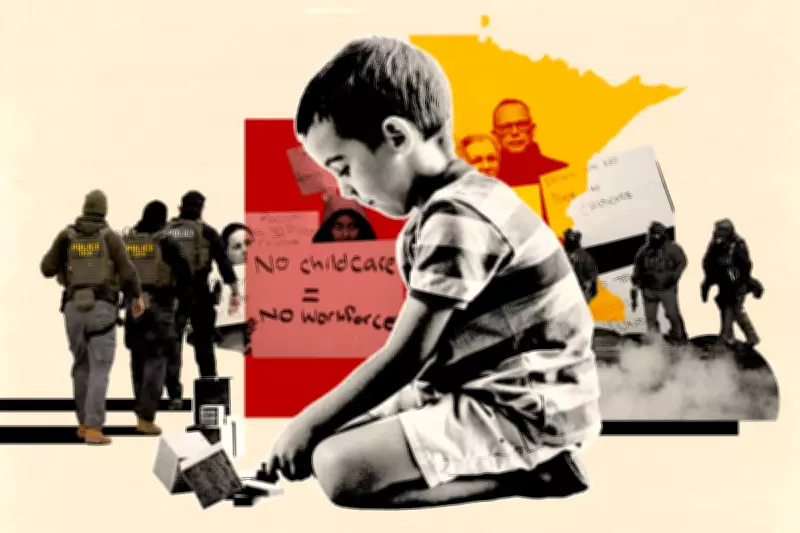
Minneapolis Childcare Center's Resilience Amid ICE Operation Surge
In the heart of Minneapolis, a Spanish-immersion childcare center has become a beacon of community solidarity in the face of federal immigration enforcement actions. Since January, when US Immigration and Customs Enforcement (ICE) agents descended on the Twin Cities as part of Operation Metro Surge, the center has relied on an unlikely group of heroes: dozens of volunteers, mostly over the age of 70, who offer rides and serve as interpreters for immigrant staff members.
Volunteers Step Up in a Time of Fear
On a chilly February afternoon, toddlers at the center grabbed their puffy coats from cubbies as parents hurried them out the door. Meanwhile, Michael, the husband of the center's director, monitored security footage intently, watching for any vehicles that might signal the arrival of ICE agents. He has been leaving his own job early every afternoon to volunteer at the center, a testament to the heightened anxiety among staff.
Other volunteers, affectionately nicknamed "abuelitas" by the staff despite their grandchildren not attending the center, arrived to drive employees home. Their mission is twofold: to provide safe transportation and to act as observers and interpreters if federal agents pull them over. Even though the director confirms all staffers are authorized to be in the country, the aggressive nature of Operation Metro Surge has left them too terrified to drive alone.

"I'm just doing what I can do," said Sarah, a 71-year-old volunteer driver. "I'm white, I'm 71. I think I would not be treated like she might be treated." For safety reasons, the center and individuals interviewed requested anonymity to avoid attracting federal attention.
Building Networks of Mutual Aid
Approximately 60 volunteers, many from suburban areas, have organized shifts to escort staff across Minneapolis neighborhoods. This effort is part of a broader network of mutual aid established by childcare centers in the Twin Cities, highlighting the community's response to government inaction.
Lily Crooks, who assists childcare centers in connecting with non-profits and volunteers, emphasized the necessity of these networks. "You literally have to have a good network to survive, because it's not as though there is a government organization coming to help," she said. At her St. Paul center, Crooks raised $5,000 through a fundraiser for Lyft gift cards, enabling employees and parents to avoid bus stops where ICE agents have been active.
"It's both really amazing to see the way that people are sticking up for their neighbors and supporting them, and then it also kind of feels bleak realizing that there isn't going to be some saving entity coming," Crooks added.
The Catalyst: A Viral Video and Escalating Tensions
The situation intensified in November when rumors spread that ICE was detaining individuals regardless of legal status. "They are not respecting the due process – like, what is happening?" said Diana, the center's director, who serves about 50 children aged three months to five years old.
Fears escalated after Christmas when Nick Shirley, a 23-year-old right-wing influencer, posted a YouTube video alleging fraud in Somali-run daycares in Minneapolis. The video, filled with false and misleading claims, went viral after being promoted by figures like Vice-President JD Vance and Attorney General Pam Bondi.
On January 5, the Trump administration cited Shirley's video as justification for deploying an additional 2,000 ICE and border patrol agents to Minnesota, bringing the total to around 3,000 officers—nearly triple the number of local police in the Twin Cities. Two days later, when an ICE agent shot and killed Minneapolis resident Renee Good, most of Diana's employees went into hiding, forcing the center to close for six days.
The fallout was severe: twelve children withdrew, leading to a staff layoff. To persuade remaining employees to return, Diana reached out to non-profits, which helped coordinate the volunteer driver system.
Risks and Resilience in Volunteer Efforts
Volunteers like Sarah, who drives an employee home multiple times a week with her 76-year-old husband as backup, acknowledge the risks. "Oh, it's risky," she admitted. "I still need to find the strength and courage to do what I know is right."

They have been trained on protocols if stopped by ICE: crack the window, avoid lying, check for a judge-signed and dated warrant. Sarah takes precautions, such as disabling her smartphone's location services and being discreet about her volunteering, especially after encountering opposition in her community. "One of the women said: 'The Somalis don't belong here.' It's really disheartening," she shared.
Reflecting on her teenage years during the civil rights movement, Sarah sees parallels. "This feels like a similar moment for our generation to stand up and against oppression in various ways," she said.
Moving Forward with "Resistencia"
Despite the Trump administration announcing that Operation Metro Surge is winding down, crowdsourced sites like IceOut continue to report ICE actions, with agents becoming stealthier and targeting suburbs. By early March, all but two employees felt comfortable enough to drive themselves again.
P, an employee driven by Sarah, expressed gratitude but frustration. "It's not OK that someone feels unsafe in a safe country," she said, using air quotes for "safe." She anticipates returning to driving soon, emphasizing, "We have to try and just do it. We have to survive. We have to resistir."
Diana explained the Spanish term "resistencia," which blends resistance and endurance. "It means that you don't give up, you keep fighting," she said. "We are going to get through it. This is going to pass."
This story, produced by the Hechinger Report, underscores the ongoing challenges and community resilience in the face of immigration enforcement, offering lessons for other communities navigating similar crises.