The fatal shooting of a woman by a federal immigration agent in Minneapolis has starkly illustrated the human cost of what the Trump administration calls its "largest operation to date" targeting immigrants.
A Broad Daylight Killing
On Wednesday, 7 January 2026, 37-year-old Renee Nicole Good was shot and killed by an agent from Immigration and Customs Enforcement (ICE) in Minneapolis, Minnesota. The incident occurred in broad daylight, with dozens of bystanders reportedly screaming in shock. This tragedy occurred just days after federal authorities announced a major surge of operations in the Twin Cities area.
Since early December, a coalition of agents from ICE, Customs and Border Protection, and Homeland Security Investigations have been conducting aggressive raids. Many officers, masked and armed with rifles, have apprehended people at locations including hardware stores, gyms, and outside homes and schools. Their tactics have involved violently tackling individuals, with targets including undocumented immigrants, US citizens, advocates, and protesters.
A Pattern of Violence and Impunity
Local leaders and human rights advocates had been warning of a potential catastrophe before Good's death. Setareh Ghandehari, advocacy director at Detention Watch Network, stated, "Before this administration, I don't think we've ever seen this kind of hyper-militarized enforcement." She expressed little surprise at the shooting and warned that similar incidents are likely if ICE continues to act "with impunity and without any semblance of accountability."
The Minneapolis mobilization signals the administration's commitment to continuing the indiscriminate immigration enforcement that has defined President Trump's second term. Data compiled by the Trace, a non-profit focusing on US gun violence, reveals a disturbing trend: since the start of the second Trump term, immigration officers have been connected to 14 shootings, including at least four that were fatal.
In a statement following Good's death, the Department of Homeland Security claimed she "weaponized her vehicle, attempting to run over our law enforcement officers." However, this account appears to be contradicted by eyewitness testimonies and video evidence. Judges have previously dismissed cases where ICE agents made similar claims to justify shootings.
Death Toll Rises Beyond Shootings
Shootings are not the only cause of death linked to the intensified enforcement. A 24-year-old Honduran man died in October while fleeing ICE agents in Virginia. In July, a farmworker in California fell to his death from a greenhouse roof during a raid. Furthermore, 2025 was the deadliest year for ICE custody since 2004, with 32 recorded deaths.
Kica Matos, president of the National Immigration Law Center, condemned the administration's approach: "Over the past year, the Trump administration has granted ICE agents virtual impunity to visit terror and violence on immigrant communities across our country. The violence has to stop, immediately."
Despite the administration's justification that these operations are necessary to root out criminals, evidence suggests otherwise. A preliminary analysis by Minnesota Public Radio indicates that most individuals arrested in the recent Twin Cities raids have no criminal convictions. This pattern holds nationally, with most immigrants detained by ICE since the start of the term having no criminal record.
The fear of further violence is palpable in Minneapolis. Just hours after Good was killed, armed immigration officers descended on Roosevelt High School, roughly three miles from the shooting scene. School officials reported that agents tackled people, handcuffed two staff members, and deployed chemical weapons on bystanders. One distraught official told MPR, "They don't care. They're just animals. I've never seen people behave like this."
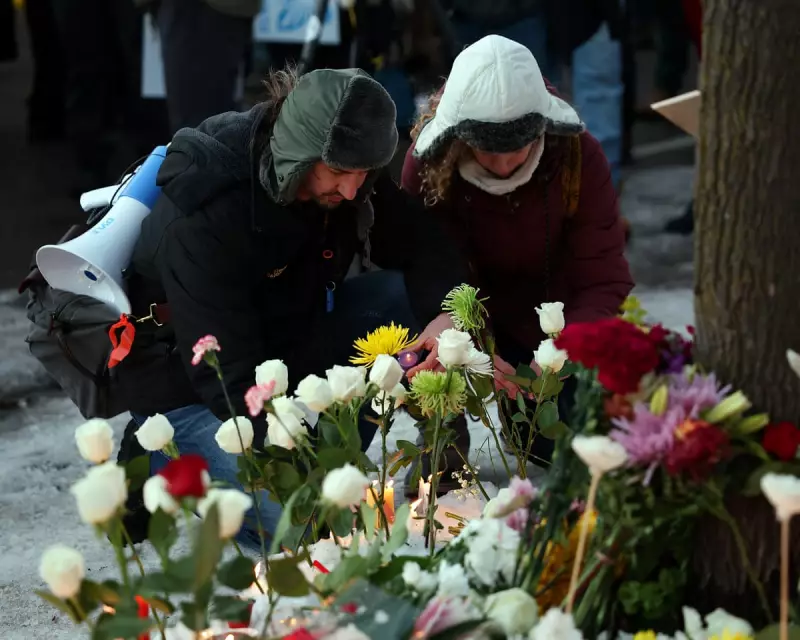
As a vigil was held for Renee Nicole Good on 7 January, the community and the nation are left to grapple with the brutal reality of an immigration enforcement strategy that advocates say is making everyone less safe.