New Theory Emerges in Celine Cremer Case After Human Remains Found in Tasmanian River
A chilling new theory has emerged regarding the fate of missing Belgian backpacker Celine Cremer, following the discovery of human remains scattered along a remote riverbed in the Tasmanian wilderness. The 31-year-old national vanished from the Philosopher Falls hiking trail near Waratah, approximately 300 kilometres northwest of Hobart, in June 2023.
Initial Search and Official Assessment
Celine Cremer was reported missing on June 26, 2023, prompting police to commence a search of the area. The operation was significantly hampered by freezing and wet winter weather conditions. The official search was abandoned in early July 2023, when authorities determined she would not have been able to survive the harsh environment.
At the time, while police did not completely rule out foul play, they believed it was far more likely that Celine had accidentally wandered from the trail. The prevailing theory was that she became disoriented in the thick foliage and ultimately succumbed to hypothermia.
Discovery of Remains and New Drowning Theory
The situation took a dramatic turn last week with the discovery of what are believed to be Celine's bones in two separate locations along the Arthur River. This has led investigators to consider a new possibility: that she may have drowned in a desperate attempt to find her way back to her vehicle.
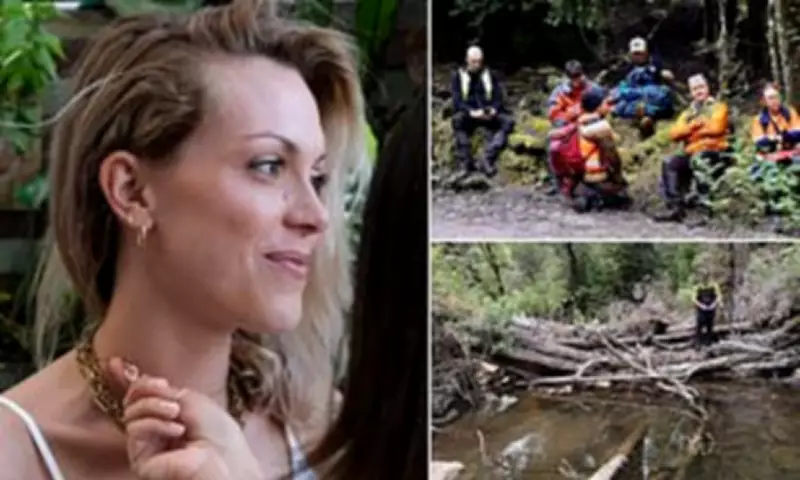
Photos from the renewed search, shared by Tasmania Police, show officers traversing the river, which is currently at a much lower level than when Celine disappeared. The waterway is filled with debris, including numerous fallen logs. There is now speculation that she may have attempted to cross the Arthur River using these downed trees, potentially slipping and drowning, with her body becoming trapped among the submerged debris.
Volunteer-Led Search Efforts
The discovery of the bones follows an extensive five-day search in December, led by a team of volunteers. Australian private investigator Ken Gamble headed the operation, which was joined by four of Celine's friends from Belgium. This private search was organised after Tasmanian YouTuber Rob Parsons posted a series of videos retracing Celine's steps, using mobile phone data provided by Mr Gamble.
During this search, the group found Celine's mauve Samsung mobile phone. They later discovered a glass water bottle and a black garbage bag that may have been fashioned into a makeshift poncho. These items were sent for forensic testing. When the organised search concluded, many local volunteers vowed to continue their efforts independently.
Critical Discovery and Police Response
On January 28, Tasmanian volunteer Jarrod Boys, who had been part of Mr Gamble's group, made a spine-tingling discovery. He spotted what he believed to be a female jawbone in the riverbed, approximately 2.5 kilometres downstream from Philosopher Falls. This location suggests Celine may have lost her phone and then attempted to follow the river, or even cross it, to escape her predicament.
Police swiftly descended on the area, winching personnel into the isolated wilderness via helicopter. On January 30, they found a further five items in the water, also believed to be human remains. Tasmanian police Commander Nathan Johnston confirmed that a polar fleece jacket, a bra, a thermal top, and additional bones had been recovered.
'Whilst further forensic examination will need to be conducted to confirm the identity, due to the nature of the items located, and the location, we believe they are Celine's,' Commander Johnston stated.
Cautious Interpretation and Ongoing Investigation
It is understood that Celine's mother in Belgium has been advised that forensic testing will take more than three weeks. When approached for comment on the possibility that Celine may have drowned, private investigator Ken Gamble urged caution.
'At this stage, it is far too early to draw any definitive conclusions about what happened to Celine,' Mr Gamble said. 'What can be said is that the discovery of scattered remains in and around sections of the Arthur River suggests a possibility that she may have entered the water at some point.'
He explained that the Arthur River system contains numerous natural obstructions formed by fallen timber and debris, which can significantly affect water flow. 'Over time, these natural features, combined with changing river levels and seasonal weather conditions, can result in remains becoming trapped, released, and dispersed downstream. This is a recognised natural process in river environments, but it should not be interpreted as a conclusion about what occurred in Celine's case.'
Mr Gamble emphasised that the investigation remains ongoing and that any interpretation must be guided by forensic evidence rather than speculation. 'Out of respect for Celine's family, we are being cautious and measured in what we say publicly,' he added.
The images from the search show how easily someone could have become trapped in the debris-filled river. After two-and-a-half years submerged, a body would have decayed to the point where bones could separate and wash downstream, potentially explaining the scattered nature of the remains. Celine's devastated family in Belgium now await the results of the forensic testing, hoping for closure in this tragic case.