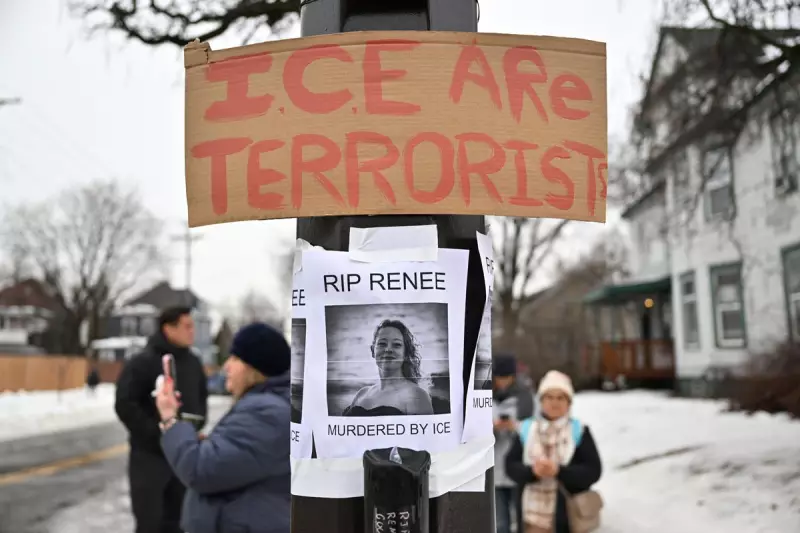
Fury and protest have engulfed the streets of Minneapolis following the fatal shooting of a woman by a US Immigration and Customs Enforcement (ICE) officer. The death of Renee Good, a 37-year-old mother of three, has ignited widespread condemnation and comes amid a major federal immigration enforcement operation in the city.
Protests and a Second Shooting Escalate Tensions
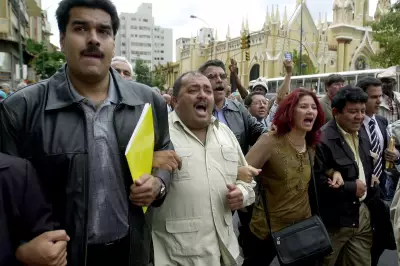
Hundreds of demonstrators marched through freezing rain on Thursday night, chanting "ICE out now" and carrying signs that read "killer ice off our streets." Their anger was directed at the shooting of Good, which occurred on the second day of what the Department of Homeland Security calls its largest-ever immigration crackdown, targeting the Twin Cities of Minneapolis and St. Paul.
The unrest was compounded by a separate incident in Portland, Oregon, where federal officers shot and wounded two people outside a hospital. The FBI and Oregon Department of Justice are investigating. Portland's Mayor Keith Wilson and the city council have demanded ICE halt all operations in the city pending a full inquiry.
Homeland Security defended both shootings. In Portland, officials claimed a Venezuelan man with alleged gang ties tried to use his vehicle as a weapon against officers. Regarding Minneapolis, Secretary Kristi Noem and President Donald Trump have characterised Good's death as an act of self-defence, suggesting she used her SUV to attack the officer.
Contested Narratives and a Fight for Investigation
This official narrative has been fiercely rejected by local leaders and protesters. Minneapolis Mayor Jacob Frey stated that video evidence renders the self-defence claim "garbage." Vice President JD Vance controversially stated that Good was a "victim of left-wing ideology" and that her death was "a tragedy of her own making."
A critical conflict has emerged over who will investigate the shooting. The Minnesota Bureau of Criminal Apprehension announced that the FBI and US Justice Department would not cooperate with them, effectively barring the state from the probe. Secretary Noem asserts the state lacks jurisdiction.
Minnesota Governor Tim Walz has demanded the state be included, warning it would be "very difficult for Minnesotans" to accept a fair investigation without local oversight. He accused Noem of acting as "judge, jury and basically executioner" in her public comments.
Scrutiny on the Officer and a Deadly Encounter
The ICE officer who shot Good has been identified in records obtained by The Associated Press as Jonathan Ross, a 43-year-old Iraq War veteran with nearly two decades in federal immigration enforcement. Noem has not publicly named him, but a DHS spokesperson linked her description of a prior injury to an incident involving Ross last June, where he was dragged by a vehicle.
Multiple bystander videos captured the fatal encounter. They show an officer approaching Good's stationary Honda Pilot, which was stopped across a road. As the vehicle begins to pull forward, a different officer standing in front of it draws his weapon and fires at least two shots at close range. The SUV then speeds into parked cars before stopping. It is not clear from the footage if the vehicle made contact with the officer.
The shooting has resonated nationally, sparking protests in other major US cities. In Minneapolis, a city still marked by the 2020 police killing of George Floyd, the school district cancelled classes for the week as a precaution. Protesters built makeshift barricades at the scene, while community members distributed supplies.
With over 2,000 officers involved in the crackdown and more than 1,500 arrests made, the operation and its deadly consequences have plunged federal immigration enforcement into a fresh wave of controversy and public scrutiny.