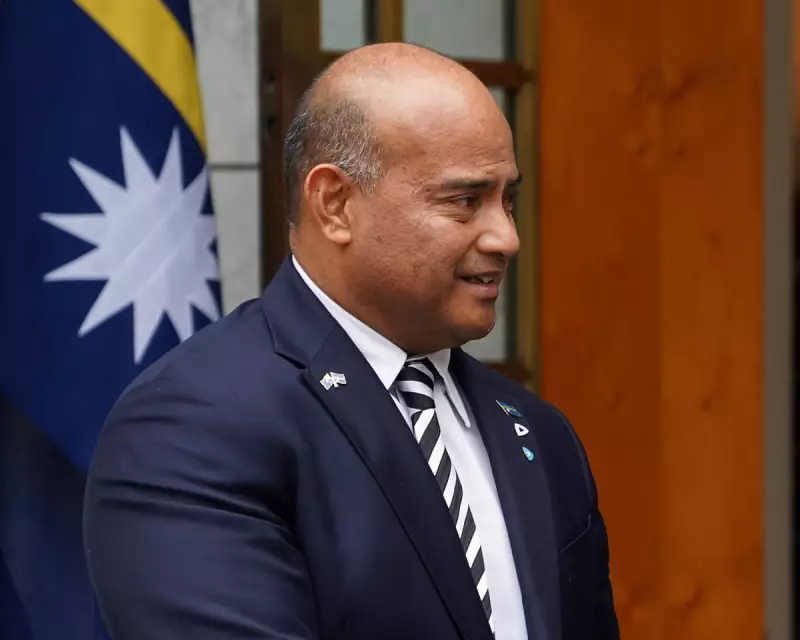
In a move raising serious questions about governmental transparency, Australia has secured a controversial $400 million offshore processing agreement with the Pacific island nation of Nauru. The deal, announced in February, involves sending individuals from the so-called NZYQ cohort—non-citizens who have completed prison sentences in Australia—to the island.
A Deal Shrouded in Secrecy
The arrangement was publicly explained by Nauru's President, David Adeang, in a video interview posted to the Nauru government's official Facebook page. Speaking in the Nauruan language, Adeang addressed his nation, clarifying that those being sent had "served their time" and were no longer subject to punishment.
He stated that Australia was attempting to return these individuals to their home countries, but they were not accepted back. Nauru agreed to take them, granting them 30-year visas and the right to settle and work on the island, living as "normal free people." Adeang drew parallels with refugees previously resettled in Nauru, noting some had troubled histories but now live peacefully.
The Suppressed Translation
While this information was vital for both Nauruan and Australian citizens, whose government is funding the arrangement, obtaining an official translation proved exceptionally difficult. The Nauruan government did not provide one, and due to the nation's small, close-knit society with no independent media, few were willing to translate for fear of repercussions.
An unofficial translation was eventually obtained by The Guardian. However, the Australian government, which holds its own translation notes from its High Commission in Nauru, has taken extraordinary steps to keep its version secret.
Defying a Senate order, Foreign Minister Penny Wong refused to release the documents, arguing disclosure would "prejudice Australia's international relations" with Nauru and the broader Pacific region. The government has even secured a non-publication order on its translation in the federal and high courts.
A Pattern of Secrecy in Offshore Policy
This level of secrecy is alarming but not new for Australia's offshore processing regime. Successive governments have been hostile to scrutiny, from the Howard government's restrictions on imagery to Scott Morrison's infamous "on-water matters" mantra.
The current Albanese government has continued this trend, also refusing to release the Memorandum of Understanding with Nauru detailing the conditions for the NZYQ cohort's resettlement, as well as a confidential bilateral agreement with Papua New Guinea.
This consistent pattern of opacity raises a fundamental question: if Australia's offshore processing policy is as sound and uncontroversial as claimed, why is the government so determined to prevent public scrutiny and keep the Australian people in the dark about actions taken in their name and with their money?