



Social Media Users Promoting Illegal UK Entry Face Five-Year Prison Terms
Social Media Users Face Five Years for Illegal UK Entry Posts

Social media users who promote illegal routes into the United Kingdom now face severe penalties, including potential imprisonment of up to five years, as the government intensifies its campaign against people smuggling networks operating online.

New Legal Powers Activated

Ministers have activated key provisions of the Border Security, Asylum and Immigration Act this week, granting authorities enhanced powers to target individuals who advertise methods for circumventing UK immigration controls through digital platforms. This represents a significant escalation in the government's strategy to disrupt small boat crossings and other unlawful entry methods.

Targeting Online Facilitators

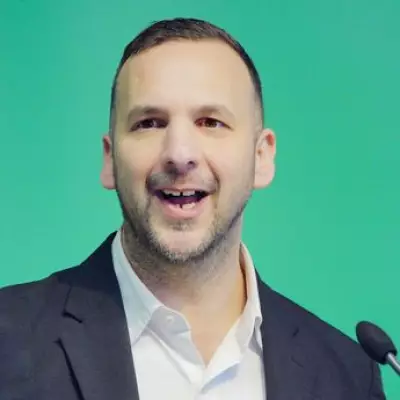
The National Crime Agency's Online Communications Centre will conduct extensive monitoring operations, scrutinising thousands of social media accounts as part of this renewed offensive. Border Security Minister Alex Norris delivered a stark warning to those involved in these activities, stating emphatically: "We are coming after you."

Mr Norris elaborated on the government's position, declaring: "Social media ads promoting the corrupt promise of a life and work in the UK are truly sickening. To the people smugglers peddling this content, whether you are selling your vile trade online through 'golden package deals', supplying boat equipment or researching routes, we are coming after you. I will not stop until we've restored order and control to our borders."

Expanded Enforcement Capabilities

While immigration authorities previously possessed powers to target social media content, they could only act when demonstrating direct causation between online material and actual migration offences. The newly implemented legislation removes this requirement, enabling proactive intervention against advertisements posted before migrants even reach British territory.

This legislative change specifically targets so-called "service agents" – intermediaries who connect prospective migrants with facilitators organising small boat crossings and alternative illegal routes. The National Crime Agency's previous efforts resulted in the removal of over 10,000 social media accounts, pages, and posts associated with people smuggling operations during the last year alone, setting a government record for such enforcement actions.

Examples of Targeted Content

Authorities have identified numerous social media posts falling within the scope of the new offence. One advertisement viewed by the Press Association promised "by truck – safe reach London UK" within two hours from France. Another TikTok post, written in Pashto, offered a one-hour "jet boat" journey from France to London at a cost of 4,000 dollars according to official translations.

A third example, a Facebook comment also in Pashto, provided contact information with the message: "if anyone wants to go to Turkey, Iran, Iraq, France, Germany, Italy, London, Austria, Switzerland." These examples illustrate the brazen nature of the online people smuggling trade that the government aims to dismantle.

Broader Immigration Context

These measures emerge against a complex backdrop of migration challenges. Recent statistics reveal that 933 individuals have arrived in the UK via small boat Channel crossings this year, though no such journeys have occurred since January 20. Since Labour's election in July 2024, approximately 65,000 people have made the dangerous crossing despite the government's pledge to "smash the gangs" responsible for these operations.

Home Secretary Shabana Mahmood has implemented multiple reforms to address these persistent issues. In November, she announced comprehensive plans to overhaul Britain's asylum system, arguing that existing processes had become unsustainable due to the "pace and scale of change destabilising communities."

Legislative Reforms and International Cooperation

The government's proposed changes include modifying how Article 8 of the European Convention on Human Rights – protecting the right to family life – applies in migration cases. Under the new framework, only individuals with immediate relatives such as children or parents in the UK would qualify to remain based on family connections.

Additionally, ministers plan to restrict multiple appeal attempts against asylum refusal decisions. In a significant international development, Prime Minister Keir Starmer recently negotiated an agreement with Chinese authorities during his diplomatic visit, aiming to prevent boat motors manufactured in China from reaching people smuggling networks. This cooperation addresses a critical vulnerability, given that 60 percent of Channel crossing boats last year utilised Chinese-made motors.

Political Dimensions and Criticism

The government's approach has attracted both support and scrutiny. Some critics have questioned the effectiveness of certain initiatives, including a Home Office TikTok account launched earlier this year that features deportation and arrest videos. Detractors have characterised this as a "laughable gimmick" that mimics tactics employed by Reform UK, whose approval ratings have surged recently.

Furthermore, the government's flagship 'one in, one out' scheme has shown mixed results, with 350 asylum seekers brought to Britain from France since its inception in September compared to 281 individuals removed through the programme. This disparity has raised questions about the policy's efficacy in reducing dangerous Channel crossings.

As enforcement operations expand and legislative changes take effect, the government maintains that these combined measures represent a comprehensive strategy to regain control of Britain's borders and dismantle the criminal networks profiting from illegal migration.