Spanish Amnesty for 500,000 Undocumented Migrants Sparks Political Fury and Hope
Spain's bold decision to regularise approximately half a million undocumented migrants and asylum seekers has ignited a fierce political storm, drawing sharp condemnation from right-wing parties while offering a transformative lifeline to those living and working in the shadows. The move, announced by the ruling Spanish Socialist Workers' party (PSOE), aims to boost economic growth and social cohesion, directly challenging prevailing European political trends.
Political Backlash and Accusations of 'Illegality'
Conservative and far-right opposition has been swift and severe. Alberto Núñez Feijóo, leader of the conservative People's party (PP), denounced the measure as a reward for "illegality" that risks overwhelming public services. Santiago Abascal of the far-right Vox party went further, attacking it as a nefarious plot to facilitate an "invasion" designed to replace Spaniards. The controversy has spilled onto social media, with figures like Elon Musk commenting on the policy, prompting a retort from Prime Minister Pedro Sánchez that "Mars can wait. Humanity can't."
A 'Gift from God' for Workers in the Shadows
In stark contrast to the political rhetoric, the announcement has been met with profound relief and hope by undocumented workers. In a cramped NGO office in central Madrid, a young Bangladeshi man, who arrived 14 months ago, described the decree as "like a gift from God." Currently selling umbrellas on the streets for between €200 and €400 a month, he spoke of the constant struggle to pay rent and support his family back home, all while being unable to access public housing or healthcare. "I don't have my papers so I can't get a proper job," he said, highlighting the precarious existence the amnesty seeks to address.

Grassroots Support and the Reality of Migrant Labour
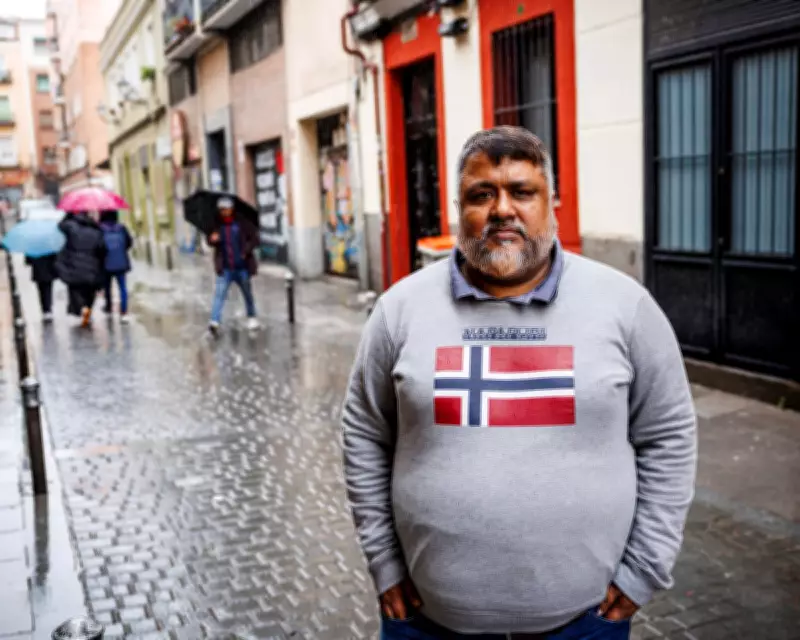
Mohammed Elahi Alam Alam, president of the Valiente Bangla Association which aids undocumented migrants in Madrid, welcomed the long-overdue recognition. His office, filled with sacks of potatoes for communal meals, toys, and Spanish language books, is a hub of support. He forcefully countered anti-immigrant narratives, asking, "Who's going to work in the fields? Immigrants. Who's going to work in the restaurants? Immigrants." His words underscore the essential, yet often invisible, role migrant labour plays in the Spanish economy.
From Exploitation to Empowerment: Stories of Regularisation
The amnesty promises a pathway out of exploitation for many. Rosa, a Colombian woman working informally as a cleaner for two years, described the sacrifice and despair of undocumented life, where employers deliberately hire people without papers to avoid proper pay and social security contributions. For her, regularisation means the chance to earn a living wage and access legal protections. This sentiment is echoed by Edith Espínola of the Regularisation Now! movement, who stated that having residency "lets you fight for your rights" and "feel a little bit more human."
Historical Precedent and Economic Rationale
Despite the current political furore, regularisation is not new to Spain. Similar programmes were enacted by both PP and socialist governments between 1986 and 2005. Research into the 2005 regularisation of nearly 600,000 people suggests significant economic benefits. Labour economist Joan Monràs noted that tax revenues increased by about €4,000 per regularised immigrant annually, with no evidence of a "magnet effect" encouraging further uncontrolled migration. He observed that career paths improved markedly, with domestic workers often moving to better-paid roles in larger companies within months.

A Broader Moral and Demographic Imperative
Prime Minister Pedro Sánchez has consistently framed migration as a driver of economic development, a stance sharpened by Spain's ageing population and low birthrate. In October 2024, he stated that migration has historically been "one of the great drivers of the development of nations," while xenophobia destroys them. The decree has found support beyond political circles, with Catholic groups describing it as "an act of social justice" recognising migrants' contributions. The policy offers official resident status, though not citizenship or voting rights in general elections, aiming to integrate a vital workforce formally into the fabric of Spanish society.