Suffolk Strangler's Historic Guilty Plea Reignites Cold Case Investigations
Police forces across Britain are facing mounting pressure to re-examine a series of unsolved disappearances and murders following a landmark courtroom confession from one of the country's most notorious serial killers. Steve Wright, the convicted murderer known as the Suffolk Strangler, has finally admitted to the abduction and killing of seventeen-year-old Victoria Hall in 1999, a crime that remained unresolved for twenty-six years.
A Dramatic Courtroom Admission After Decades of Denial
In a seismic moment at the Old Bailey this week, a balding sixty-seven-year-old Steve Wright staggered to his feet and uttered the word "Guilty" for the first time in relation to any of his horrific crimes. This shocking confession marks a pivotal breakthrough in a case that has haunted investigators and devastated families for over a quarter of a century. Wright, who is already serving a whole life sentence for the murders of five women in Ipswich during a six-week rampage in 2006, will now face an additional forty-year prison term for Victoria Hall's murder.
The admission has immediately triggered profound and urgent questions about Wright's complete criminal history. Authorities and experts are now grappling with whether Victoria Hall was his first victim, and why there appears to be a seven-year gap between her murder and the 2006 killing spree that ultimately led to his capture. Did Wright lie dormant during those intervening years, or are there other undiscovered victims from that period?

Families and Experts Demand Further Investigations
In the wake of the guilty plea, Wright's own family members and leading criminologists have issued impassioned calls for police to question the serial killer about other unsolved cases. His ex-wife, Diane Cole, seventy-one, stated unequivocally, "I think this is just the beginning. I suspect he has killed quite a few other women." She has specifically urged detectives to investigate Wright's potential connection to the mysterious 1986 disappearance of twenty-five-year-old estate agent Suzy Lamplugh, whom Wright knew when they worked together aboard the QE2 ocean liner.
Wright's brother, Keith, fifty-seven, echoed these demands, telling reporters, "It's time he did the right thing and told the police everything. There's still so much we don't know, so many unanswered questions. How many more victims are there?" Esteemed criminologist Professor David Wilson, who first linked Wright to Victoria Hall's murder in his 2008 book, believes investigators should also re-examine the unsolved disappearances of Amanda Duncan in Ipswich in 1993 and Kellie Pratt in Norwich in 2000.
The Tragic Case of Victoria Hall and a Missed Opportunity
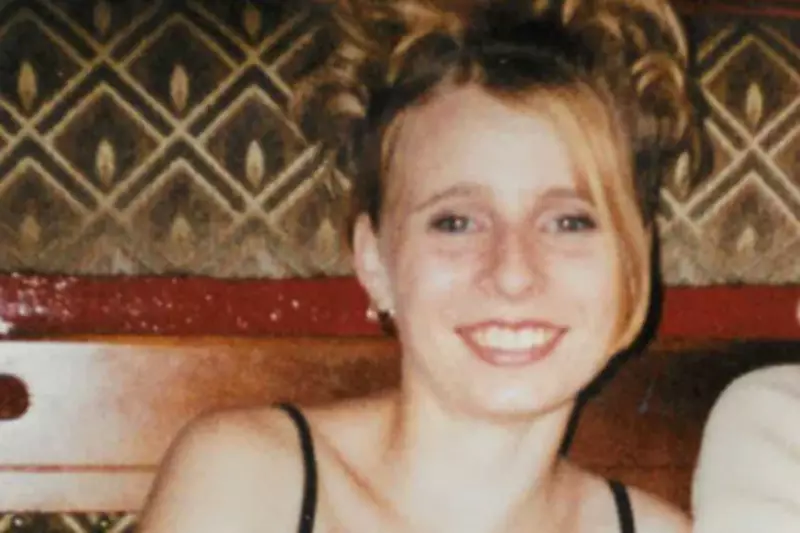
Victoria Hall was a bright seventeen-year-old studying for her A-levels in English, sociology, and business studies with aspirations to study sociology at university. On the evening of September 18, 1999, she left her home in Trimley St Mary for a night out with her best friend at the Bandbox nightclub in neighbouring Felixstowe. After leaving the venue around 1 a.m., the friends walked home together, parting ways at 2:20 a.m. just three hundred metres from Victoria's house. She never arrived home.
Her naked body was discovered five days later in a ditch in Creeting St Peter, approximately twenty-five miles from where she was last seen. A post-mortem examination confirmed she had been asphyxiated, a chilling method Wright would later employ in his subsequent murders. At the time of her disappearance, Wright was living less than a mile away. Alarmingly, he had attempted to kidnap another young woman, twenty-two-year-old Emily Doherty, just one day earlier as she walked home from Felixstowe. She managed to escape and provided a description of her attacker that included a partial vehicle number plate.

Despite this critical lead, Suffolk Police failed to identify Wright as a suspect for either incident. Instead, in a catastrophic miscarriage of justice, they charged innocent businessman Adrian Bradshaw with Victoria's murder. Prosecutors argued that soil samples found on his Porsche were similar to those from the crime scene, but a jury acquitted him in just ninety minutes after hearing the evidence was inconclusive. Bradshaw, who had also been at the Bandbox that night, described the wrongful accusation as "probably the most difficult moment of my life."
The Path to Justice and Lingering Injustices
Left free to kill again, Wright's horrifying spree in 2006 saw him snatch and murder five women from Ipswich's red-light district over a matter of weeks: Tania Nicol, nineteen; Gemma Adams, twenty-five; Anneli Alderton, twenty-four; Paula Clennell, twenty-four; and Annette Nicholls, twenty-nine. Their bodies were discovered in streams, ponds, and woodland, with two posed in a cruciform shape. DNA and fibre evidence ultimately linked Wright to these crimes, leading to his conviction and a whole life sentence in 2008.
Police only reopened the investigation into Victoria Hall's murder in 2019, on the twentieth anniversary of her death. Wright initially denied the charge but changed his plea after a ruling that jurors would be informed about his other murders. Tragically, Victoria's mother, Lorinda, who passed away in December, did not live to see her daughter's killer finally brought to justice.
This case now stands as a stark reminder of the enduring pain caused by unsolved crimes and the critical importance of relentless investigation. As Professor Wilson noted, the sophistication of Wright's 2006 crimes suggested prior experience. With his guilty plea, there is renewed hope that other cold cases may yet be solved, offering long-awaited closure to more grieving families.