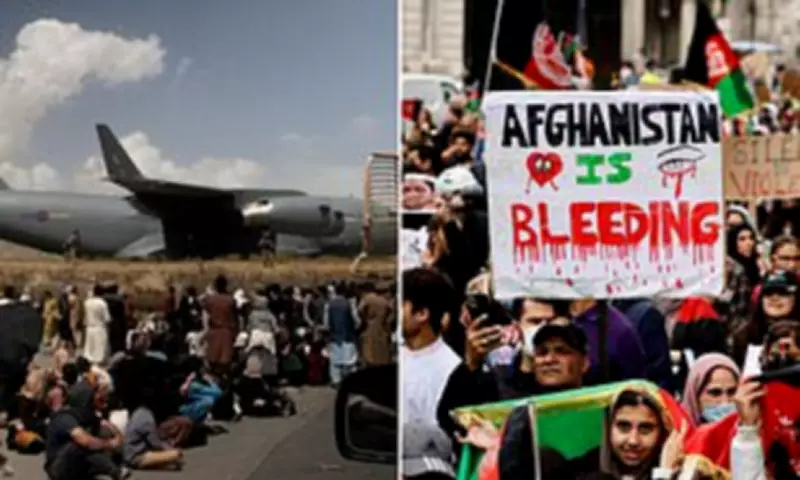
Thousands of Afghan Migrants Untracked in UK Resettlement Programmes
A significant number of Afghan migrants who fled to the United Kingdom to escape Taliban rule have had their whereabouts lost by officials, according to a recent report. The National Audit Office (NAO) has disclosed that the details of 6,929 individuals who arrived in the UK since 2021 are now unknown, representing 18 per cent of those who have entered the country by the end of December 2025.
Lost Contact and Accommodation Issues
The watchdog highlighted that these migrants either arranged their own accommodation immediately upon arrival or left migrant hotels without providing forwarding addresses, leading to the loss of contact. This situation has raised concerns about the effectiveness of tracking systems within the resettlement schemes.
However, the Ministry of Defence has responded by suggesting the report was worded 'clumsily', arguing that the government has no obligation to monitor migrants' locations once they have been released from initial accommodation. This stance has sparked debate over accountability and support for vulnerable arrivals.

Financial Implications and Programme Costs
The report, published on Wednesday, also detailed substantial financial aspects of the Afghan resettlement efforts. The government expects to bill taxpayers approximately £5.7 billion for these schemes, with only £3.1 billion spent since April 2021. This leaves £2.6 billion yet to be incurred, indicating ongoing financial commitments.
These schemes were established to assist Afghan nationals and their families who worked alongside the British Armed Forces during the 20-year war, including soldiers, police officers, and interpreters who feared reprisals from the Taliban. Between April 2021 and December 2025, 37,950 people arrived from Afghanistan under these programmes, with an estimated further 9,000 to be resettled by 2033, when relocations are expected to conclude.
Support and Integration Efforts
Individuals on the resettlement schemes receive support from local authorities to learn English, access benefits and public services, and adapt to life in the UK. This support lasts for three years after their arrival, aiming to facilitate smoother integration into British society.
Gareth Davies, head of the National Audit Office, commented, 'Government departments have worked together in challenging conditions to resettle thousands of Afghan citizens at risk of reprisals from the Taliban. Although progress has been made under the new Afghan Resettlement Programme, the Government has more to do to successfully resettle the affected people in the UK.'
Government Response and Programme Management
A government spokesperson emphasised the scale and complexity of Afghan resettlement, noting that around 38,000 Afghans have already been settled in the UK. The government remains committed to completing Afghan resettlement by the end of this parliament, with the Afghan Resettlement Programme (ARP) consolidating all schemes into a single pathway for better outcomes and value for money.
New key performance indicators have been introduced to improve case handling times and provide greater transparency for applicants, alongside an online ARP eligibility self-checker. These measures aim to enhance the efficiency and effectiveness of the programme.
Historical Context and Security Concerns
The issue of Afghan resettlement has been fraught with challenges, including security breaches. In August 2023, a British soldier accidentally sent an email containing access to a confidential database, putting 100,000 Afghans at risk of death. This led to Operation Rubific, one of the biggest peacetime evacuations in modern UK history, aimed at rescuing individuals whose names were on a database of 33,000 records targeted by the Taliban.
The projected cost of this evacuation was £7 billion, adding to the financial burden. In July last year, after 23 months of secrecy, it was revealed that several Afghans on the list had previously been rejected for violent or sexual assaults, raising further questions about vetting processes.

Instead of addressing these issues transparently, the Ministry of Defence was accused of mounting a cover-up to suppress reports of the data breach when discovered in August 2023. This has compounded scrutiny over the handling of Afghan resettlement efforts and the accountability of government departments involved.