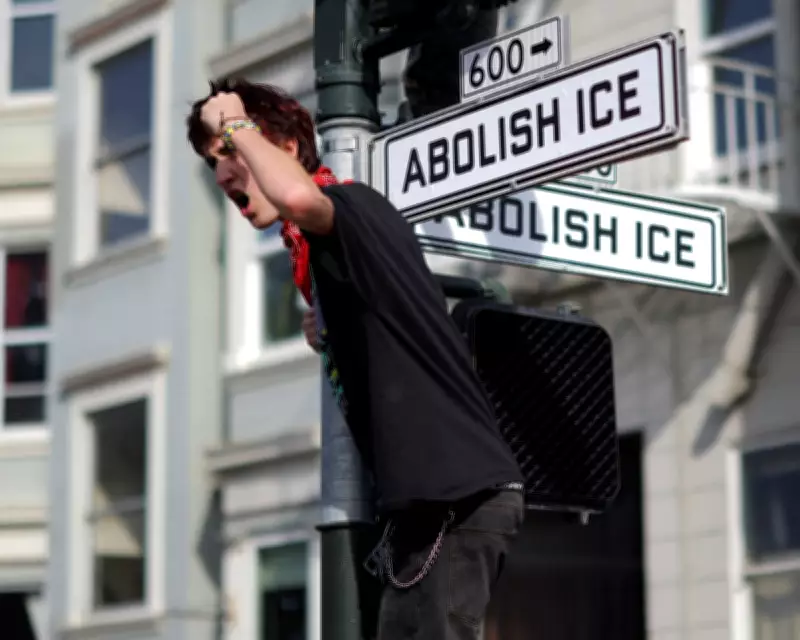
Over the weekend, organisers anticipated more than three hundred separate demonstrations would unfold across every single one of the fifty states, including Washington DC. The coordinated action, dubbed 'ICE Out of Everywhere', represented a significant nationwide mobilisation against federal immigration enforcement policies.
Presidential Directive on Protest Intervention
Amid mounting criticism of his administration's stringent immigration measures, President Donald Trump issued a clear directive to Homeland Security Secretary Kristi Noem. The instruction, communicated via the president's social media platform, stated that federal personnel should "under no circumstances" become involved with protests or riots occurring in cities governed by Democratic leadership, unless those local authorities explicitly request assistance.
In his post, Trump elaborated, "We will, however, guard, and very powerfully so, any and all Federal Buildings that are being attacked by these highly paid Lunatics, Agitators, and Insurrectionists." The order raised immediate questions about its practical implementation, particularly regarding the operations of US Customs and Immigration Enforcement agents and other Department of Homeland Security personnel on the ground. The president provided no further operational details concerning how this policy would affect day-to-day federal agency activities in these urban areas.
Local Pushback and Escalating Tensions
In a move signalling escalating jurisdictional friction, Chicago Mayor Brandon Johnson commanded the city's police force to actively investigate and document any alleged illegal activities conducted by federal immigration agents within Chicago. This directive from a major metropolitan mayor is likely to intensify the existing standoff between municipal and federal authorities over immigration enforcement powers and protocols.
The political landscape was further complicated by a partial government shutdown that commenced on Saturday. This funding lapse resulted from a congressional impasse concerning new restrictions on federal agents involved in the administration's mass deportation initiatives, a debate reignited following the tragic killings of two US citizens in Minneapolis.
Broader Political and International Context
Beyond domestic immigration disputes, President Trump also commented on international relations, suggesting that Iran was engaged in negotiations with the United States. He hinted at a potential deal to avert military strikes, telling Fox News, "[Iran is] talking to us, and we'll see if we can do something, otherwise we'll see what happens." He noted that regional allies were not being briefed on potential strike plans for security reasons.
Meanwhile, Democratic lawmakers and watchdog groups levelled accusations against the Justice Department, claiming it was failing to release millions of documents related to the Jeffrey Epstein investigation as legally required. In a separate development, reports emerged that President Trump envisions constructing a monumental 250-foot arch in Washington DC, a structure that would significantly overshadow the Lincoln Memorial.
Additional notable events from the period included a federal judge ordering the release of a detained five-year-old boy and his father from a Texas facility, and Germany's football federation definitively ruling out a boycott of the upcoming World Cup despite public calls to send a political message to the US administration. The collective developments painted a picture of a nation grappling with deep internal divisions over immigration policy, federal authority, and presidential direction.