
Local Communities Resist Trump's $45 Billion Immigration Detention Expansion
State and municipal authorities across the United States are mounting significant opposition to federal initiatives aimed at expanding immigrant detention capacity within their jurisdictions. The Trump administration's ambitious $45 billion programme, funded through recent tax legislation, seeks to establish numerous new facilities nationwide, but faces growing grassroots and governmental pushback.
Community Concerns and Public Opposition
With immigration enforcement tensions running high, numerous local officials are challenging attempts to house thousands of detained immigrants in converted warehouses, privately operated facilities and county jails. The fatal shootings of Renee Good and Alex Pretti during immigration operations in Minnesota have intensified scrutiny of U.S. Immigration and Customs Enforcement (ICE) activities, bringing additional attention to proposed detention site expansions.
In Hanover County, Virginia, just north of Richmond, hundreds of concerned residents attended a tense public hearing regarding a proposed ICE facility. Resident Kimberly Matthews warned county officials: "You want what's happening in Minnesota to go down in our own backyard? Build that detention center here, and that's exactly what will happen."
Municipal Resistance Strategies
Elected representatives in multiple regions are implementing various strategies to obstruct detention facility development:
- Kansas City, Missouri officials scrambled to pass an ordinance establishing a five-year moratorium on non-city-run detention facilities
- Mayors in Oklahoma City and Salt Lake City announced property owners would not sell or lease facilities for immigration detention purposes
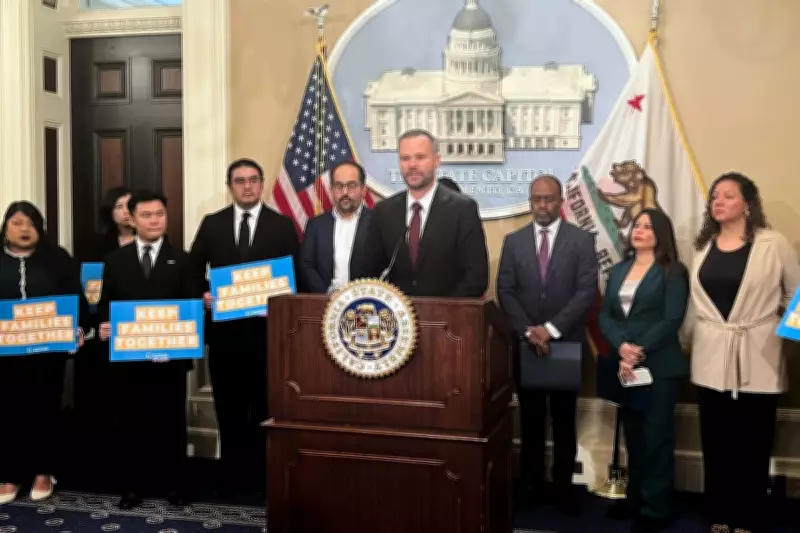
- Several Democratic-led state legislatures are advancing bills designed to block or discourage ICE facilities through regulatory measures
A particularly innovative California proposal seeks to impose a 50% tax on proceeds from companies operating ICE facilities, effectively encouraging their departure from the state.
Rapid Expansion of Detention Network
Federal data reveals dramatic growth in immigration detention under the current administration. By late December, ICE was detaining over 70,000 immigrants, a substantial increase from approximately 40,000 when President Trump took office. The number of detention facilities utilised by ICE has nearly doubled within just over a year, reaching 212 sites across 47 states and territories.
Most expansion has occurred through existing contracts with the U.S. Marshals Service or arrangements to utilise vacant beds in county jails. However, the administration is now pursuing larger-scale dedicated facilities, with recent multi-million dollar warehouse purchases in:
- Washington County, Maryland ($102 million)
- Berks County, Pennsylvania ($84 million)
- Surprise, Arizona (over $70 million)
Legal Limitations on Local Opposition
Despite community resistance, legal experts note significant constraints on local governments' ability to block federal detention facilities. Danielle Jefferis, an associate law professor at the University of Nebraska specialising in immigration and civil litigation, explains that while municipalities can decline to lease space to ICE, they generally cannot prohibit private businesses and landowners from using property for federal immigrant detention purposes.
Recent court decisions have reinforced federal authority in this domain. In 2023, a federal court invalidated a California law prohibiting private immigrant detention facilities for infringing upon federal powers. Similarly, a federal appeals court panel struck down a New Jersey law forbidding agreements to operate such facilities in July.
Hanover County Board of Supervisors Chair Sean Davis acknowledged the limitations, stating: "The federal government is generally exempt from our zoning regulations." This legal reality has prompted creative regulatory approaches, with some municipalities examining building permits, water and sewer capacity requirements as potential obstacles to facility conversion.
State-Level Legislative Challenges
The Democratic-led New Mexico House recently passed legislation banning state and local government contracts for ICE detention facilities, sending the measure to the Senate for consideration. Similar bills are pending in Hawaii, Massachusetts, New York and Rhode Island, indicating coordinated opposition across multiple states.
The Otero County Processing Center, located 25 miles from downtown El Paso, Texas, represents one of three privately operated ICE facilities potentially affected by New Mexico's proposed legislation. County officials have indicated readiness to challenge the legislation legally if it threatens revenue bonds used to finance the facility's construction.
Democratic state Representative Sarah Silva, supporting the ban, articulated constituent concerns: "Our state can't be complicit in the violations that ICE has been doing in places like Minneapolis. To me that was beyond the tipping point." Meanwhile, Republican opponents have warned of potential job losses and economic consequences if detention facilities are forced to close.
Uncertain Legal Landscape
As ICE continues scouting potential sites nationwide, often touring large warehouses without releasing detailed plans, the ultimate effectiveness of local regulatory resistance remains uncertain. Professor Jefferis observes: "We're currently in a moment where it is being tested. So there is no clear answer as to how the courts are going to come down."
ICE maintains that new facilities will meet established detention standards, stating in an official communication: "It should not come as news that ICE will be making arrests in states across the U.S. and is actively working to expand detention space." However, the growing coalition of local governments, state legislatures and community organisations suggests this expansion will continue facing determined opposition across multiple fronts.