
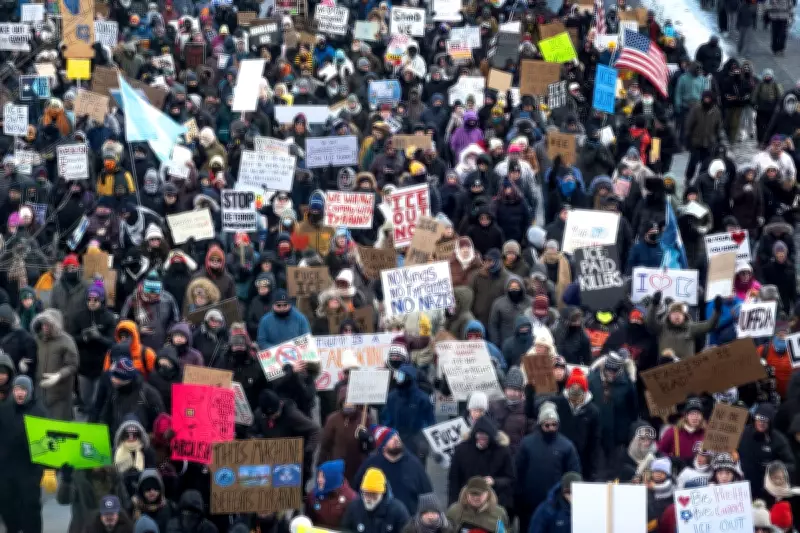
Schools and businesses across the United States are shutting their doors as the nation prepares for a widespread 'blackout' on Friday, with protests and a general strike planned in 46 states. Demonstrators are mobilising against the Trump administration's immigration crackdown and demanding the withdrawal of federal agents from Minnesota, following public outrage over recent fatal shootings.
Mass Closures and Cancellations Announced
Multiple businesses have announced they will be closed during the planned 'blackout,' while some schools in Arizona and Colorado have proactively cancelled classes in anticipation of mass absences. The coordinated action reflects growing discontent with immigration enforcement tactics that have sparked nationwide concern.
Catalyst: Fatal Shootings in Minnesota
The demonstrations follow public fury over the fatal shootings of two US citizens, Alex Pretti and Renee Good, by immigration officers in Minnesota. These incidents have galvanised protest organisers, who are calling for a sustained movement including walkouts, boycotts, and continued civil disobedience.
Organisers have issued a rallying cry, stating, "The people of the Twin Cities have shown the way for the whole country — to stop ICE's reign of terror, we need to SHUT IT DOWN." This message underscores the determination to maintain pressure through economic and social disruption.
Polling Reveals Shifting Public Opinion
A recent poll indicates that American approval of President Trump's immigration policy has fallen to its lowest point during his second term, with a majority now believing the crackdown has gone too far. This declining support suggests the protests may resonate with broader public sentiment beyond the activist core.
Strategic Focus: Minneapolis Resistance
In Minneapolis, local residents have adopted a strategy of tracking ICE agents' movements, with one participant explaining, "We're here to frustrate and demoralize" the enforcement officers. This grassroots surveillance represents a tactical escalation in community resistance to immigration operations.
The planned nationwide action represents one of the most significant coordinated protests against immigration policy in recent years, testing both the administration's resolve and the protest movement's organisational capacity. With businesses shuttered, schools empty, and streets filled with demonstrators, Friday's events may signal a pivotal moment in the ongoing national debate over immigration enforcement and civil liberties.