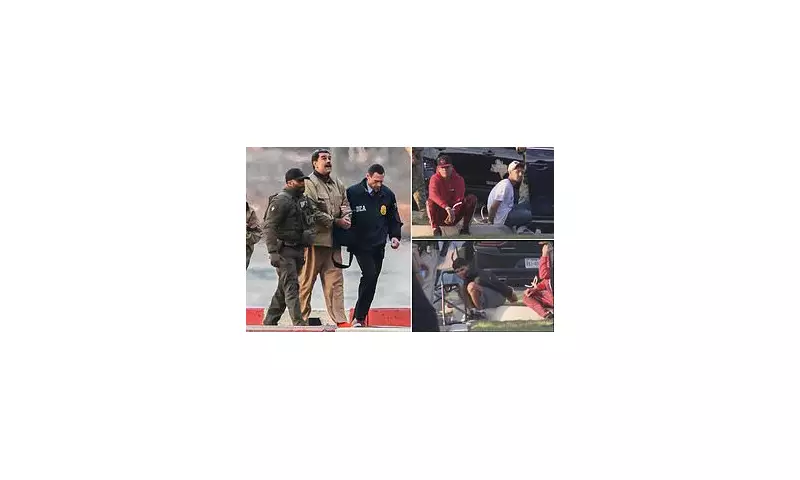
Security officials in the United States are on high alert amid fears that Venezuelan criminal gangs, which were driven underground during the Trump administration's immigration crackdown, could now reactivate to terrorise American citizens. This concern follows the recent capture of Venezuelan dictator Nicolas Maduro, whose regime is accused of directing the gangs' operations on US soil.
From Prison Gang to Transnational Threat
The primary group in focus is Tren de Aragua (TdA), a notorious Venezuelan prison gang that evolved into a sophisticated international criminal syndicate. According to exclusive intelligence obtained by the Daily Mail, federal agents believe sleeper cells composed of gang members could be awakened to carry out orders from remnants of the Maduro regime as they fight to retain influence.
John Fabbricatore, a former ICE officer and Trump administration official, told the Daily Mail: "That's something that local law enforcement and federal law enforcement is going to have to be aware of - that these guys could still be subversives in the area and controlled by that party." He confirmed a network exists within the US aiming to destabilise the country, but noted law enforcement is monitoring the situation closely.
Infiltration and Criminal Enterprise
Tren de Aragua operatives first entered the United States in significant numbers from summer 2022, crossing the southern border illegally amidst a surge of Venezuelan migrants. Exploiting the lack of diplomatic relations and criminal record sharing between the US and Venezuela, members posing as asylum-seekers infiltrated major cities including Miami, New York, Denver, and Dallas.
The gang quickly established a brutal business model, seizing control of apartment complexes to run child prostitution rings and drug dens. A viral video in August 2024 showed TdA members storming a unit in Aurora, Colorado, later revealing their control over the entire Edge of Lowry complex. This model was replicated in other cities, including San Antonio, Texas.
Prostitution served as a primary revenue stream and a gateway for drug distribution. "Prostitution is a big money-maker, and the thing with prostitution is that it brings guys in that they can then sell dope to," Fabbricatore explained in a September 2024 interview.
Crackdown and the Current Threat
The election of President Donald Trump in January 2025 marked a turning point. A concerted crackdown by federal and local agencies led to mass arrests, including over 100 TdA members in Colorado alone in 2025. Increased border security also stemmed the flow of new gang members crossing into the US.
Consequently, the gang's visible presence diminished. "They've gone kind of underground a little bit, right now, not being so open," Fabbricatore noted, though he stressed the underlying criminal activities like prostitution and drug-running persist.
However, Maduro's capture has altered the risk calculus. Experts warn that loyalists may now order dormant cells to conduct attacks, risking police detection to make a statement. Victor Avila, another Trump administration official, described the gang members as "the soldiers for these regimes" capable of carrying out terrorist attacks or extreme violence.
The gang's future structure is also in question. Some analysts, like Fabbricatore, suggest remaining TdA elements in the US may have already been absorbed by powerful Mexican drug cartels or other criminal syndicates, morphing into a new but equally dangerous form.
The US Department of Justice has long accused the Maduro regime itself of operating as a drug cartel, dubbed "Cartel de los Soles," alleging it trafficked tonnes of cocaine into the United States. Tren de Aragua is seen as a foot soldier in this broader geopolitical conflict, which Miami immigration attorney Rolando Vazquez labelled "an act of war" against the American people.