US Government's Account of Portland Border Patrol Shooting Unravels in Court
In the aftermath of a US border patrol agent shooting two individuals in Portland, Oregon, the Department of Homeland Security's official narrative has rapidly disintegrated under legal scrutiny. The incident, which occurred on 8 January, initially saw DHS officials describe the targets as "vicious" gang members who had "attempted to run over" officers with their vehicle.
Contradictions Emerge in Federal Testimony
Court documents obtained by the Guardian reveal that a Department of Justice prosecutor directly contradicted the DHS's claims in subsequent legal proceedings. The prosecutor explicitly told a judge, "We're not suggesting ... [the driver] is a gang member," undermining the central premise of the government's initial statements.
The shooting involved border patrol agents conducting what they described as a "targeted" stop of a vehicle occupied by two Venezuelan nationals. According to the DHS press release issued the following day, the passenger, Yorlenys Zambrano-Contreras, had been "involved" in a Portland shooting the previous year, while the driver, Luis Niño-Moncada, had "weaponized their vehicle against" officers.

Gang Allegations Fail to Withstand Scrutiny
The government's assertion that both individuals were connected to the Venezuelan gang Tren de Aragua has proven particularly problematic. An FBI affidavit suggests that in the previous shooting cited by DHS, Zambrano-Contreras was not a suspect but rather a reported victim of sexual assault and robbery.
Neither individual has prior criminal convictions, according to their legal representatives. Immigration and criminal justice experts who have reviewed the case records have characterised the federal government's communications as a "smear campaign" against the two Venezuelan immigrants.
Critical Evidence Missing
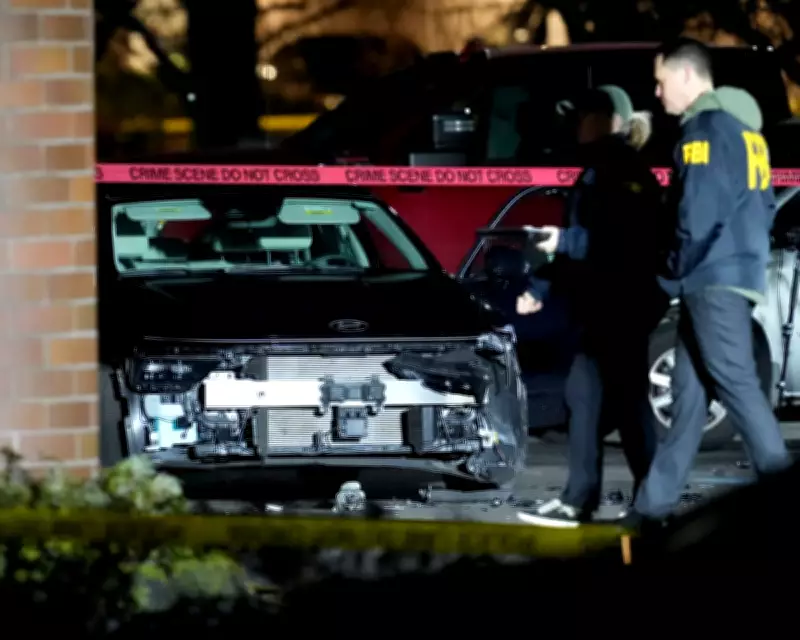
Significantly, none of the six border patrol agents involved in the Portland incident recorded body-camera footage of the encounter. The shooting occurred in a hospital parking lot, but initial investigations found that surveillance cameras failed to capture the incident clearly.
Prosecutors have since disclosed that investigators have obtained some surveillance footage partially showing the event, though the grainy, distant recording without sound does not clearly capture the moment of the shooting.
Legal Challenges Mount
Niño-Moncada remains detained facing charges of aggravated assault of an officer based on claims he attempted to intentionally hit agents with his car. Zambrano-Contreras has pleaded guilty to improper entry to the US, a misdemeanor, but faces no criminal charges related to the shooting.
Legal experts have expressed concern about the government's approach, with former US prosecutor Sergio Perez noting the "rush to smear individuals" rather than conducting "slow and thorough investigations."
Pattern of Questionable Claims
The Oregon shooting controversy emerges as the Trump administration faces broader scrutiny over its statements regarding immigration enforcement incidents. Portland city councilor Sameer Kanal described a "playbook of demonizing people" and "claiming vehicles were used as 'weapons'" that represents a pattern of victim-blaming.
Scholars specialising in Latin American gangs have repeatedly disputed the administration's claims about Tren de Aragua posing a national security threat, noting the group's decentralised nature and lack of formal hierarchy in the United States.
Prosecution Faces Significant Hurdles
Legal analysts suggest the US attorney's office will face substantial challenges if the case proceeds to trial. The government must prove Niño-Moncada had intent to assault agents with his vehicle, a difficult task without body-camera evidence and considering DHS's admission that no officers were injured.
Former federal prosecutor Carley Palmer noted that the gang connection allegations could be considered "unduly prejudicial" and excluded from trial proceedings, while the case essentially becomes a "he said, he said" matter where "credibility is everything."

The unraveling of the government's narrative raises serious questions about transparency and accountability in immigration enforcement operations, particularly as similar patterns have emerged in other high-profile cases across the country.