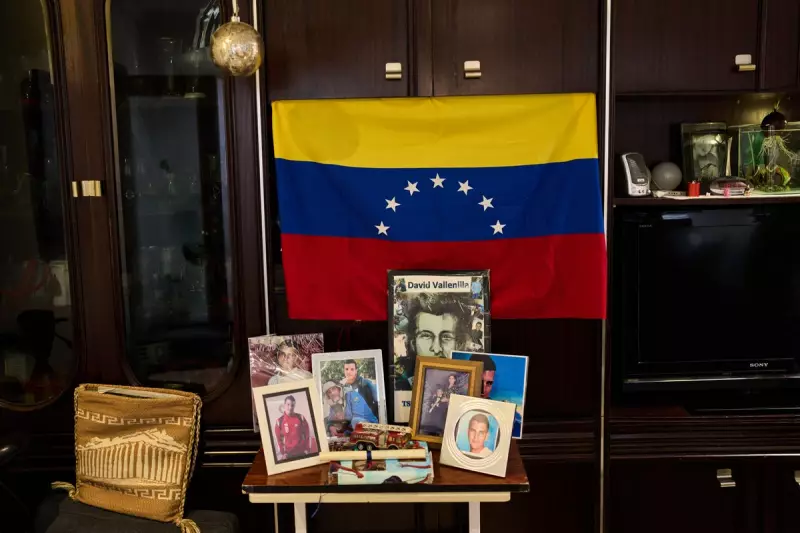
The dramatic capture of Venezuelan leader Nicolás Maduro by U.S. forces has sent shockwaves through the large Venezuelan community living in Spain, sparking a turbulent mix of hope, joy, and deep-seated fear. For the approximately 600,000 Venezuelans who call Spain home—the largest population anywhere outside the Americas—the news has been both a moment of historic reckoning and a source of profound anxiety.
A Community Torn Between Past Trauma and Future Hope
Many of these migrants fled a nation crippled by political persecution, violence, and economic collapse. While some have established deep roots in cities like Madrid, working in sectors from healthcare to hospitality, others are recent arrivals. The community's reaction to the events unfolding at breakneck speed in their homeland has been intensely personal, coloured by individual loss and sacrifice.
On Friday 16 January 2026, the news broke, leading many to gather at impromptu rallies or cluster around screens, watching history unfold. The emotional spectrum was vast, ranging from awe to trepidation, as people grappled with the potential for a new chapter or the threat of further instability.

A Father's Long Quest for Justice
For David Vallenilla, a 65-year-old from Caracas now living alone in Madrid, the day began with a startling text message from a cousin. "They invaded Venezuela," it read. Initially in disbelief, Vallenilla's thoughts immediately turned to his son, David José.
In June 2017, his 22-year-old son, a nursing student, was shot point-blank by a Venezuelan soldier during a protest near a military air base in Caracas and later died. The video of the incident became an emblematic symbol of the Maduro government's repression. After demanding answers, Vallenilla himself faced threats and was forced to relocate to Spain with NGO assistance in 2019.
On the day of the capture, his phone flooded with messages about David. "Many told me, 'Now David will be resting in peace,'" he shared. "But don't think it was easy: I spent the whole day crying." While fearful of more violence, Vallenilla holds a cautious hope that the Trump administration might effect the change his son sought. "Nothing will bring back my son. But the fact that some justice has begun to be served helps me see a light at the end of the tunnel."
A Mother's Dream for Her Daughters' Homeland
Journalist Carleth Morales, 54, first arrived in Madrid a quarter-century ago, intending only a temporary stay for study when Hugo Chávez was reelected. She never imagined the prolonged crisis that would unfold. In 2015, she founded an organisation for Venezuelan journalists in Spain, which now boasts hundreds of members.
Waking to a barrage of missed calls on the fateful morning, Morales felt a surge of complex emotions. "Of course, we hope to recover a democratic country, a free country," she said. However, decades of suffering make optimism difficult. Having built a life in Spain over more than twenty years, a full return seems unlikely for her, but she dreams for her daughters. "I work for Venezuela so that my children will see it as a life opportunity," she stated, adopting a colleague's phrase. "So perhaps in a few years it won’t be me who enjoys a democratic Venezuela, but my daughters."
The Agonising Wait for Loved Ones in Prison
For Verónica Noya, the past two weeks have been an agony of waiting by the phone. Her husband, Venezuelan army Captain Antonio Sequea, was imprisoned in 2020 for participating in a military incursion to oust Maduro and remains in solitary confinement in Caracas's El Rodeo prison. Her brother was also arrested in the same plot. For 20 months, communication has been impossible.
"That’s when my nightmare began," Noya said. While Venezuelan authorities claim hundreds of political prisoners have been released since Maduro's capture, rights groups report far fewer. Noya waits for news of her four imprisoned relatives, including her husband's mother. Struggling to explain their father's absence to her children, she fled to Spain, where she held a passport through family roots.

Despite the pain, her identity remains steadfast. "I’m Venezuelan above all else," Noya affirmed. "And I dream of seeing a newly democratic country." The path forward for her, and for the entire diaspora in Spain, remains fraught with uncertainty, but flickers with a hard-won hope.