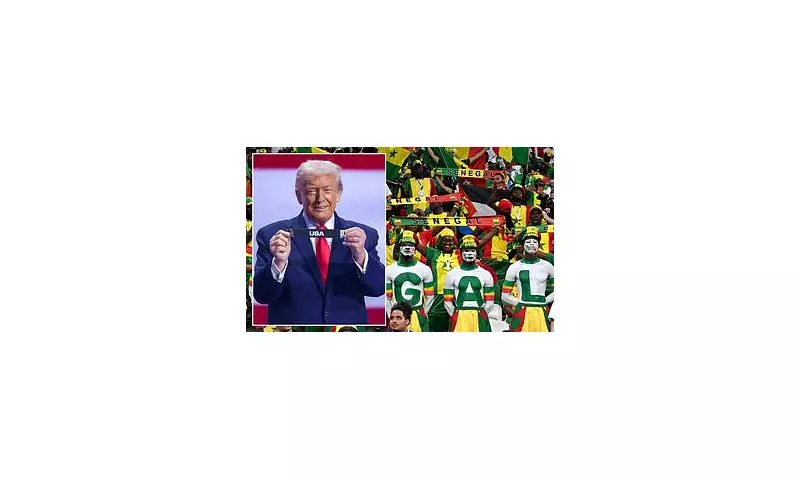
Football fans from Senegal and Ivory Coast face the prospect of being unable to attend their nations' matches on American soil during the 2026 FIFA World Cup, following a new proclamation signed by President Donald Trump.
New Travel Restrictions Target African Nations
On Tuesday, the Trump administration issued a partial travel ban affecting nationals from Senegal and Ivory Coast, suspending their entry into the United States. This move extends existing restrictions already imposed on Iran and Haiti, two other nations qualified for the expanded 48-team tournament next summer.
The proclamation, which adds fifteen further countries to a list of twelve announced in June, is officially titled: 'RESTRICTING THE ENTRY OF FOREIGN NATIONALS TO PROTECT THE UNITED STATES FROM FOREIGN TERRORISTS AND OTHER NATIONAL SECURITY AND PUBLIC SAFETY THREATS'. It prohibits both immigrant and non-immigrant visas from the listed countries, covering crucial categories for tournament attendance such as tourism and business visits.
Exemptions for Players, But Not for Supporters
While the ban is expected to impact travelling supporters, explicit exemptions exist for athletes, support staff, and their family members. This ensures stars like Everton's Iliman Ndiaye of Senegal and Manchester United's Amad Diallo of Ivory Coast will be permitted to compete. However, their fans may be left watching from afar.
The 2026 World Cup is scheduled to be hosted across the United States, Canada, and Mexico between June and July. Senegal, drawn in Group I with France, Norway, and a playoff winner, are set to play two of their group stage fixtures at the MetLife Stadium in East Rutherford, New Jersey—the venue for the final. Their third match is in Toronto.
Similarly, Ivory Coast in Group E will play two matches in the US, facing Ecuador and Curaçao at Philadelphia's Lincoln Financial Field. Their sole match outside the US will be against Germany in Toronto.
Broader Context and Justifications
The White House stated the proclamation includes exceptions for lawful permanent residents, existing visa holders, and specific categories like athletes and diplomats. It reiterated that the measures are designed to 'protect the national security and national interest of the United States and its people'.
The order also provided reasoning for the inclusion of Haiti, citing government statistics on visa overstays and claiming 'hundreds of thousands of illegal Haitian aliens flooded into the United States during the Biden Administration'. It further argued that Haiti's political crisis and lack of a central authority pose risks to US national security.
This development casts a shadow over the fan experience for the first 48-team World Cup, highlighting how geopolitical immigration policies can directly intersect with and potentially disrupt major international sporting events.