

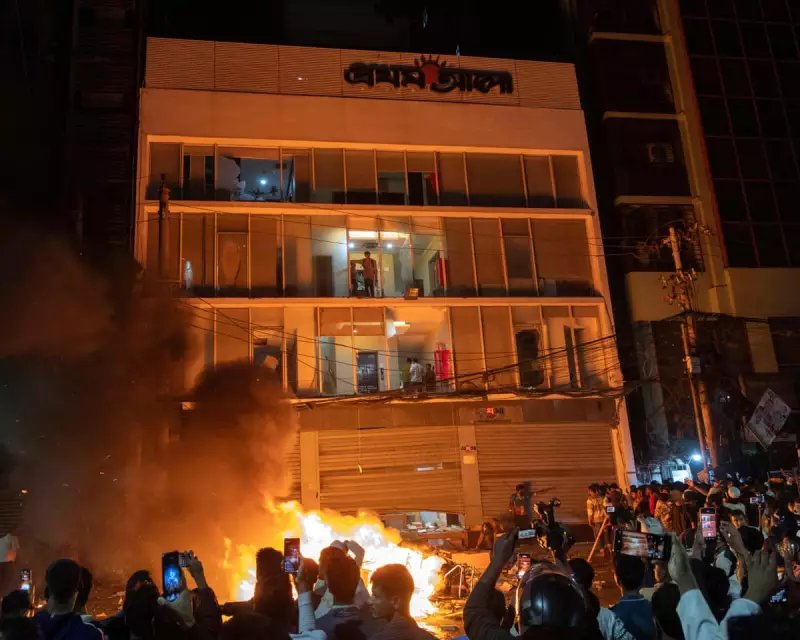
The fragile political optimism in Bangladesh has been shattered by a wave of deadly mob violence, culminating in the arson attacks on the country's two most prestigious newspaper offices in Dhaka. The assaults, which left journalists trapped inside burning buildings, followed the assassination of a prominent pro-democracy leader and have raised grave concerns about the nation's trajectory.
A Night of Terror for the Press
On the night of 18 December, a furious mob set fire to the offices of the Bengali-language Prothom Alo newspaper. Shortly after, the headquarters of the Daily Star, another leading publication, were also targeted. Reporter Zyma Islam, 35, was among the 29 staff who fled to the roof of the Daily Star building as the violence escalated.
"We all knew that this mob was not going to stop at trashing this office, that it was going to set fire to it," Islam recounted. Choking on smoke so thick she could not see her phone, she posted what she feared was a final message on Facebook: "I can't breathe any more. There's too much smoke. I'm inside. You are killing me."

The attackers were incensed by the murder of Sharif Osman Hadi, a key figure in the pro-democracy movement that ousted former prime minister Sheikh Hasina in August 2024. Authorities stated Hadi's killers were Hasina loyalists who had fled to India. The mob, however, directed its rage at institutions perceived as linked to the previous regime.
A Spiralling Cycle of Violence
This incident is part of a much broader and more deadly pattern. According to figures compiled by the human rights organisation Ain o Salish Kendra, mob violence has claimed 184 lives so far this year, a stark increase from 51 such deaths in 2023. In a separate incident just days before the newspaper attacks, a Hindu garment worker was lynched over blasphemy rumours.
The interim government, led by Muhammad Yunus, appeared powerless to prevent the attacks. Firefighters attempting to rescue trapped journalists were set upon by the crowd. The military did not arrive to escort the staff to safety until around 4am. Shafiqul Alam, press secretary to the interim leader, expressed his shame on Facebook, revealing he had made scores of calls "to the right people" for help without success.
A journalist from Prothom Alo, who wished to remain anonymous, watched the mob gather from the 13th floor. "I took part in [the movement] because we were in a dungeon for 15 years under [Hasina's] Awami League rule," he said. "But for the first time in the last 16 months, I thought, 'have we just plunged to our nadir?'"
Hope Fades for a 'Bangladesh 2.0'
The violence represents a profound setback for the hopes ignited by Hasina's removal after 15 years of autocratic rule. The youth-led protests had spoken of a "Bangladesh 2.0", free from the cycles of retribution perpetuated by the old political parties. Now, that vision seems distant.
"Awami League's time was bad – Prothom Alo was threatened and attacked," the anonymous journalist stated. "But [it's shocking] being attacked in this way and getting no help whatsoever from the government – they surrendered to the mob."
The fear has spread rapidly through journalistic and civil society circles. Zia Chowdhury, a reporter at the Business Standard, said a pervasive sense of vulnerability now exists. "[It's left] a sense of fear of being hounded by angry groups when I'm on the ground... There was much hope since the interim government took charge but the hope has diminished slowly."
Islam believes the country is held hostage by a cycle of retribution that began with the 1,400 protestors killed by Hasina's forces in 2024, followed by subsequent attacks on her supporters. She argues last week's violence must serve as a warning, prompting the government to act decisively and justly. "I have my fingers crossed that that's the one thing that doesn't happen because I don't want to perpetuate a culture of revenge," she said, urging that any arrests target genuine culprits, not scapegoats. For now, she clings to a sliver of optimism: "We still have a little hope. It's still not time to worry and go into full-blown panic yet."






