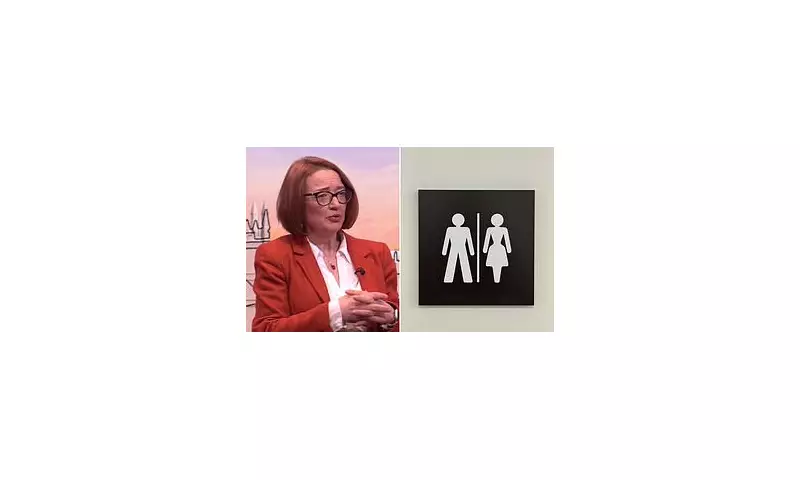
The new chair of Britain's equalities watchdog has suggested that public toilets and changing rooms could be rebranded as unisex to make them more accessible for transgender people. In her first major interview, Dr Mary-Ann Stephenson of the Equality and Human Rights Commission (EHRC) highlighted straightforward changes to support those who cannot or choose not to use facilities designated for their biological sex.
No Need for 'Toilet Police', Says Watchdog Head
Dr Stephenson, who was appointed in July, stressed that there was no need for heavy-handed enforcement or 'toilet police'. She argued that social conventions and clear signage often suffice. Her comments come as businesses await crucial new guidance on providing single and separate-sex services, following a landmark Supreme Court judgment in April.
That ruling clarified that the terms 'woman' and 'sex' in the 2010 Equality Act refer to biological sex. Dr Stephenson acknowledged this legal definition, stating the Supreme Court had ruled that under equalities law, women and men are defined based on their biological sex at birth. However, she added a personal perspective, saying that 'in most social situations I would want to treat people the way they want to be treated'.

Practical Solutions and Pending Guidance
Dr Stephenson gave a practical example involving two self-contained, lockable cubicles, each with its own sink. 'The most sensible thing in those circumstances for a service provider to do is to make both of those unisex', she told the BBC. 'There is no need to say one is for men and one for women, you could make them both unisex.'
The new EHRC guidance, which is intended to help organisations navigate these sensitive issues, is currently being assessed by government ministers. A Government spokesman recently emphasised the need for legally sound guidance, warning that rushed and flawed advice would be 'utterly catastrophic'.
Background and Controversy
Dr Stephenson's appointment was met with criticism from some trans campaigners. This was partly due to her past financial support for lawyer Allison Bailey, who won part of a tribunal claim that she was discriminated against for holding gender-critical beliefs. Dr Stephenson defended her impartiality, stating she contributed to the case out of frustration that women were 'being harassed and losing their jobs on the basis of lawfully held beliefs'.
The debate continues to balance legal definitions, individual dignity, and practical accommodations in public spaces across the UK.