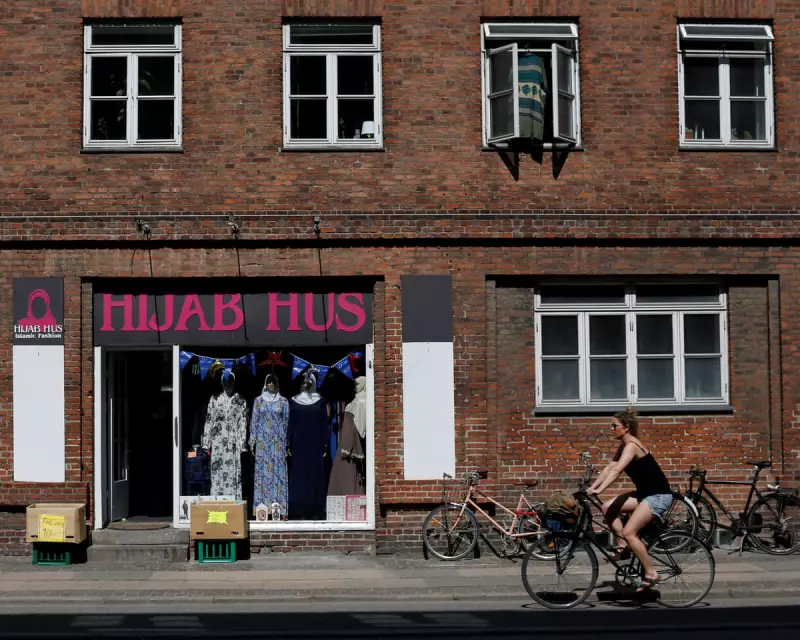
In a landmark decision, the European Court of Justice (ECJ) has ruled that Denmark's controversial 'parallel societies' legislation, widely known as the 'ghetto law', may be unlawful under EU equality rules. The preliminary ruling offers significant hope to residents of areas like Copenhagen's Mjølnerparken, who have long argued the policy is racially discriminatory.
The 'Parallel Societies' Law Under Scrutiny
Enacted in 2018, the Danish law allows the state to intervene in areas officially designated as 'parallel societies'. An area qualifies for this label if at least half of its residents have a 'non-western' background and it meets certain unfavourable socioeconomic criteria, such as high unemployment or crime rates. Previously, the government referred to these neighbourhoods as 'ghettoes'.
The legislation mandates that in these 'transformation areas', authorities must reduce social housing by 40% by 2030. This can be achieved through the sale or demolition of properties, or by terminating tenants' leases, which has already forced over 1,000 people to move out and driven up rental costs.

ECJ Delivers Critical Preliminary Ruling
On Thursday, the ECJ issued its long-awaited judgment on whether the law constitutes racial discrimination. The court stated that the legislation may lead to an increased risk of early lease termination and eviction for residents of these areas compared to those in neighbourhoods with similar socioeconomic conditions but lower levels of immigration.
The court clarified that it is now for the Danish courts to examine whether the law results in 'a difference in treatment based on the ethnic origin of the majority of the inhabitants'. They must determine if the neutrally worded law in practice places 'persons belonging to certain ethnic groups at a particular disadvantage.'
While the ruling is less emphatic than a prior opinion from an ECJ advocate general, who stated tenants suffered 'direct discrimination', lawyers and human rights groups hailed it as a decisive step forward.
Residents' Fight for Justice
The case was brought by residents of the Mjølnerparken social housing estate in central Copenhagen, who filed suit in 2020. They argued that using ethnicity to determine where people can live is fundamentally discriminatory.
Muhammad Aslam, chair of the Mjølnerparken residents association, expressed his pleasure with the ECJ's decision. He described the law as 'inhumane', stating, 'It threw the families out from our homes when we have done nothing wrong.' Aslam, who has lived in Denmark since childhood, criticised the political rhetoric that has targeted minority communities for over a decade.
Susheela Math, head of legal at Systemic Justice, called the ruling 'a day of reckoning for the Danish state', emphasising that 'discrimination is not integration'. She noted the law is part of a long history of political rhetoric and practices targeting minorities.
The Danish Institute for Human Rights said the judgment provides several grounds for the law to constitute ethnic discrimination, though it does not bring the case to a definitive close. The Danish Ministry of Social Affairs and Housing stated it would study the verdict carefully as the case returns to Denmark's eastern high court for a final decision expected next year.