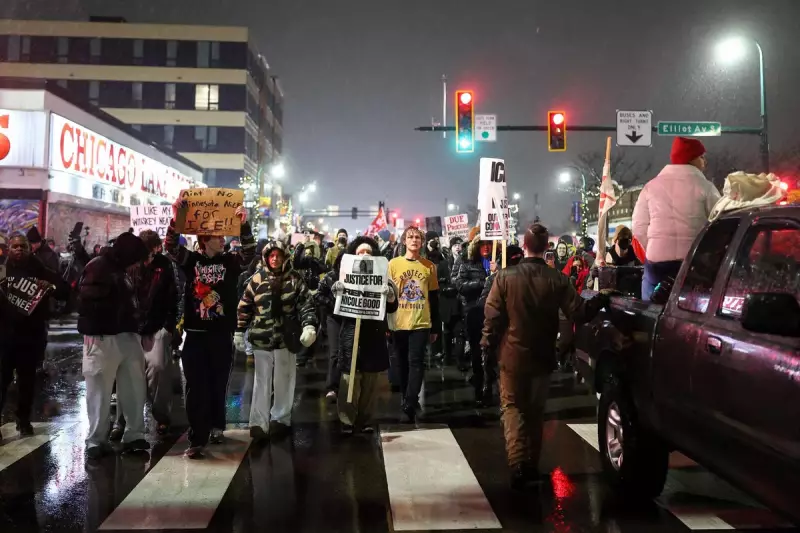
The fatal shooting of a 37-year-old mother by an Immigration and Customs Enforcement (ICE) officer in Minneapolis has thrust a contentious law enforcement tactic back into the spotlight, raising urgent questions about policy and accountability.
A Fatal Encounter and a Widening Policy Chasm
Renee Nicole Good was shot and killed by an ICE agent while she was in her car on Friday, 9 January 2026. The incident has immediately intensified the long-running debate over when officers are justified in using deadly force, particularly against moving vehicles.
This tragedy has illuminated a stark and potentially dangerous inconsistency in federal guidelines. While the US Department of Justice advises officers to move out of the path of a moving vehicle rather than shoot at it, ICE's own policy lacks this crucial directive. This discrepancy persists despite a 2022 executive order from the White House that mandated federal agencies, including ICE, to adopt use-of-force policies that meet or exceed the Justice Department's standards.

The Proven Alternative: Banning Shots at Vehicles
Across the United States, numerous police departments have already implemented policies that explicitly prohibit firing at moving vehicles, recognising the high risk and frequent ineffectiveness of the tactic. This approach has been shown to reduce police killings without increasing danger to officers.
A leading example is the New York City Police Department, which adopted such a ban years ago. The logic is clear: shooting at a fast-moving, often unpredictable target is highly unlikely to stop the threat and is far more likely to result in tragic loss of life, as seen in Minneapolis. The bullet may miss its intended target, strike a passenger, or cause the driver to lose control, endangering many more lives.
Historical Lessons and the Path to Accountability
This incident underscores a persistent and deadly gap between official policies and established best practices for protecting life. History offers a clear parallel in the evolution of the 'fleeing felon rule'. For decades, officers were permitted to use deadly force to stop any suspect fleeing from a felony. However, after numerous questionable shootings, clear restrictions were put in place, saving lives and improving police accountability.
The shooting of Renee Nicole Good presents a similar crossroads. It poses a direct challenge to federal authorities: will they align ICE's protocols with the more restrictive and life-preserving policies adopted by progressive police forces and even other federal bodies? The continued absence of a clear prohibition on shooting at vehicles in ICE's rulebook leaves agents without definitive guidance and the public at avoidable risk.
As investigations into the Minneapolis shooting proceed, the core issue remains a matter of policy. The tactic employed in this fatal ICE encounter is one that many major police departments explicitly warn against. Closing this policy gap is now a critical step toward preventing future tragedies.