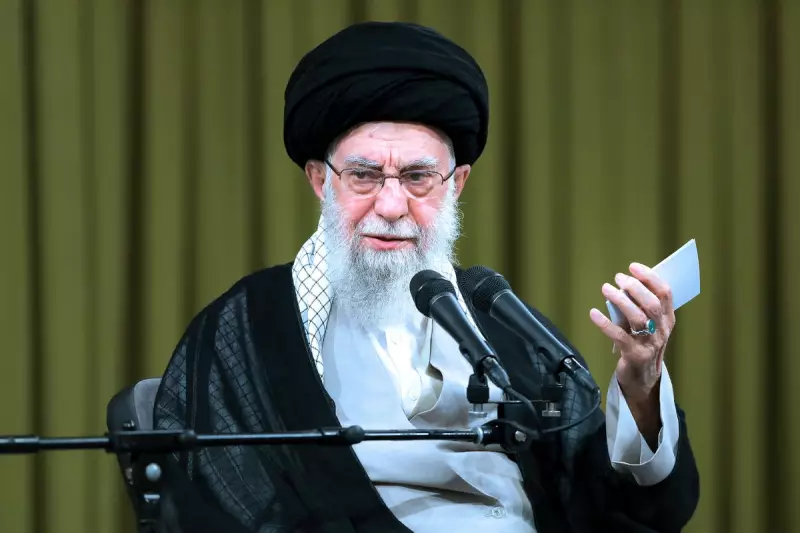
Iran's top judicial official has signalled that detained protesters will face expedited trials and potential execution, as the death toll from a brutal state crackdown climbs above 2,500. The warning from judiciary chief Gholamhossein Mohseni-Ejei comes despite a stark threat of "very strong action" from US President Donald Trump.
A Judiciary Chief's Chilling Ultimatum
In a video shared by Iranian state television on Wednesday, 14 January 2026, Gholamhossein Mohseni-Ejei issued a stark directive. "If we want to do a job, we should do it now," he stated. "If we want to do something, we have to do it quickly. If it becomes late, two months, three months later, it doesn't have the same effect." His comments are widely interpreted as a green light for the rapid prosecution and hanging of those arrested during the nationwide unrest.
This declaration stands as a direct challenge to President Trump, who warned Iran against executions in a CBS interview aired on Tuesday. Trump vowed that the US would take "very strong action" if such measures were carried out, referencing the thousands already killed.

A Soaring Death Toll and a Nation in Fear
The scale of the state's response has been devastating. According to the US-based Human Rights Activists News Agency (HRANA), at least 2,571 people have been killed in the security force crackdown. This figure dwarfs the fatalities from any other major protest in Iran in decades and evokes memories of the 1979 Islamic Revolution's chaos.
The agency's breakdown indicates that 2,403 of the dead were protesters, 147 were government-affiliated, and 12 were children. More than 18,100 people have been detained. With severe internet disruptions inside the country, verifying these numbers independently remains a challenge for foreign media, including The Associated Press.
On the streets, fear persists. A mother of two, shopping for groceries on Wednesday, spoke anonymously of her terror. "We are very frightened because of these sounds (of gunfire) and protests," she said. "We have heard many are killed and many are injured. Now peace has been restored but schools are closed and I'm scared to send my children to school again."
Witnesses like Ahmadreza Tavakoli, 36, described scenes that turned from protest to warfare. "People were out to express themselves and protest, but quickly it turned into a war zone," he told the AP after witnessing a demonstration in Tehran. "The people do not have guns. Only the security forces have guns."
Digital Battleground and a State in Mourning
Amid the repression, activists confirmed on Wednesday that Starlink satellite internet terminals are now offering free service in Iran. This has been crucial in circumventing an internet shutdown imposed by the theocracy on 8 January. Mehdi Yahyanejad, a Los Angeles-based activist, confirmed the functionality of the free subscriptions, which have been tested inside Iran.
In response, security personnel have reportedly begun raiding apartment buildings in areas like northern Tehran, searching for the illegal Starlink dishes. Simultaneously, the state prepared for a mass funeral for 100 security force members killed during the demonstrations, highlighting the conflict's heavy toll on both sides.
The crisis continues to escalate, with the judiciary's latest threats marking a dangerous new phase. The international community watches closely, with the potential for executions threatening to trigger a further severe response from a US administration that has already conducted military strikes on Iranian nuclear sites in the recent past.