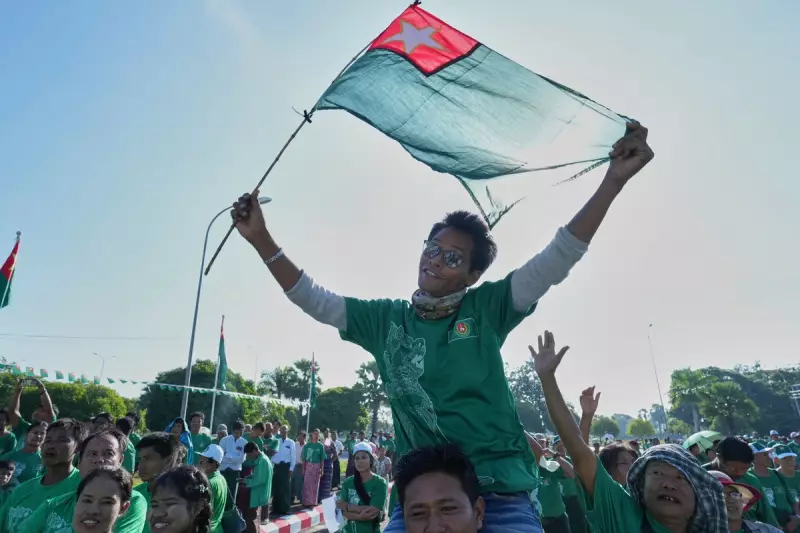
Myanmar's military government has intensified its crackdown on dissent, charging more than 200 individuals with violating the country's strict election law as a controversial general election draws near.
Widespread Arrests and Severe Penalties
According to state-run media, Home Affairs Minister Lt.-Gen. Tun Tun Naung stated that authorities have taken action against 229 people – 201 men and 28 women – in connection with 140 cases of alleged attempts to sabotage the electoral process. The report did not specify how many have been detained.
The charges stem from a new law enacted in July, which prescribes punishments ranging from three to ten years' imprisonment for actions deemed disruptive to the election. Other offences can carry sentences up to the death penalty.

State media has named several prominent activists among those charged, including Tayzar San, Nan Lin, and Htet Myat Aung. The latter was arrested after leading a protest in Mandalay on 3 December, calling for a public boycott of the polls. His organisation claims he was abused during arrest and that his life is in danger.
A Controversial and Staggered Vote
The election, which critics argue is designed to lend a facade of legitimacy to military rule, is scheduled to begin on 28 December 2025. Due to the ongoing civil war, voting will be held in three phases, with subsequent rounds on 11 January and 25 January 2026.
A major point of contention is the exclusion of Aung San Suu Kyi's National League for Democracy (NLD), which was forcibly disbanded in 2023. The NLD had won landslide victories in the 2015 and 2020 elections. The military seized power in February 2021, preventing the NLD from taking a second term.
Suu Kyi, now 80, is serving a 27-year prison sentence following a series of prosecutions widely viewed as politically motivated. The military recently denied reports concerning her health.
International Scrutiny and Domestic Crackdown
Those charged include filmmakers, actors, members of pro-democracy militias, and ethnic armed groups. Alleged offences range from destroying campaign posters and threatening election workers to posting critical comments on social media. Local media reports indicate some have received prison sentences of up to 49 years.
In a briefing, military spokesperson Maj. Gen. Zaw Min Tun dismissed international opinion, stating the election is "being held for Myanmar, not for the international community." He asserted the government's objective was to return to a multi-party democratic system.
This mass charging of opponents underscores the fraught environment surrounding the upcoming vote, which independent observers and much of the international community have already condemned as neither free nor fair.