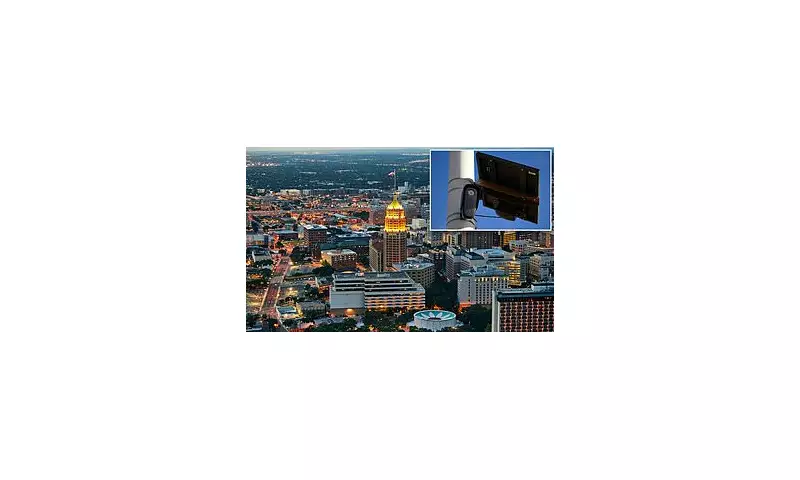
A quiet neighbourhood in San Antonio, Texas, has become the epicentre of a growing controversy over mass surveillance, as residents report a mysterious proliferation of high-tech cameras monitoring public spaces.
The Rise of the Unaccountable Camera
On the city's northside, locals have noticed an increasing number of unexplained black devices fixed to poles. These are Flock Safety cameras, powered by solar panels, and they are far from ordinary. Each unit can scan, record, and log the licence plate of every passing vehicle, alongside detailed information about the car's make, model, and colour.
While marketed as a tool for law enforcement to combat crime and traffic violations, the deployment has expanded far beyond police use. Private businesses, shopping malls, homeowners' associations, and small towns have also adopted the systems. This rapid, opaque spread has left many citizens asking a critical question: who exactly is collecting this sensitive data, and what are they doing with it?

A Legal Grey Zone and Mounting Concerns
Fears are particularly acute regarding the potential for data to be shared with federal agencies like Immigration and Customs Enforcement (ICE) or sold to third parties. The camera's manufacturer admits the gathered data can extend beyond the vehicle to include details identifying its owner, deepening privacy anxieties.
"Since we live in a big brother world, I thought it important to share this with others," one resident told My San Antonio. "The cameras are being deployed and aren't secure. We should all be discussing these cameras and getting them out of our city."
The issue is compounded by a lack of transparency. While some entities using the cameras are identifiable, others remain shrouded in mystery, creating what one Wilderness Oaks local on Reddit called a "legal grey zone."
Legal Challenges and a National Backlash
Abuses of the system are already the subject of litigation. In Oakland, California, anti-surveillance advocate Brian Hofer filed a lawsuit late last year alleging the police department illegally shared licence plate data with ICE, violating state law. Hofer, who resigned from a city privacy panel in protest, branded Flock a "shady vendor."
This is not an isolated local issue. Activists and politicians in at least seven states—Arizona, Colorado, New York, Oregon, Tennessee, Texas, and Virginia—have mobilised against Flock's surveillance network, as reported by NBC.
The opposition creates unlikely alliances. Sandy Boyce, a 72-year-old Trump voter in Sedona, Arizona, found common cause with liberals to successfully lobby her city council to terminate its Flock contract. "From liberal to libertarian, people don't want this," she stated.
Critics argue the cameras represent a fundamental shift in policing. "Flock cameras are NOT 'crime-fighting tools,'" one opponent asserted. "They are 24/7 mass surveillance systems... that profit off our data."
In response to criticism, Flock Safety has said it would stop a 'national lookup' feature for federal agencies and claims it will adhere to local sanctuary city policies. However, for residents like Jay Hill of Murfreesboro, Tennessee, the core problem remains: "It really is a tracking system for law-abiding citizens... I can't go anywhere without passing five of those [cameras]." The debate in San Antonio reflects a national struggle to balance security with civil liberties in an increasingly monitored age.