Across the United States, a profound and unsettling trend is emerging as Native American citizens, fearing detention or harassment by immigration authorities, are rushing to secure tribal identification documents. This movement represents a defensive response to the Trump administration's intensified immigration enforcement actions, which have created an atmosphere of anxiety within indigenous communities.
A New Era of Documentation for Ancient Peoples
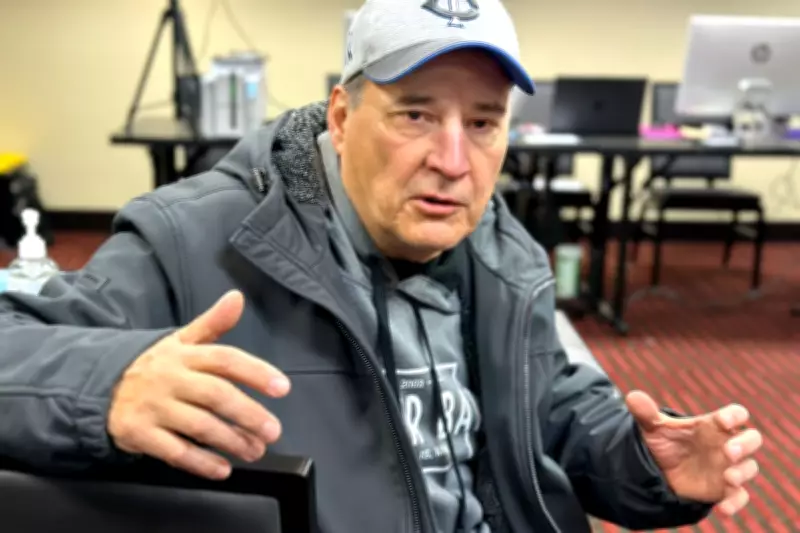
Shane Mantz, a Choctaw Nation citizen who manages a pest-control company in Minneapolis, now carries his tribal citizenship card in his wallet at all times. "Some strangers mistake me for Latino," Mantz explained, expressing concern about being swept up in Immigration and Customs Enforcement (ICE) operations. His experience mirrors that of countless Native Americans who, despite their ancestors inhabiting these lands for millennia before European arrival, feel compelled to prove their right to belong.
Tribal Nations Respond with Urgent Measures
Recognising this pressing need, dozens of the 575 federally recognised Native nations are implementing expedited processes for obtaining tribal identification. These measures include waiving application fees, lowering minimum age requirements—which traditionally range from 5 to 18 nationwide—and accelerating card production timelines. This represents an unprecedented situation where tribal IDs are being widely utilised as proof of US citizenship and protection against federal law enforcement.

David Wilkins, an expert on Native politics and governance at the University of Richmond, observed, "I don't think there's anything historically comparable. I find it terribly frustrating and disheartening." The irony is not lost on indigenous communities. Jaqueline De León, a senior staff attorney with the Native American Rights Fund and member of Isleta Pueblo, stated pointedly, "As the first people of this land, there's no reason why Native Americans should have their citizenship questioned."
Historical Context and Modern Realities
The US government has maintained detailed genealogical records of Native Americans since the late 1800s, originally to determine "blood quantum" for eligibility regarding healthcare, housing, education, and other federally obligated services. These records were historically used to undermine tribal sovereignty and identity. Beginning in the late 1960s, tribal nations started issuing their own identification forms, with photo ID cards becoming commonplace over the past two decades for voting, employment verification, and domestic air travel.
Today, approximately 70% of Native Americans reside in urban areas, including significant populations in the Twin Cities region. This metropolitan area witnessed a major ICE operation in early January, described by officials as the "largest immigration operation ever." The deployment featured masked, heavily armed agents in unmarked SUVs conducting neighborhood patrols, resulting in over 3,400 arrests according to agency reports.
Cross-State Support and Community Mobilisation
In response, representatives from at least ten tribes traveled hundreds of miles to Minneapolis—the birthplace of the American Indian Movement—to process identification applications for urban members. Participating nations included the Lac Courte Oreilles Band of Ojibwe from Wisconsin, the Sisseton Wahpeton Oyate of South Dakota, and North Dakota's Turtle Mountain Band of Chippewa.
Christine Yellow Bird, who directs the Mandan, Hidatsa and Arikara Nation's satellite office in Fargo, North Dakota, made four trips to Minneapolis in recent weeks, accumulating nearly 2,000 miles on her vehicle. She helped organise events at coffee shops, hotel ballrooms, and the Minneapolis American Indian Center to connect urban tribal citizens with vital resources. "I'm proud of who I am," Yellow Bird remarked. "I never thought I would have to carry my tribal ID for my own safety."
Documented Harassment and Tribal Responses
Reports of ICE interactions with Native Americans have been increasing. Last year, Navajo Nation President Buu Nygren disclosed that several tribal citizens reported being stopped and detained by ICE officers in Arizona and New Mexico. Tribal leaders nationwide have since advised carrying identification at all times.

In November, Elaine Miles, a member of the Confederated Tribes of the Umatilla Indian Reservation and actress known for "Northern Exposure," reported being stopped in Washington state by ICE officers who questioned the authenticity of her tribal ID. More recently, the Oglala Sioux Tribe banned ICE from its reservation spanning South Dakota and Nebraska, while the Standing Rock Sioux Tribe reported a member's detention in Minnesota.
Personal Accounts of Detention
Peter Yazzie, a Navajo construction worker from Chinle, Arizona, described being arrested and held by ICE in Phoenix for several hours last week. Yazzie recounted sitting in his car at a gas station when officers who had just detained Latino men turned their attention to him, pushed him to the ground, and searched his vehicle. Despite providing his driver's license, birth certificate, and federal Certificate of Degree of Indian Blood, he was detained because the car registration didn't match his name.
"It's an ugly feeling," Yazzie reflected. "It makes you feel less human. To know that people see your features and think so little of you." The Department of Homeland Security did not respond to inquiries about this incident or multiple requests for comment over several weeks.
An Enduring Question of Belonging
For Shane Mantz, securing tribal documents for his children has become a priority amidst his pest-control work in Minneapolis neighborhoods with active ICE presence. "It gives me some peace of mind," he acknowledged. "But at the same time, why do we have to carry these documents? Who are you to ask us to prove who we are?"
This sentiment echoes throughout Native American communities as they navigate a landscape where proving one's right to exist on ancestral land has become a matter of daily precaution rather than historical certainty.