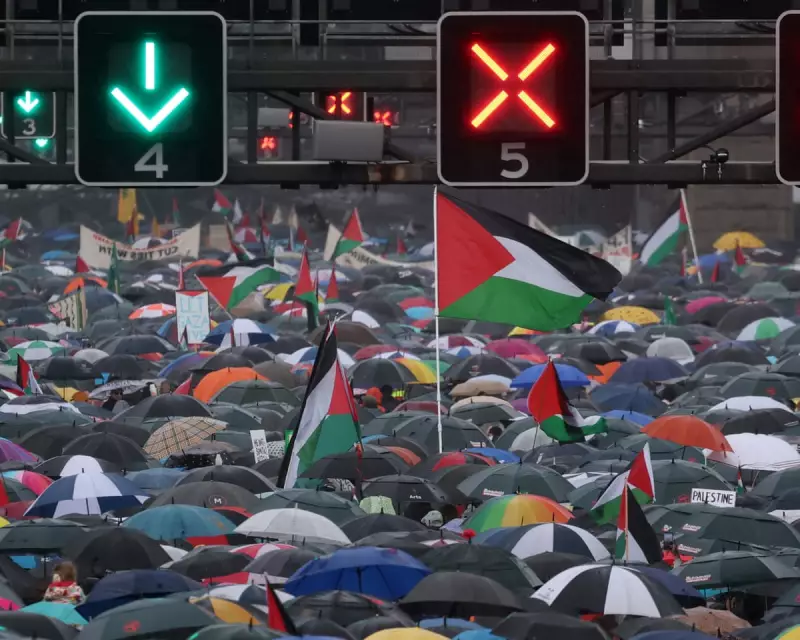
New South Wales Premier Chris Minns has announced a push for what he describes as "extraordinary powers" to ban public assemblies for up to three months, directly linking the need for the crackdown to the recent Bondi terror attack and large-scale pro-Palestinian demonstrations.
Unprecedented Powers Proposed
The proposed laws, which would be part of a terrorism and other legislation amendment bill, would grant police the ability to declare a Public Assembly Restriction Demonstration (PARD) power. This could be enacted within 14 days of a terrorism designation for any area of the state if an assembly was deemed to risk community safety or cause fear of harassment or violence.
Minns stated that under these powers, once a terrorism designation is in place, police with ministerial agreement could restrict assemblies in a specific area or across the entire state. No public assemblies in a designated area would be permissible, including those authorised by a court, effectively stripping the judiciary of oversight for the duration of the order, which could last for three months.

Linking Protests to Bondi Violence
The Premier explicitly connected the proposed measures to the Bondi beach attack on Sunday evening, which killed 15 people, and to previous mass protests. "When you see people marching and showing violent bloody images, images of death and destruction, it's unleashing something in our community that the organisers of the protest can't contain," Minns told reporters on Friday.
He argued, "The truth of the matter is, we can't risk another mass demonstration on that scale in NSW. The implications can be seen, in my view, on Sunday." This reference follows an estimated 225,000 to 300,000 people marching across the Sydney Harbour Bridge in early August to protest the conflict in Gaza, an event attended by several state and federal Labor MPs including Minns's deputy, Penny Sharpe.
Fierce Backlash and Community Division
The announcement has triggered significant criticism from civil liberties advocates and some Jewish groups. The president of the NSW Council for Civil Liberties, Tim Roberts, labelled the changes "extraordinary" and said granting such broad powers to the police commissioner was a step too far.
Jewish groups aligned with the pro-Palestine movement were particularly scathing. Jesse McNicoll of Jewish Voices of Inner Sydney called it "outrageous" that community pain was being used to shut down a movement "opposing genocide," insisting the protests had nothing to do with the attacks. Max Kaiser from the Jewish Council of Australia questioned the focus on pro-Palestine rallies when significant antisemitism exists on the far right.
Conversely, federal antisemitism envoy Jillian Segal and NSW Jewish Board of Deputies president David Ossip have drawn a direct line between protest rhetoric and violence. Ossip stated that calls to "globalise the intifada" in streets and universities had seen a "logical progression" to the violence at Bondi.
The Palestine Action Group's spokesperson, Josh Lees, defended the chants, explaining that "intifada" means 'shaking off' and relates to Palestinian resistance to occupation, arguing that banning it was akin to banning solidarity with the anti-apartheid movement.
Political and Legal Implications
The proposal creates tension within the Labor party itself, given the participation of senior figures in the August bridge march. When asked if it was wrong for his cabinet members to attend, Minns shifted focus, saying, "My concern is Sydney right now."
Police have alleged the Bondi attackers, 24-year-old Naveed Akram and his father, were "inspired by ISIS." Prime Minister Anthony Albanese confirmed Naveed Akram had been examined in late 2019 but was assessed as posing no ongoing threat.
The NSW Treasurer, Daniel Mookhey, weighed in, stating that anyone chanting "globalise the intifada" was committing hate speech, a claim contested by protest organisers. The proposed laws would include a carve-out for industrial disputes but would significantly curtail the right to peaceful assembly in response to security concerns, setting a new precedent in Australian law.