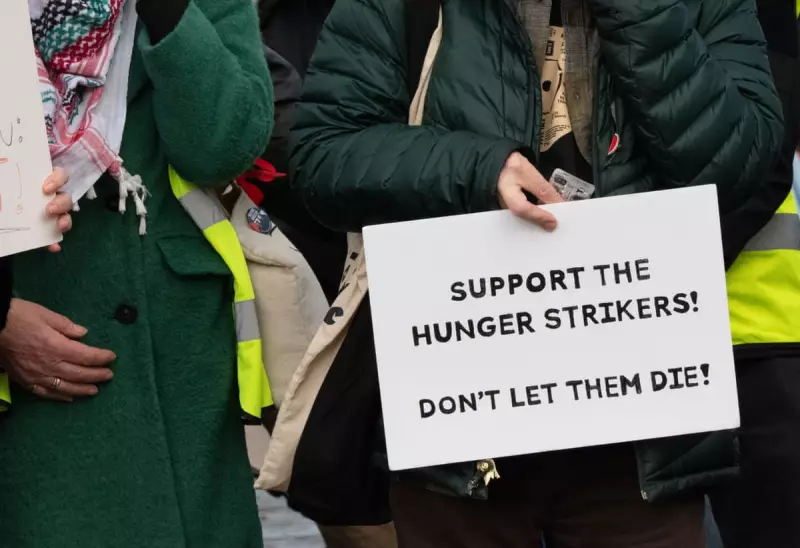
Lawyers representing two imprisoned activists from the group Palestine Action have issued a stark warning to the UK government, demanding immediate intervention as their clients enter a second week of a hunger strike. The activists, held in HMP Wandsworth, are protesting their treatment and what they describe as their designation as "political prisoners".
Legal Warnings and Deteriorating Health
The legal team for the activists has formally written to the Justice Secretary, Alex Chalk, and the Prisons Minister, Edward Argar. Their correspondence, seen by The Guardian, outlines the grave and escalating health risks faced by the hunger strikers. Medical professionals have reportedly warned that the pair could suffer irreversible organ damage if the protest continues.
One of the activists, a 31-year-old woman, has been consuming only water since December 14th. The other, a 33-year-old man, began his fast on December 15th. Both were convicted earlier this year for their roles in a campaign targeting an Israeli-owned arms factory in Kent. Their sentences, of two years and nine months and two years and three months respectively, were handed down in October.

The Core of the Protest: "Political Prisoner" Status
Central to the dispute is the activists' claim that they are being treated as political prisoners, a classification they argue is illegitimate under British law. Their lawyers contend that prison authorities have subjected them to punitive measures, including prolonged solitary confinement and restricted access to legal counsel and family visits.
"They are being punished for their political beliefs and the nature of their protest, not merely for the crimes for which they were convicted," a statement from the legal team asserted. The hunger strike is a direct response to these conditions and a plea for the government to acknowledge and address their grievances.
The campaign group Palestine Action is known for its direct-action tactics aimed at companies it alleges supply military equipment to Israel. The activists' case has drawn attention from human rights organisations, who are monitoring the situation closely.
Government Response and Mounting Pressure
As of now, the Ministry of Justice has not publicly detailed its response to the lawyers' urgent letters. A standard departmental statement acknowledged awareness of the situation, emphasising that prisons have robust policies to manage prisoners refusing food or fluid.
However, critics argue that such policies are inadequate when the root cause is a perceived political dimension to the prisoners' treatment. The legal team's intervention piles pressure on ministers to engage directly with the substance of the complaints, rather than relying solely on standard prison healthcare protocols.
The situation presents a complex challenge for the UK government, balancing prison management, legal obligations, and the highly charged political context of the activists' cause. With health concerns mounting daily, the window for a diplomatic or administrative resolution is rapidly narrowing.
Supporters of the activists have planned vigils outside the Ministry of Justice and HMP Wandsworth, calling for their immediate release or, at minimum, a transfer to a more appropriate prison category. The outcome of this standoff could set a significant precedent for how the British justice system handles activists involved in international protest movements.