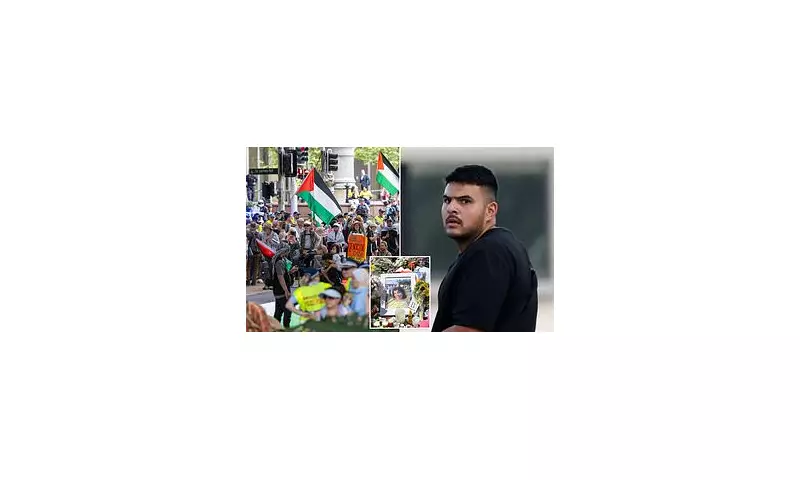
A leading pro-Palestine advocacy group has sparked significant controversy after vehemently criticising a proposed new law that would allow police to ban protests in the immediate aftermath of a terrorist incident. The heated debate follows the devastating Bondi Beach attack, which left 15 people dead.
Minns Proposes Sweeping New Police Powers
NSW Premier Chris Minns unveiled the legislative plans on Wednesday, just days after the horrific mass shooting at Bondi Beach. The proposed law would grant the state's police commissioner the authority to prohibit public demonstrations following a officially designated terror event.
Minns expressed deep concern that a large-scale protest in Sydney's current climate could further fracture community cohesion. 'My concern is a mass demonstration in this combustible situation could light a flame that would be impossible to extinguish,' the Premier stated. He warned that such actions now would 'rip apart our community'.

The legislation, which would apply to protests for any cause, would also prevent organisers from appealing a police decision to the NSW Supreme Court. The government is currently seeking legal advice on drafting the laws to ensure they do not breach the implied constitutional freedom of political communication.
Palestine Action Group's Fierce Opposition
The announcement was met with immediate and fierce opposition from the Palestine Action Group (PAG), the organisation behind Sydney's major pro-Palestine rallies. In a statement shared on social media, the group condemned the proposal as a 'serious danger to our democratic rights'.
The PAG accused certain political figures of exploiting the 'horrific and antisemitic Bondi attack' to further their own agendas. While clarifying it has no protests 'currently planned', the group argued the law would 'hand the state sweeping powers to shut down dissent on any issue it chooses'.
This is not the first legal clash between the group and authorities. Last year, the PAG successfully relied on the implied freedom of political communication to overturn laws that restricted protests near places of worship.
Public Backlash and Community Divisions
The group's statement triggered a strong reaction from members of the public, with many urging a period of quiet reflection and mourning. 'This is a time for quiet reflection not protest,' one woman wrote online. 'People need to have time to grieve not only the people lost but the loss of our innocence.'
Another commenter appealed for unity, stating: 'Let this period of mourning pass... We need to honour the lives lost and show respect for the Jewish community. This is a time to stand together, to pause our demands.'
However, other voices rejected any conflation of pro-Palestinian activism with antisemitism. 'We must fight both antisemitism and fight against the ongoing genocide of Palestinians,' one user argued. 'Those two things are on the same side.'
Details of the Bondi Beach Attack
The proposed law comes in direct response to Australia's worst mass shooting in nearly three decades. The attack at Bondi Beach on Sunday night saw Sajid Akram, 50, and his son Naveed, 24, allegedly open fire from a footbridge onto a crowd attending a Hanukkah celebration.
Fifteen people were killed in the atrocity. Sajid Akram was shot dead by police at the scene, while Naveed Akram was taken to hospital under police guard. Naveed has since been charged with 59 offences, including 15 counts of murder and committing a terrorist act.
Critics of the proposed protest ban have raised concerns about how long such powers could remain in effect, fearing a terror incident could be used to justify open-ended restrictions on civil liberties. The debate continues as the community grapples with the aftermath of the tragedy and the balance between security and freedom.