

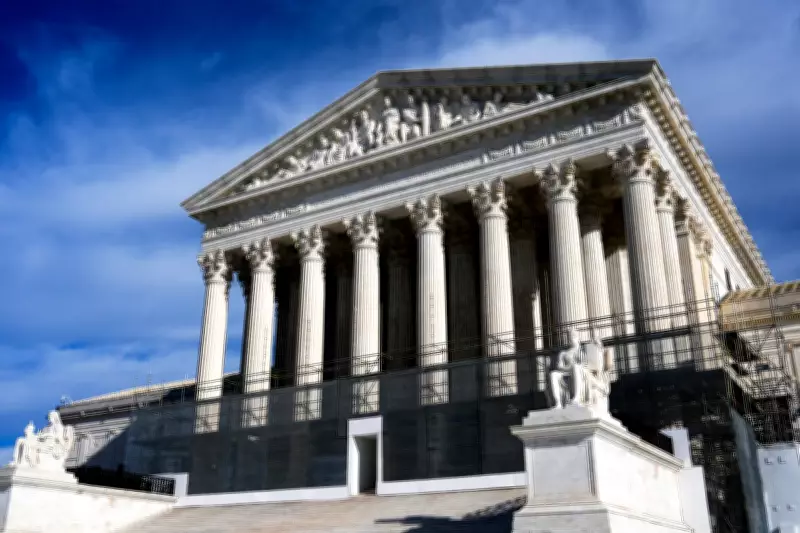
Supreme Court Case on Guns and Marijuana Forges Unlikely Political Alliances
A landmark Supreme Court case set for hearing on Monday is creating unusual political alliances as it examines whether individuals who regularly use marijuana can legally own firearms. The case challenges a federal law that prohibits habitual drug users from possessing guns, pitting traditional opponents against each other in a rare overlap of gun rights and cannabis legalisation movements.
Unusual Political Bedfellows Emerge
Gun rights and cannabis legalisation typically occupy opposite ends of the political spectrum, yet both have driven significant policy shifts across the United States in recent decades. This case brings these forces together in an unprecedented manner. The Republican Trump administration is defending the firearm restriction, receiving support from gun-control groups that usually align with Democrats. Conversely, the National Rifle Association and the American Civil Liberties Union have formed an unlikely partnership to challenge the law.
At the heart of the dispute is a federal statute that bars people who regularly use marijuana from legally owning firearms. This issue has divided lower courts since a pivotal 2022 Supreme Court decision that expanded gun rights nationwide.

Constitutional Concerns and Public Safety Arguments
Cecillia Wang, legal director at the ACLU, argues that the law violates the Second Amendment and contains unconstitutionally vague language regarding what constitutes a drug user. "We're deeply concerned with the potential of this statute to basically give federal prosecutors a blank check," she stated. "Millions of Americans use marijuana and there is no way for them to know based on words of this statute whether they could be charged or convicted of this crime because they own a firearm."
While cannabis is legal for medicinal use in most states and for recreational use in approximately half the country, the law applies more broadly to all illegal substances. This means the case could potentially allow wider legal gun ownership by other drug users if the restriction is overturned.
The organisation Everytown for Gun Safety contends that the law meets the Supreme Court's requirement that firearm regulations must have strong historical and traditional grounding. "Restricting firearm use by illegal drug users is 'as old as legislative recognition of the drug problem itself,'" their attorneys wrote in legal documents.
Key Case and Broader Implications
Cannabis remains illegal at the federal level, though President Donald Trump has signed an executive order to expedite its reclassification as a less dangerous substance. The Justice Department is asking justices to revive a criminal case against Ali Danial Hemani, a Texas man charged with a felony for possessing a firearm while acknowledging he smoked marijuana every other day.
FBI agents discovered a small quantity of cocaine during a broader investigation of his home, but the gun charge was the sole accusation filed against him. The conservative-leaning 5th U.S. Circuit Court of Appeals dismissed the case, ruling that only individuals who are intoxicated while armed can be criminally charged.
The administration has supported gun rights in other legal matters, but government lawyers argue this restriction is justifiable. "Habitual illegal drug users with firearms present unique dangers to society — especially because they pose a grave risk of armed, hostile encounters with police officers while impaired," they asserted in court filings. They maintain the law aligns with historical restrictions on individuals who were frequently intoxicated.
Divergent Perspectives from Advocacy Groups
While the conservative-majority Supreme Court has expanded gun rights, it has also upheld federal laws disarming people subject to domestic violence restraining orders. The Department of Justice contends drug users pose similar risks. This same law was applied in the case of Hunter Biden, convicted of purchasing a firearm while addicted to cocaine.

Nevertheless, the NRA and other gun-rights groups, typically aligned with the Republican Party, oppose the administration in Hemani's case. "Americans have traditionally chosen which substances are acceptable for responsible recreational use, and the fundamental right to keep and bear arms was never denied to people who occasionally partook in such drugs — unless they were carrying arms while actively intoxicated," lawyers for the Second Amendment Foundation wrote.
The cannabis advocacy group NORML concurs, noting that one of the fastest-growing user demographics comprises baby boomers using products like marijuana gummies to alleviate arthritis and sleep issues. "It's laughable to think that by outlawing cannabis users possessing firearms you'll minimise the problem with gun violence," said Joe A. Bondy, chair of NORML's board of directors, one of America's oldest and largest marijuana legalisation organisations.





