

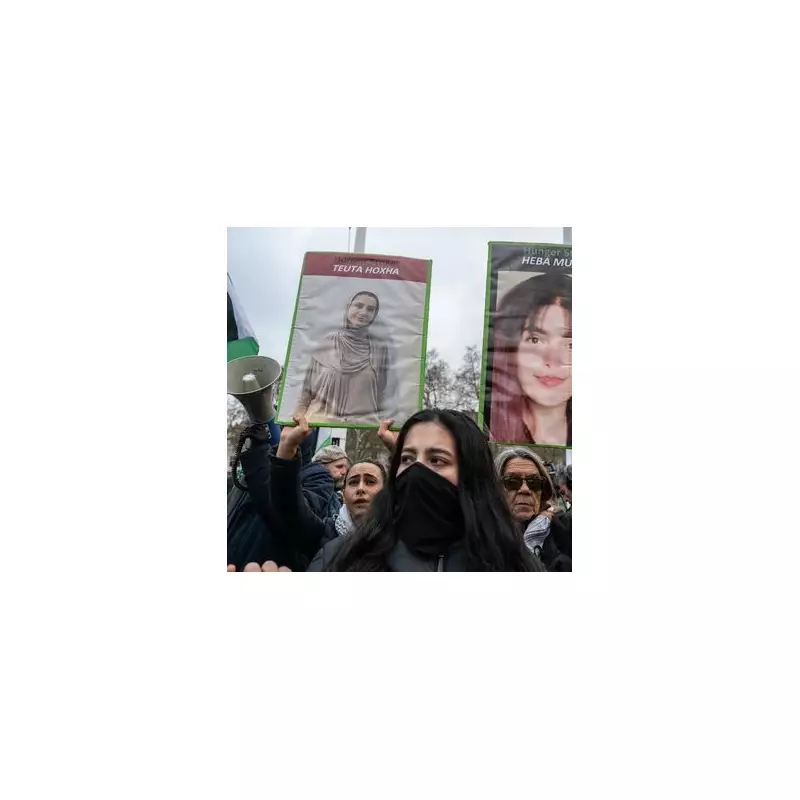
A 29-year-old woman on a prolonged hunger strike in a UK prison has said she feels "suffocated" and is now at serious risk of permanent brain damage and organ failure.
"Suffocated" but determined
Teuta Hoxha, who is being held on remand at HMP Peterborough awaiting trial for direct action protests related to Palestine, has now refused food for 46 days. Speaking to The Guardian earlier in her protest, Hoxha described the profound psychological and physical toll.
"You get to the stage where you’re constantly reminded of the big and irreversible changes that happen with prolonged starvation," she said. "It is something that plays on the mind." She added that the autonomy that allowed her to begin the strike is now at risk of being lost.

Hoxha reported visible changes to her skin and hair as her body weakens. Despite this, she insists she remains "strong mentally and determined," a sentiment she believes is shared by her fellow protesters.
Demands and legal action
Hoxha is one of four remaining hunger strikers from the original group, after seven were hospitalised and four others ended or paused their protests. A spokesperson for Prisoners for Palestine confirmed the remaining strikers will continue until new demands are met.
These demands include an end to all non-association orders isolating prisoners, the transfer of a fellow protester named Heba back to HMP Bronzefield near her family, and granting remand prisoners the same access to courses and activities as sentenced inmates. The group argues that extended time on remand, often beyond the six-month legal limit, justifies these changes.
The prisoners' broader demands, which prompted the initial strike, are for immediate bail, fair trials, and the closure of Elbit Systems' UK sites. Their legal team, Imran Khan and Partners, has initiated a legal battle, sending a pre-action letter to Justice Secretary David Lammy on December 22.
Official responses and constitutional stance
A spokesperson for HMP Peterborough stated that all prisoners are managed according to national policies, with wellbeing continually assessed. They emphasised that any prisoner refusing food receives regular NHS medical assessments and support, with access to hospital care when necessary.
Prisons Minister Lord Timpson acknowledged the situation was "very concerning" but stated that hunger strikes are not a new issue for the prison system, averaging over 200 annually in recent years. He defended the established safety procedures and NHS care provided.
Crucially, he stated that ministers would not meet with the strikers, citing the constitutional principle of the separation of powers. "It would be entirely unconstitutional and inappropriate for Ministers to intervene in ongoing legal cases," he said, noting that remand decisions are for independent judges.
The protest continues within the walls of HMP Peterborough, as Teuta Hoxha and her comrades balance their determination against the escalating and potentially fatal risks to their health.






