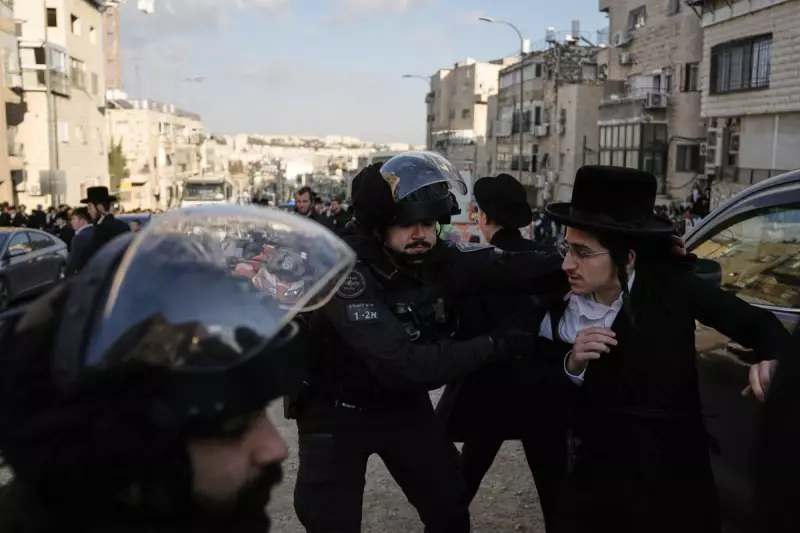
A routine attempt to issue a parking ticket escalated into a major confrontation in Jerusalem on Thursday, resulting in 13 police officers injured and four protesters arrested. The incident, which saw hundreds of ultra-Orthodox Jews, known as Haredim, clash with law enforcement, underscores the deepening rift between the community and the state over contentious military conscription plans.
From Parking Ticket to Full-Scale Riot
The violence erupted on Thursday 18 December 2025 in an insular ultra-Orthodox neighbourhood. According to authorities, an inspector's attempt to write a parking ticket was met with immediate violence and threats, leading to one initial arrest. The situation rapidly deteriorated as hundreds of community members gathered to protest, attempting to free the detained suspect.
Protesters targeted police vehicles, overturning one car and smashing windshields on others. They pelted officers with stones and eggs, prompting a forceful response. Videos circulating on Israeli social media showed police deploying stun grenades, water cannons, and using batons to disperse the crowd.

Injuries and Accusations Fly
The aftermath of the clashes was significant. Five police officers required hospital treatment, with several others sustaining lighter injuries. By Thursday afternoon, police confirmed four arrests were made, with investigations into several others ongoing.
Amid the chaos, residents levelled a serious accusation against the police, claiming the initial arrest was related to the man's failure to register for military conscription. Police officials firmly denied this, stating the incident began solely over a parking violation.
Roots of the Tension: The Draft Exemption Debate
This violent episode is not an isolated event but a symptom of a long-simmering conflict. When Israel was founded in 1948, a small number of gifted ultra-Orthodox scholars were exempted from the compulsory military draft that applies to most Jewish citizens.
Over decades, with pressure from politically powerful religious parties, those exemption numbers have swelled. Today, Israel's roughly 1.3 million ultra-Orthodox Jews—about 13% of the population—largely oppose enlistment. They believe their paramount duty is full-time study in religious seminaries, arguing that army service would erode their devout way of life.
However, public sentiment, particularly among secular Israelis who have served multiple combat tours in recent conflicts like the war against Hamas in Gaza, has shifted dramatically. There is now substantial support for rolling back the broad exemptions and drafting the Haredim into national service.
As the government considers such measures, encounters in ultra-Orthodox neighbourhoods have grown increasingly volatile. The community has promised staunch opposition, with protests often turning violent, as seen in Jerusalem this week, signalling more turbulence ahead for Israeli society.