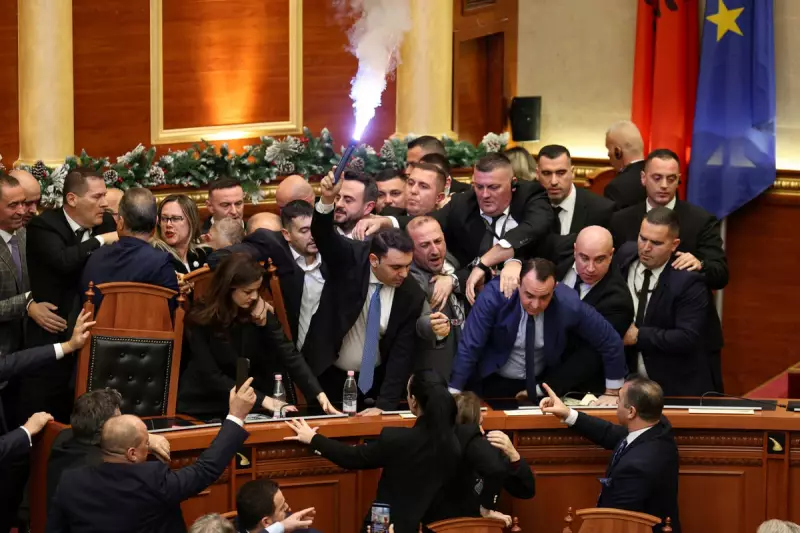
The Albanian parliament in Tirana was thrown into unprecedented disarray on Thursday, as opposition lawmakers physically clashed with security personnel, ignited flares, and hurled projectiles in a dramatic protest that halted proceedings.
Session Descends into Physical Confrontation
The violent altercation erupted during a session to appoint the country's next ombudsman, a key independent human rights official. Members of the opposition Democratic Party of Albania, who have spent months protesting what they call election fraud and democratic backsliding by the ruling Socialists, brought the vote to a standstill.
In chaotic scenes, opposition MPs tugged away microphones and threw bottles towards the parliament speaker, Niko Peleshi, as he attempted to maintain order and continue the vote. Peleshi pleaded with the assembly to "respect the institution of the parliament," warning, "We cannot destroy the state like this."

Flares Lit and Arrest Warrant Controversy
The confrontation escalated further when opposition lawmakers, who had occupied the ruling cabinet's chairs before the session, refused to leave. During scuffles with parliamentary guards, several lit bright red flares, filling the chamber with smoke.
Protesters held placards with slogans directly attacking Prime Minister Edi Rama, comparing him to the former Panamanian dictator Manuel Noriega and labelling him "The Noriega of Europe." A central demand of the opposition is the resignation of Deputy Prime Minister Belinda Balluku.
Balluku remains in her role as Minister of Infrastructure and Energy despite an active arrest warrant issued by Albania's Special Court Against Corruption and Organized Crime (SPAK). The court has accused her of interfering with public procurement in major construction projects and has asked parliament to strip her of immunity, a matter set for a special session.
EU Ambitions Clouded by Ongoing Turmoil
The political meltdown casts a long shadow over Albania's aspirations on the international stage. The nation, alongside Montenegro, is seen as a leading candidate for European Union membership in the Western Balkans.
However, international observers consistently warn that widespread corruption and the monopolisation of power by the Socialist Party, in government since 2013, present major obstacles to its European integration goals. Thursday's events in Tirana will likely amplify those concerns in Brussels and other European capitals.