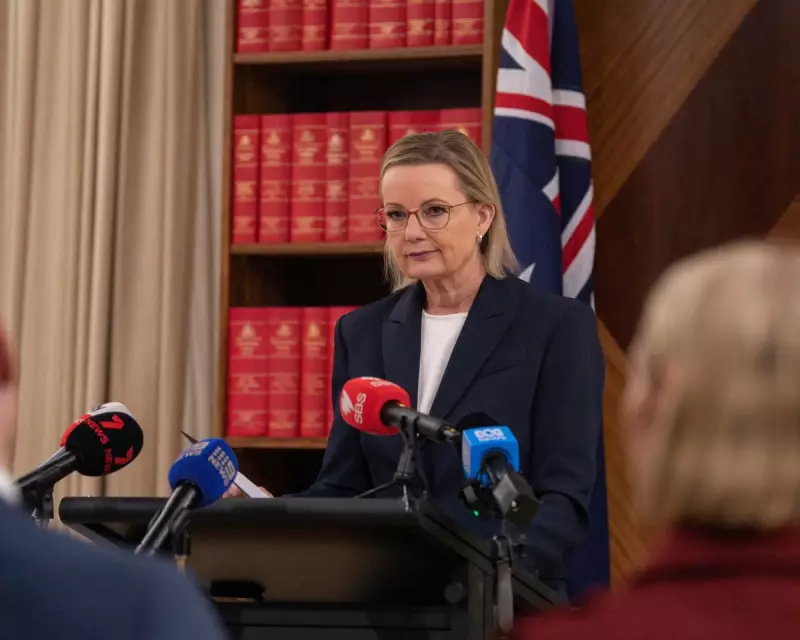
The political battle over Australia's proposed hate speech and anti-vilification laws has intensified, with Opposition Leader Sussan Ley declaring the government's bill "pretty unsalvageable" and vowing to oppose it. This stance has drawn sharp criticism from Prime Minister Anthony Albanese, who accused the Coalition of "playing politics" after weeks of demanding parliamentary action.
Coalition's Swift Opposition Stuns Government
In a significant political reversal, the Coalition has signalled it will vote against the suite of new laws, which are due to be introduced to parliament next week. The package includes provisions for a national gun buyback scheme and reforms to hate speech legislation. Ley's announcement on Thursday morning came just weeks after she demanded parliament be recalled immediately following the Bondi beach terror attacks on 14 December.
"We called for the parliament to be recalled to hold a condolence motion to honour the victims, to help the nation come together, and we also wanted immediate action," Ley stated. "The government has delivered neither. They fought the nation on the royal commission. They've taken a month to deliver this bad bill."

Prime Minister Anthony Albanese expressed disbelief at the Coalition's position. "This is somewhat stunning, frankly. The Coalition day after day, very clearly, called for parliament to be recalled," he told the ABC. "You can't have it both ways. It just seems to me, people who were watching the events since 14 December would have seen politics being played by the Coalition."
Key Concerns and Calls for Amendment
Ley outlined several core objections to the proposed legislation. She warned of dangerous carve-outs that could allow preachers to use religious texts to spread hatred and claimed the laws would do little to protect Australian Jews or counter Islamic extremism. A major point of contention is the absence of specific bans on phrases like 'globalise the intifada' and 'from the river to the sea', which Jewish leaders deem antisemitic.
However, the Executive Council of Australian Jewry (ECAJ) urged the Coalition to seek improvements rather than outright opposition. ECAJ co-chief executive Peter Wertheim called on Ley "not to allow the perfect to become the enemy of the good".
"Some of the opposition's criticisms of the bill are valid and repeat concerns which we ourselves have expressed about the bill's shortcomings," Wertheim said. "By all means seek to amend the bill to remove its shortcomings, but a wholesale rejection of the bill would not at all be warranted."
Political Maneuvering and the Path Forward
With the Coalition likely to oppose the bill, the Albanese government will need the support of the Greens when parliament votes on Tuesday. The Greens are considering their position but have flagged likely amendments, particularly concerning freedom of political speech, amid worries that protest rights for groups like pro-Palestinian activists could be curtailed.
The Coalition released its own plans before Christmas, which included implementing the report by the government's special envoy on antisemitism, Jillian Segal, and strengthening counter-terrorism laws. Their proposal also involves stripping citizenship from dual-national terrorists and imposing tougher bars on extremists entering Australia.
Foreign Affairs Minister Penny Wong condemned the Opposition's stance as "nothing more than weakness, nothing more than hypocrisy". As a rushed parliamentary inquiry is due to report this week, last-minute deal-making is expected over the weekend, with Albanese promising to seriously consider proposed amendments.
Labor has indicated it will consider stronger legal protections for religious groups, people with disabilities, and LGBTQ+ Australians after the current bill passes parliament.