The Democratic Party has been thrown into disarray after eight of its senators broke ranks to support a Republican-backed deal to end the government shutdown, sparking outrage among party activists and leaders who described the agreement as a "senseless surrender".
The rebellion that split Democrats
In a dramatic Sunday night vote that exposed deep fissures within the party, eight Democratic senators crossed the aisle to join Republicans in passing a measure to reopen the federal government. The rebellion came after a six-week stalemate that had left hundreds of thousands of federal workers without pay and caused significant disruption across the United States.
The deal, brokered by a group of moderate senators, will see government funding extended until January 2026 and guarantees backpay for federal employees who missed paychecks during the shutdown. It also reverses workforce reductions implemented by the Trump administration during the closure period.
What the deal leaves behind
However, the agreement failed to address a crucial Democratic priority: the extension of Covid-era enhanced tax credits for the Affordable Care Act's health insurance marketplace. This omission has drawn fierce criticism from progressive activists and party leaders who argue the deal represents a significant capitulation.
Leah Greenberg, co-founder of the activist group Indivisible, expressed the frustration felt by many on the left, questioning: "What on Earth does the base have to do to convince Dems they need to fight?" She condemned the agreement as a "senseless surrender" that betrayed the party's core principles.
Mixed reactions from Democratic leadership
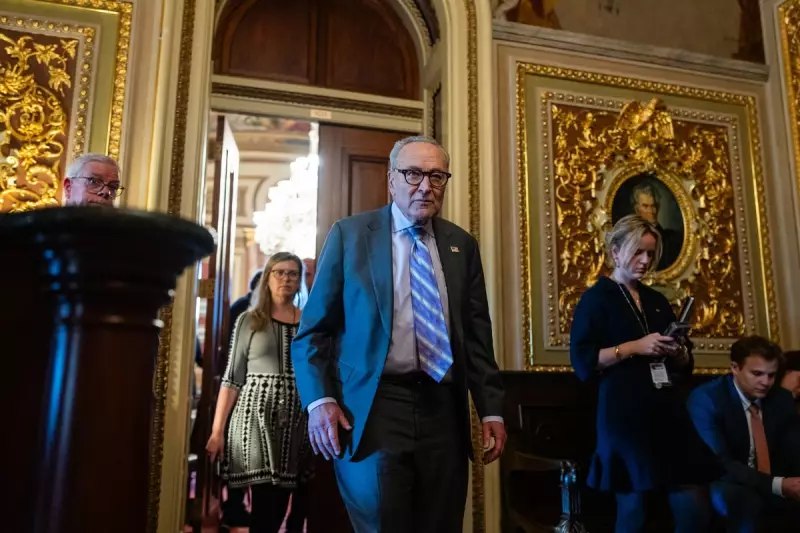
While Senate Minority Leader Chuck Schumer ultimately opposed the final deal, he faced criticism from within his own party for his handling of the shutdown negotiations. Some activists accused him of failing to adequately communicate the potential outcomes to the Democratic base.
The rebellion comes less than a week after Democrats celebrated significant electoral victories in races ranging from the Georgia public service commission to governorships in Virginia and New Jersey. The timing has left many activists questioning why the party appeared to surrender its leverage so quickly after demonstrating political strength.
Malcolm Kenyatta, Vice Chairman of the Democratic National Committee, did not mince words in his assessment: "This 'deal' doesn't come close to meeting the seriousness of this moment. I mean, it's not even in the same Zip code." He emphasised that healthcare costs are exploding in ways that will make coverage unaffordable for many Americans.
The group of senators who broke ranks included three former governors: New Hampshire's Jeanne Shaheen and Maggie Hassan, along with Independent Senator Angus King of Maine. They were joined by Democratic Senators Tim Kaine of Virginia, Dick Durbin of Illinois, John Fetterman of Pennsylvania, and Nevada's Catherine Cortez Masto and Jacky Rosen.
The measure ultimately passed by a 60-40 vote, highlighting the deep divisions within the Democratic caucus and raising questions about the party's unity heading into the next election cycle.