The fifth anniversary of the January 6 attack on the US Capitol saw a stark political divide, with Democratic lawmakers leading commemorations while most Republicans remained silent or sought to minimise the event's severity.
A Solemn Remembrance and a Political Fault Line
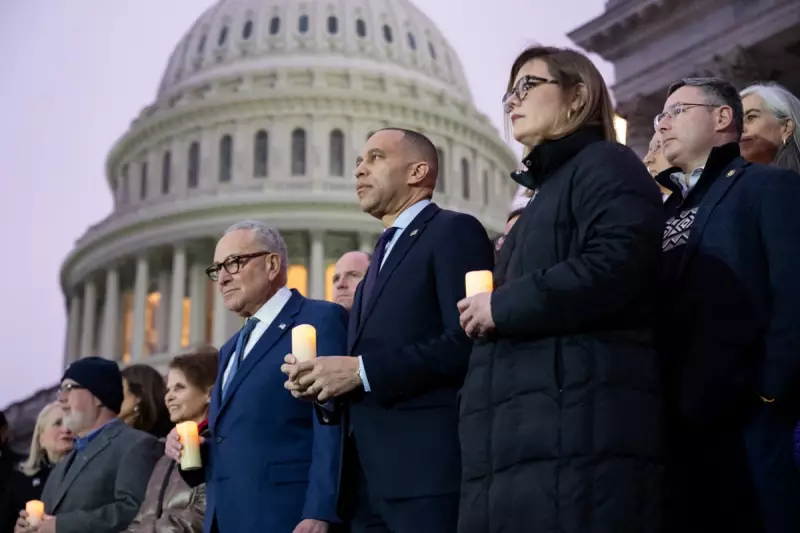
On Tuesday, Senate Majority Leader Chuck Schumer and House Minority Leader Hakeem Jeffries led Democratic members of Congress and family members of fallen Capitol police officers in a moment of silence. This act of remembrance stood in sharp contrast to the posture of the Republican party, which largely avoided marking the anniversary of the day a pro-Trump mob stormed the building to disrupt the certification of the 2020 election.
Democrats convened an unofficial hearing to examine the lasting impacts of the insurrection. Hakeem Jeffries used the platform to sharply criticise former President Donald Trump and congressional Republicans, accusing them of attempting to "rewrite history and whitewash the horrific events." He highlighted that the anniversary was the first since Trump returned to office and issued sweeping pardons to almost everyone convicted or charged in connection with the violence.

Contrasting Narratives and Unresolved Tensions
Republican responses were sparse. Those who did comment, like Congressman Mike Collins, propagated a grossly distorted version of events on social media, falsely describing the attack as a "self-guided tour" by "peaceful grandmothers." The White House communications director, Steven Cheung, echoed this revisionist stance, promoting a website with a distorted timeline of January 6 and accusing media outlets of spreading lies.
The hearing featured emotional testimony. Former Capitol Police officer Winston Pingeon described being assaulted by rioters who claimed "President Trump sent us." He condemned the pardons of those who attacked him and his colleagues as "completely unacceptable." In a striking act of contrition, pardoned rioter Pam Hemphill refused her pardon, stating she appeared to "make amends" and had "fallen for the president's lies."
Protests, Plaques, and a Persistent Divide
The day also saw controversy over an uninstalled plaque. Congress passed a law requiring a plaque honouring officers who responded to the attack be placed in the Capitol, but Republican House Speaker Mike Johnson has yet to install it. Democratic Congressman Jamie Raskin demanded action, noting the plaque was "gathering dust in a closet somewhere."
In the afternoon, several dozen protesters, some wearing apparel indicating they had received pardons, marched from the White House to the Capitol. They were halted by police but a smaller group later placed flowers at the west front in honour of Ashli Babbitt, the rioter fatally shot by police during the breach.
The political schism was further illustrated by Republican Senator Thom Tillis. While criticising Trump's pardons for sending a dangerous message, he also took aim at Democrats for their stance on 2020 racial justice protests. The day underscored that five years on, the January 6 insurrection remains a deeply divisive and unresolved chapter in American politics, with competing narratives actively shaping the national memory of the event that led to nine deaths and threatened the peaceful transfer of power.