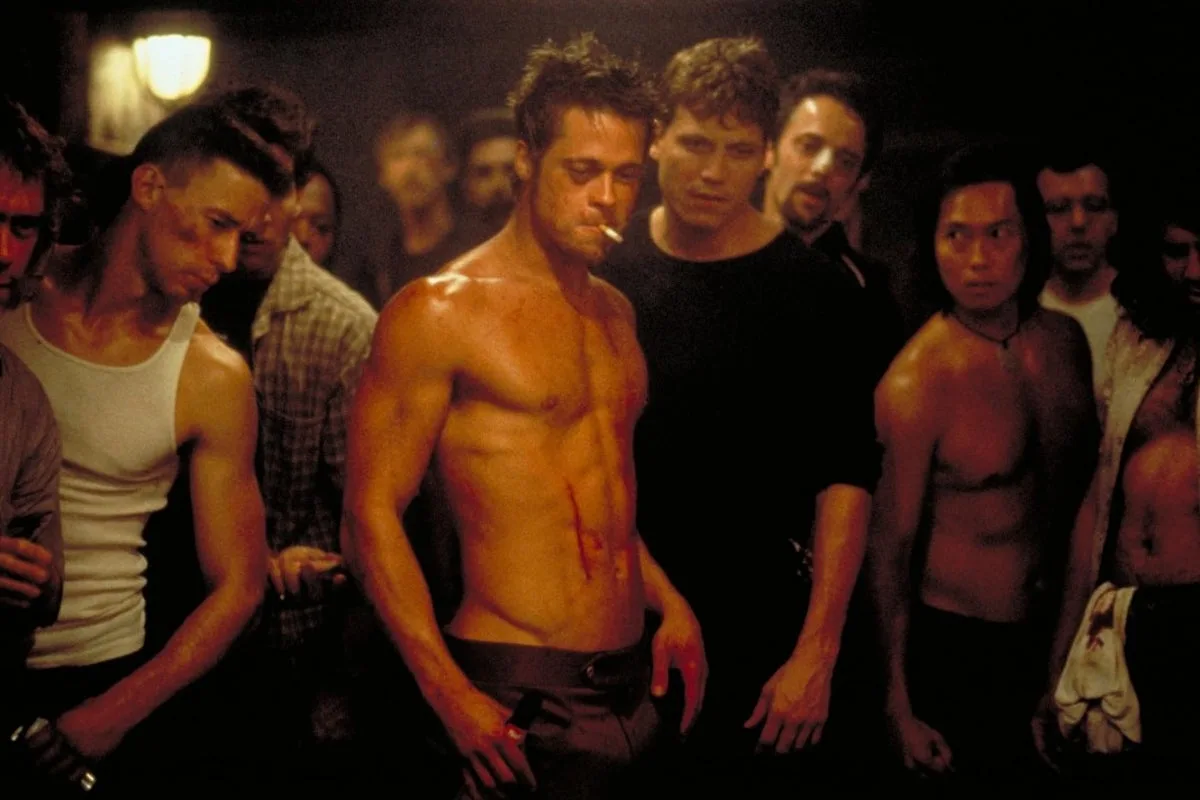
David Fincher's 1999 film Fight Club has become a cultural touchstone, but its reputation has been hijacked by incels and men's rights groups. The film, which bombed at the box office before finding a second life on home video, is far more complex than its boneheaded supporters would have it.
Starring Edward Norton as an unnamed white-collar wage-slave and Brad Pitt as Tyler Durden, a soap salesman who preaches a gospel of primal liberation, Fight Club critiques consumerism and conformity. Tyler's first idea is bare-knuckle brawls for emasculated men; his second is to blow up the city. Fincher has called it a 'cautionary tale', but opinions differ on what it cautions against.
Critics at the time saw it as anarchistic and fascistic. The Evening Standard called it 'a Nazi piece of work'. Today, it's a touchstone for incels and doomers, and reportedly a favourite of US defence secretary Pete Hegseth. But the film is thornier than its fans acknowledge, pointing out where Tyler's quick-fix cure leads: towards terrorist violence and societal meltdown.

Fight Club is currently back in cinemas in a 4k restoration. Hopefully, fresh exposure will restore its reputation as a nuanced cautionary tale, not a rallying cry for toxic masculinity.