A crucial Republican strategy to secure long-term power in Washington is facing an unexpected revolt from within the party's own ranks, sparked by President Donald Trump's inflammatory language.
A Personal Stand Against Presidential Rhetoric
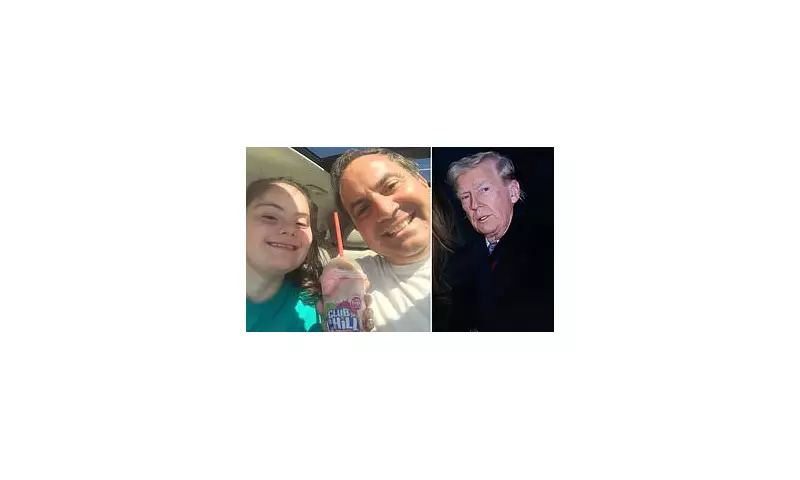
Indiana State Senator Michael Bohacek, a Republican, has pledged to vote against a draft congressional map designed to eliminate two Democratic seats. His opposition stems not from political calculation, but from a deeply personal place. Bohacek publicly rebuked Trump for using a slur aimed at people with intellectual disabilities to describe Minnesota Governor Tim Walz, who is Kamala Harris's 2024 running mate.
Governor Walz is the father of a son with a non-verbal learning disorder, anxiety, and ADHD. In a Facebook post on Friday, Bohacek, who is himself a father to a daughter with Down syndrome, wrote: 'This is not the first time our president has used these insulting and derogatory references and his choices of words have consequences.'

He directly linked his protest to the redistricting vote, stating: 'I will be voting NO on redistricting, perhaps he can use the next 10 months to convince voters that his policies and behavior deserve a congressional majority.' This echoes past controversies, including accusations from 2016 that Trump mocked a disabled journalist.
The High-Stakes Redistricting Battle
The proposed map is part of a national Republican effort to maintain a congressional majority after the 2026 midterm elections, where the sitting president's party typically loses seats. Trump has pressured GOP-led states to assist him, aiming to avoid becoming a lame duck or facing further impeachment proceedings.
The Indiana Senate is scheduled to vote on the new congressional district maps as soon as Monday, December 8th. However, Bohacek's defiant stance may be largely symbolic. Republicans hold 40 of the 50 seats in the Indiana Senate, and 70 of the 100 seats in the Indiana House, where the maps must first be passed.
Indiana State Representative Kyle Pierce told the Daily Mail 'the likelihood is high that we will pass these maps,' adding that he believed both chambers had the necessary votes. Conservative Congressman Marlin Stutzman, whose district strongly backed Trump, argued the redraw was essential to counter decades of Democratic gerrymandering.
National Context and Local Protest
This vote occurs against a backdrop of intense national manoeuvring on electoral maps. A federal court recently struck down a Texas plan to eliminate five Democratic seats, ruling it a racial gerrymander, a case now before the US Supreme Court. Conversely, California voters last month approved Proposition 50, allowing Democrats to gerrymander their state temporarily to offset potential GOP gains elsewhere.
In Indiana, not everyone supports the mid-decade redistricting push. On Monday, December 1st, multiple groups rallied at the Indiana Statehouse in Indianapolis, urging representatives to reject the proposed changes. Despite this protest and Bohacek's principled stand, the Republican supermajority means the map is still highly likely to pass, underscoring the deep political divisions defining the American electoral landscape.