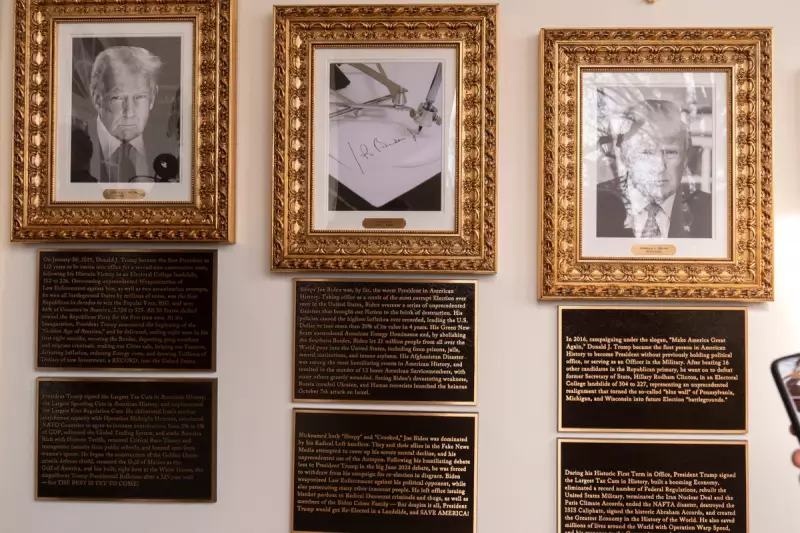
In an unprecedented move that has ignited political controversy, the White House under President Donald Trump has installed new, highly opinionated plaques beneath the official portraits of his predecessors. The updated descriptions, added on Wednesday 17 December 2025, starkly depart from traditional neutral tributes, instead echoing President Trump's long-held and often vocal criticisms.
A 'Walk of Fame' Transformed into a Political Battleground
The new plaques form part of what the administration calls the 'Presidential Walk of Fame' or 'Wall of Fame', a display along the colonnade featuring portraits of former commanders-in-chief. In a clear break with protocol, the textual additions serve as a permanent, stone-set record of Trump's personal views. This initiative is seen as a continuation of the administration's efforts to customise the White House environment and part of an ongoing campaign targeting political opponents.
The most incendiary label is reserved for immediate predecessor Joe Biden. The plaque beneath his portrait declares, 'Sleepy Joe was, by far, the worst President in American History'. It further contends he took office 'as a result of the most corrupt Election ever seen in the United States'. Notably, Biden's official portrait has been replaced entirely with a photograph of an autopen, a mechanical device used for signing documents.

Historical Figures Reassessed Through a Partisan Lens
The revisionism extends beyond the 46th president. The plaque for Barack Obama describes him as 'one of the most divisive political figures' and criticises his signature healthcare law, referred to as the 'highly ineffective "Unaffordable" Care Act'. The text links this to Democratic electoral losses, stating it resulted in 'the Election of the largest House Republican majority since 1946'.
In a contrasting note of approval, the administration asserts that former President Ronald Reagan 'was a fan', though the plaque does not elaborate on the nature of this endorsement. The lengthy, opinion-driven descriptions across the display represent a fundamental shift in how the presidency memorialises its own history within the walls of the executive mansion.
Implications for Presidential Legacy and Diplomacy
This action sets a remarkable new precedent for the personalisation of the White House's historic fabric. By inscribing partisan rhetoric into its very architecture, the Trump administration has effectively turned a space traditionally reserved for dignified remembrance into a platform for contemporary political commentary. The move is likely to deepen existing political divisions and raises questions about the norms governing the transition of power and respect between administrations.
Observers note that such a permanent and public denigration of former presidents, particularly the immediate predecessor, is without modern parallel. It transforms the White House not just into a home and office for the sitting president, but into a museum curated exclusively through his political lens, potentially influencing how visitors and future generations perceive the legacies of those who came before.